
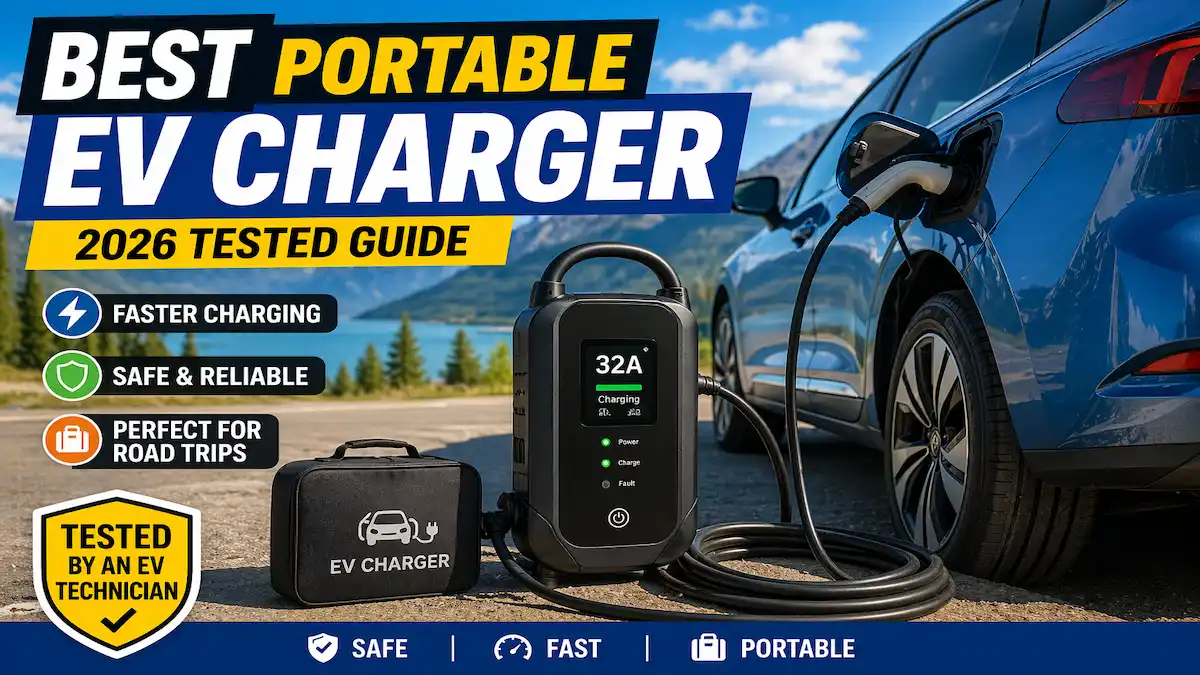
TL;DR: What is a Best Portable EV Chargers
A portable EV charger is a compact charging device that allows electric vehicle owners to recharge their cars using standard household or high-power outlets. The best portable EV charger delivers faster charging speeds, built-in safety protections, and universal compatibility, making it essential for road trips, emergencies, and daily convenience.
The top portable electric vehicle chargers is a compact Level 2 unit (16A–40A) that plugs into common outlets and delivers safe, reliable charging anywhere. Look for weatherproof design, smart safety protection, and compatibility with your EV. Avoid low-quality chargers—they often overheat, charge slowly, or fail when you need them most.
People trust specs on paper, but real-world performance tells a completely different story. Not all portable EV chargers are safe or reliable. Some look great online but:
- Overheat after 30 minutes
- Trip circuits constantly
- Charge painfully slow
And when you’re stuck on the side of the road… that’s not something you want to gamble on.
What’s Inside? (Quick Glance)
Why You Actually Need a Portable EV Charger
Most drivers think: “I’ll just rely on public charging.” That works… until it doesn’t. A customer came into my workshop after getting stranded 40km outside Brisbane. Public charger? Out of service. His cheap portable charger? Thermal shutdown after 20 minutes. That’s exactly why I always recommend keeping a tested portable EV charger in your car.
Check here for EV charging standards and safety:
https://www.energy.gov/eere/electricvehicles/charging-electric-vehicles
Portable EV Charger Comparison
| Charger Type | Power Source | Charging Speed | Best Use Case | Pros | Cons |
|---|---|---|---|---|---|
| Level 1 (Portable Basic) | Standard 120V wall outlet | Slow (8–10 km/hour) | Emergency use, overnight backup | No installation needed Works anywhere | Very slow Not practical for daily use |
| Level 2 (Best Portable EV Charger Option) | 240V outlet | Medium–Fast (25–40 km/hour) | Home charging, road trips | Faster charging Reliable for daily use Ideal balance of speed & portability | May require proper outlet Slightly more expensive |
| DC Fast Charger (Public) | High-voltage DC supply | Very Fast (150–300+ km/hour) | Highways, long-distance travel | Rapid charging Ideal for quick top-ups | Expensive Not portable Battery wear over time |
| Smart Portable Charger | 120V / 240V (varies) | Depends on amperage | Tech-savvy users, energy tracking | App control Scheduling Energy monitoring | Higher cost Not always necessary |
| Solar EV Charger (Portable/Hybrid) | Solar panels + battery | Very slow (varies widely) | Off-grid situations | Eco-friendly Works without grid power | Extremely slow Weather dependent |
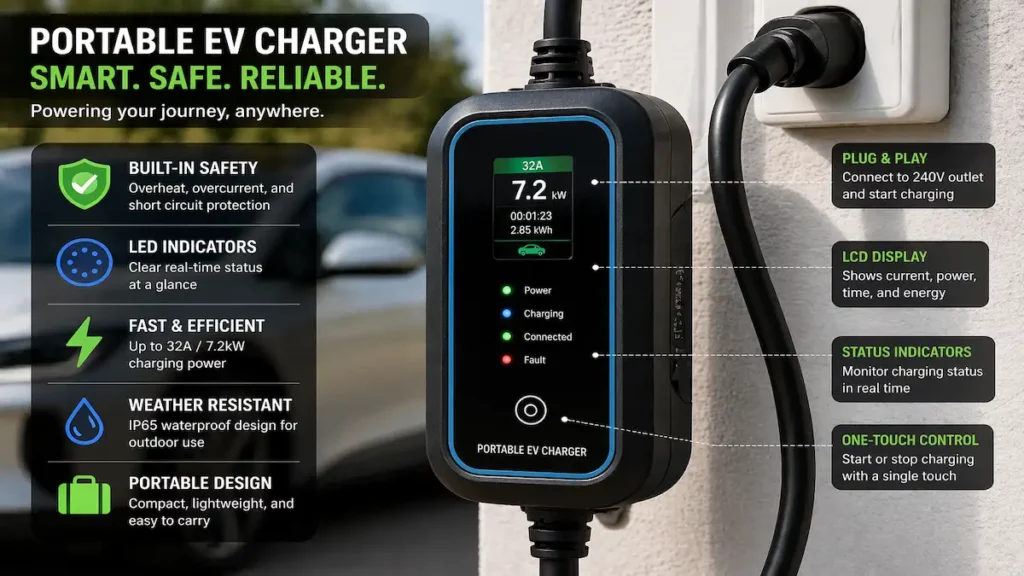
Portable EV Charger Buying Guide
If you want something reliable, here’s what actually matters:
1. Amperage (Power Output)
- 16A → Basic
- 32A → Ideal
- 40A → Fastest
I recommend 32A minimum
2. Build Quality
- Thick cables
- Solid connectors
- Heat-resistant materials
If it feels cheap… it probably is.
3. Safety Features
- Overheat protection
- Surge protection
- Auto shutoff
This is non-negotiable.
4. Portability
- Lightweight
- Compact
- Easy to store
5. Compatibility
Make sure it supports:
- Type 2 (Australia standard)
- Your EV model
For emergency prep, read:
https://pickyaura.com/ev-accessories-and-tools/prepare-ev-emergency-kit/
If you’re serious about avoiding breakdown stress, don’t wait until you need one. Check the tested recommendations here:
https://pickyaura.com/ev-accessories-and-tools/ev-charging-cables-tested/
Best EV Chargers for Road Trips
When it comes to long-distance travel, choosing the best portable EV charger isn’t just about speed, it’s about reliability when you’re far from infrastructure. Here’s the thing… road trips expose every weakness in a charger. I’ve seen chargers perform perfectly at home, then completely fail after hours of continuous use on the road.
A customer once took a weekend trip up the coast with what he thought was a “top-rated” portable charger. After two charging stops, the unit started overheating and cutting off every 10 minutes.
How to Choose Portable EV Chargers
1. Consistent Power Output (Not Just Peak Rating)
Some chargers advertise 32A but can’t sustain it. You want a charger that can hold stable output for hours, not just minutes.
2. Heat Management
If a charger overheats, it slows down—or shuts off completely. Long charging sessions = heat buildup. Look for:
- Built-in cooling system
- Temperature sensors
- Auto power adjustment
3. Multi-Outlet Compatibility
This is something most people overlook… until they’re stuck. On road trips, you won’t always find the same outlet type. A good travel charger should support:
- Standard wall sockets (backup)
- 15A / 32A outlets
- Adapters for flexibility
4. Cable Length & Durability
Short or thin cables become a serious limitation fast. Not every parking spot is ideal.
- Minimum 5–7 meters cable
- Thick insulation
Best Portable EV Chargers for Travel
If you want zero headaches, here’s what I personally recommend:
- 32A Level 2 portable charger
- Carry adapter kit for different outlets
- Keep it stored in a protective case
- Pair it with your emergency kit
Common Road Trip Charging Mistakes
Relying only on public chargers
Using a low-quality backup charger
Ignoring heat buildup during long sessions
Let me be honest… you don’t want to figure this out in the middle of nowhere.
Quick Road Trip Checklist
Before you leave, make sure you have:
- Tested portable EV charger
- Correct plug adapters
- Extension cable (if needed)
- Charging plan backup
The best portable EV charger for road trips is one that delivers consistent performance, handles heat, and works with multiple outlet types. Speed matters—but reliability is what actually gets you home.
Final Thoughts
Choosing the best portable EV charger isn’t about features—it’s about reliability when things go wrong. After years in diagnostics, I can tell you this: the right charger saves time, money, and stress. The wrong one? You’ll regret it exactly when you need it most.
Frequently Asked Questions
What is the best portable EV charger in 2026?
The best portable EV charger is a 32A Level 2 unit with safety protections, durable build quality, and compatibility with your EV. Avoid cheap models that overheat or deliver inconsistent power.
Can I use a portable EV charger every day?
Yes, but only if it’s high-quality. Cheap chargers can degrade quickly and pose safety risks.
How fast does a portable EV charger charge?
Level 2 portable chargers can add 25–40 km of range per hour depending on amperage and vehicle.
Are portable EV chargers safe?
They are safe if they include proper safety features like temperature control, surge protection, and certified components.
Do I need a 32A or 40A charger?
32A is ideal for most users. 40A is faster but requires proper electrical support.
As electric vehicles become more common, having the right charging solution is something many drivers will need to think about. I appreciate that you explained the options clearly, since it can be confusing for first-time EV owners. A portable charger seems like a smart backup for road trips or unexpected situations. Do you think most drivers should own one even if they already have a home charging setup?
Hi Monica, thank you for the question! While a dedicated home charger is best for daily, fast charging, a portable charger is excellent “insurance.” Even if you have a home setup, having a portable unit in your trunk gives you peace of mind for road trips, unexpected detours, or visiting friends and family who might not have a dedicated EV charger. It is the ultimate backup plan for any EV driver!