
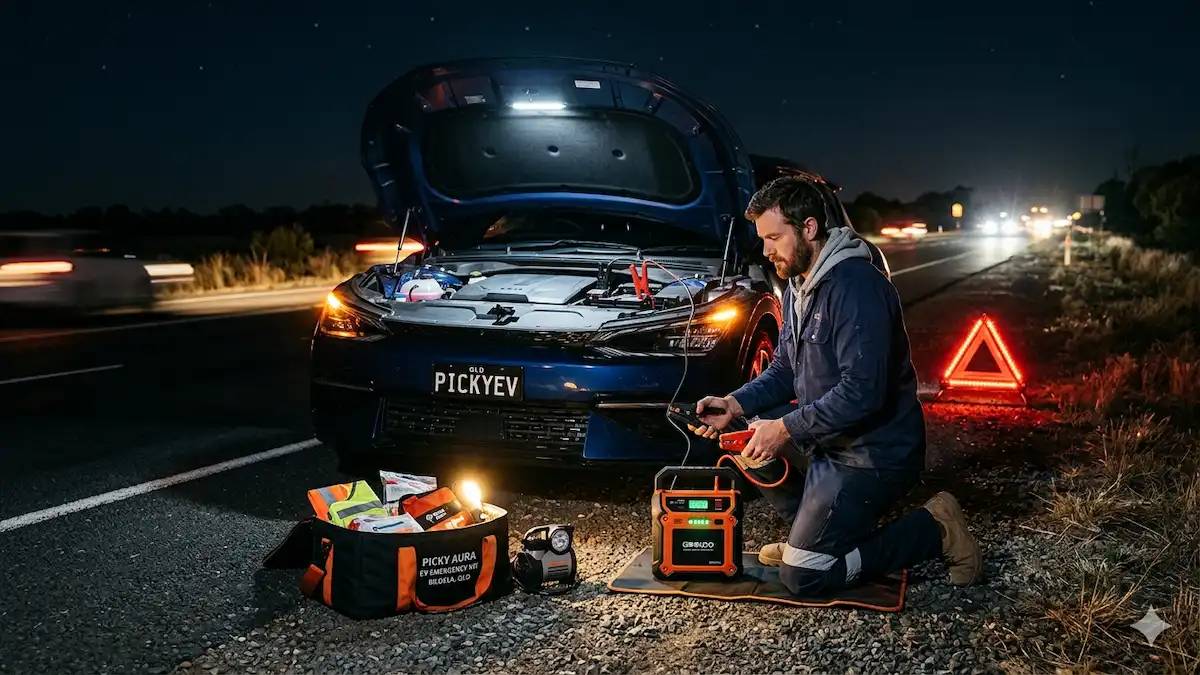

TL;DR: What Should be Included in EV Emergency Kit
An EV emergency kit should include a portable tyre inflator, tyre repair kit, charging cables, reflective warning triangle, high-visibility vest, torch, first aid kit, power bank, drinking water, emergency blanket and a portable jump starter for the 12V battery system. A well-prepared EV emergency kit helps drivers stay safe, manage common roadside problems and remain comfortable while waiting for assistance.
EV breakdowns don’t behave like traditional cars. There’s no engine noise. No warning shake. Sometimes the car just shuts off and also EVs don’t usually leave you stranded because they “break down”, they leave you stranded because you weren’t prepared.
What is Inside? (Quick Glance)
How to Prepare an EV Emergency Kit
Electric vehicles have changed how we drive, maintain and refuel our vehicles, but they have not eliminated roadside emergencies.
Many first-time EV owners assume that because electric vehicles have fewer moving parts than petrol or diesel cars, breakdown preparation is less important. In reality, EVs introduce a different set of risks that require a slightly different approach to emergency planning.
A punctured tyre on a remote road, an unavailable charging station, a damaged charging cable, a failed 12V battery or an unexpected road closure can quickly turn a routine journey into a stressful situation. The problem becomes even more serious when travelling with children, driving through unfamiliar areas or covering long distances where charging infrastructure may be limited.
The real reason people search for information about an EV emergency kit is not simply to learn what items to carry. They want confidence. They want reassurance that if something unexpected happens, they can handle the situation safely without panic.
Over the years, one thing becomes obvious when working around vehicles. Drivers who experience the least stress during breakdowns are rarely the lucky ones. They are usually the prepared ones.
A properly equipped EV emergency kit reduces risk, improves safety and gives you practical options when things do not go according to plan.
Why Electric Vehicles Need a Different Emergency Kit
Traditional roadside kits were largely designed around common petrol and diesel vehicle problems.
Drivers often carried spare fuel containers, engine fluids and basic repair tools because those vehicles were more likely to suffer mechanical failures. Modern electric vehicles remove many of those concerns but introduce new ones.
For example, many EVs no longer include a spare wheel. Manufacturers often prioritise efficiency and weight reduction, meaning drivers rely heavily on tyre repair kits and roadside assistance when tyre damage occurs.
Another common misconception is that EVs cannot suffer battery-related failures. While the high-voltage traction battery powers the vehicle, most EVs still depend on a conventional 12V battery to operate critical electronic systems. If that smaller battery fails, the vehicle may not start despite having plenty of driving range remaining.
Charging infrastructure also creates challenges that conventional vehicles rarely face. A petrol station is usually available within a reasonable distance. Public charging networks continue expanding rapidly, but chargers can still be occupied, temporarily offline or incompatible with specific charging requirements.
These differences mean an EV emergency kit should focus on safety, charging readiness, tyre management and communication rather than traditional engine-related repairs.
The Most Important Goal of an EV Emergency Kit
Many people think an emergency kit should allow them to fix every roadside problem. That is unrealistic.
The primary goal of an emergency kit is not to repair major vehicle faults. Its purpose is to help you remain safe, visible, informed and comfortable until the situation is resolved.
When viewed this way, choosing emergency equipment becomes much easier. Every item should answer one of four questions:
- Can it improve safety?
- Can it help solve a minor problem?
- Can it help me communicate?
- Can it help me remain comfortable during a delay?
If the answer is yes, it deserves consideration.
EV Emergency Kit Essentials List
Safety should always be the first priority when building an EV emergency kit. Many roadside incidents become dangerous not because of the vehicle fault itself but because drivers are exposed to traffic, poor weather or reduced visibility while dealing with the situation.
1. High-Visibility Vest
A high-visibility vest is one of the simplest and most valuable items you can carry. If your EV becomes stranded at night, during heavy rain or on a poorly lit road, being visible to other motorists becomes critical.
A reflective vest dramatically increases your visibility when exiting the vehicle, inspecting damage or placing warning equipment.
In roadside situations I have observed over the years, visibility is often overlooked until drivers actually need it. By then, conditions may already be hazardous.
For a relatively small investment, a high-visibility vest provides a substantial safety benefit.
2. Reflective Warning Triangle
A reflective warning triangle gives approaching drivers additional time to react to a stopped vehicle.
This is particularly important on motorways, rural roads and areas with limited visibility around bends or hills.
The warning triangle should be placed a safe distance behind the vehicle according to local road safety recommendations.
Combined with hazard lights, it creates an important visual warning that reduces collision risk.
3. LED Torch
Breakdowns rarely happen at convenient times. A quality LED torch makes it easier to inspect tyres, locate charging ports, read warning messages and move safely around the vehicle after dark.
Rechargeable models work well, but it is sensible to ensure they remain charged or carry a backup light source.
Many drivers store a torch in their vehicle for years without checking its condition. Include it in your regular emergency kit inspections to ensure it functions when needed.
4. First Aid Kit
A first aid kit belongs in every vehicle regardless of whether it is electric, petrol or diesel. Minor injuries can occur during roadside inspections, tyre repairs or accident situations.
A practical kit should include dressings, antiseptic wipes, adhesive bandages, gloves and other basic medical supplies.
While most roadside incidents are minor, having immediate access to first aid equipment can make a significant difference before professional help arrives.
5. Portable Charging Cable
Many public charging stations require drivers to provide their own charging cable. Forgetting a cable can instantly turn an available charger into a useless one.
Always verify that your charging cable is stored securely in the vehicle and inspect it regularly for signs of wear, damage or contamination. Charging cables are often taken for granted until the moment they are needed.
6. Backup Charging Plan
One of the most overlooked parts of an EV emergency kit is not a physical item at all. It is a backup charging strategy.
Before longer journeys, identify alternative charging stations along your route. Avoid relying entirely on a single charger.
In practice, charging station outages cause far more travel disruptions than most people expect. Experienced EV owners typically maintain several charging options rather than depending on one location. This simple habit can prevent a great deal of stress.
7. Mobile Phone Power Bank
Your smartphone is now one of the most important emergency tools you own. It may be needed for navigation, charging apps, roadside assistance requests, emergency calls and route planning.
A high-capacity power bank ensures you remain connected even during extended delays.
When travelling long distances, keeping both your phone and power bank fully charged should become part of your departure routine.
8. Charging Network Apps
Many charging providers operate through dedicated mobile applications. Keeping these apps installed and updated allows quicker access to charging information when plans change unexpectedly.
Offline maps can also be useful in areas with poor mobile coverage. These apps help you locate real-time charging stations (EV charging networks)
https://www.plugshare.com
https://abetterrouteplanner.com
9. Portable Tyre Inflator
A portable tyre inflator is arguably one of the most valuable tools you can carry. Slow punctures often develop gradually rather than causing an immediate flat tyre.
A portable inflator can provide enough pressure to safely reach a repair facility instead of waiting for roadside assistance.
In workshop vehicles I’ve serviced, low tyre pressure is one of the most common preventable issues affecting both safety and efficiency. For EV owners, maintaining proper tyre pressure also helps maximise driving range.
10. Tyre Repair Kit
Most modern EVs include some form of tyre repair solution rather than a spare wheel. Learning how to use the repair kit before an emergency occurs is highly recommended.
Many drivers discover during a roadside emergency that they have never actually opened the kit supplied with the vehicle. A little preparation beforehand can save considerable frustration later.
11. Tyre Pressure Gauge
EVs are generally heavier than comparable internal combustion vehicles because of battery weight. As a result, tyre pressures become especially important.
Incorrect pressures can reduce efficiency, increase tyre wear and negatively affect handling. Regular pressure checks are one of the simplest ways to improve both safety and vehicle performance.
12. Portable Jump Starter
This is one of the most misunderstood aspects of EV ownership. Many electric vehicles still rely on a conventional 12V battery for critical electronics, locking systems and startup procedures.
When that battery fails, the vehicle may become completely unresponsive despite having substantial charge remaining in the traction battery.
For that reason, a portable jump starter is one of the smartest additions to an EV emergency kit. It occupies little storage space but can potentially save a lengthy roadside recovery call.
13. Multi-Port USB Charger
A multi-port charger helps keep phones, tablets and other essential devices powered during emergencies.
This becomes particularly valuable when travelling with family members or during extended delays.
Reliable communication is often one of the most important factors in reducing stress during a roadside situation.
Comfort and Survival Items That Make a Real Difference
Many online EV emergency kit guides focus entirely on vehicle-related equipment. While charging accessories and tyre tools are important, comfort and personal safety items often become just as valuable during a real roadside situation.
If you’ve ever been stranded waiting for assistance, you’ll know that discomfort quickly increases stress levels and poor decision-making.
Drinking Water
Water is one of the most overlooked emergency supplies. Even a minor roadside delay can last several hours, especially in remote locations, during holiday periods or when severe weather affects travel conditions.
Government road safety agencies such as the Australian Government’s road safety resources recommend carrying water during long-distance travel because dehydration can become a serious issue far quicker than many people realise. Keep sealed bottles in the vehicle and replace them periodically.
Non-Perishable Snacks
A few energy bars, trail mix packs or long-life snacks can make a significant difference if you’re waiting for assistance longer than expected. This becomes particularly important when travelling with children.
In my experience, many roadside situations become more stressful because people are tired, hungry and frustrated rather than because the vehicle problem itself is severe.
Emergency Blanket
An emergency blanket takes up almost no storage space yet provides valuable protection during cold weather. Even in relatively mild climates, temperatures can drop significantly overnight.
For drivers who regularly travel longer distances, this simple addition is well worth including.
Weather Protection
A lightweight rain jacket, gloves and spare warm clothing can transform a miserable roadside experience into a manageable inconvenience.
Many EV owners focus heavily on technology and charging equipment while forgetting basic human comfort needs. The best emergency kits prepare for both.
If you are an EV owner don’t miss to check our full guide on EV accessories and tools here https://pickyaura.com/ev-accessories-and-tools/
How to Choose the Right EV Emergency Kit
One mistake many drivers make is assuming every EV owner needs exactly the same equipment.
The reality is that your ideal emergency kit depends heavily on how and where you drive.
Urban EV Drivers
Drivers who primarily operate within cities generally have easier access to roadside assistance, charging infrastructure and repair facilities.
For urban use, a basic emergency kit containing:
- Charging cable
- Tyre inflator
- First aid kit
- Reflective triangle
- Torch
- Power bank
will usually provide adequate coverage.
Highway Commuters
Drivers who regularly travel between cities should expand their kit. A portable jump starter, additional water supplies and tyre repair equipment become far more valuable when assistance may be further away.
Rural and Remote Travellers
This is where emergency preparedness becomes significantly more important. When travelling through remote areas, charging infrastructure gaps, limited mobile reception and longer recovery times create additional risks.
Drivers undertaking regular regional travel should consider carrying extra water, additional food supplies, backup charging plans and more extensive emergency equipment.
Many EV owners planning longer journeys can also benefit from reviewing our guide on EV road trip essentials, which covers route planning strategies and charging preparation in greater detail.
Common EV Emergency Kit Mistakes to Avoid
Assuming Public Chargers Are Always Available
One of the biggest mistakes new EV owners make is assuming charging stations are always operational.
While charging infrastructure continues improving, outages, maintenance issues and occupied chargers still occur.
Before longer journeys, I strongly recommend identifying multiple charging options along your route.
For charging preparation advice, our guide covering EV charging accessories explains which backup charging equipment can help reduce travel disruptions.
Ignoring the 12V Battery
Many EV owners focus entirely on driving range while overlooking the small 12V battery that powers essential vehicle systems.
In workshop environments, 12V battery failures remain one of the more common reasons modern vehicles become unexpectedly immobilised. A portable jump starter can often save considerable frustration.
Never Testing Emergency Equipment
An emergency kit that hasn’t been checked in years may be almost useless when needed.
- Recharge power banks.
- Test torches.
- Inspect charging cables.
- Verify tyre inflators operate correctly.
- Replace expired first aid supplies.
Regular inspections should become part of your routine vehicle maintenance schedule.
EV-Specific Emergencies
Many generic emergency kit articles fail to discuss EV-specific situations that owners may eventually encounter.
Charging Station Failure
You arrive with limited battery remaining only to discover the charger is offline. This scenario is becoming less common as infrastructure improves, but it still occurs. Always maintain a reserve range buffer whenever possible.
Charging Cable Damage
Charging cables experience frequent handling, exposure to weather and repeated storage. Inspect cables regularly for damage and replace them when necessary.
The official guidance available through organisations such as the UK Government’s electric vehicle charging advice emphasises the importance of using compliant charging equipment and following manufacturer recommendations.
Software and Connectivity Issues
Modern EVs depend heavily on software systems. Occasionally, connectivity problems, charging errors or temporary software faults can occur.
Keeping your vehicle updated and understanding basic troubleshooting procedures can prevent unnecessary roadside assistance calls.
Are still confused? check my product reviews on EV emergency kit here
Do you want reduce your car maintenance cost. If so you should visit here
https://pickyaura.com/automotive-tools/car-maintenance-tools-beginners/
Final Thoughts
Preparing an EV emergency kit is one of the simplest ways to make electric vehicle ownership less stressful and more predictable.
The best kits are not necessarily the most expensive. They are the ones that address real-world problems. A quality tyre inflator, charging equipment, power bank, warning triangle, first aid supplies and basic comfort items will handle the majority of situations drivers are likely to encounter.
In vehicles I’ve seen over the years, roadside emergencies rarely become major disasters because of the original fault. Problems usually escalate because drivers were unprepared for what happened afterwards.
A well-designed EV emergency kit changes that. It improves safety, reduces uncertainty and gives you practical options when plans go wrong.
For most EV owners, that peace of mind is worth far more than the cost of the equipment itself.
Frequently Asked Questions
What is the most important item in an EV emergency kit?
A portable tyre inflator is arguably the most useful item because tyre-related issues remain one of the most common roadside problems, particularly since many EVs do not include spare wheels.
Do electric vehicles need jump starters?
Yes. Most EVs still use a conventional 12V battery to operate essential electronic systems. If that battery fails, a portable jump starter may help restore vehicle functionality.
Can an EV run completely out of battery?
Yes. If the traction battery reaches zero charge, the vehicle will stop. This is why maintaining a charging buffer and identifying backup charging locations is recommended during longer trips.
Are pre-made EV emergency kits worth buying?
Some are useful, but many contain generic equipment rather than EV-specific items. Building your own kit often provides better value because you can tailor it to your driving habits and travel requirements.
Should EV owners carry a spare wheel?
If your vehicle supports one and storage space allows, a spare wheel can be beneficial. However, many EVs are designed around tyre repair kits and inflators instead.
How often should an EV emergency kit be checked?
Every six months is a sensible minimum. Drivers who travel frequently may prefer quarterly inspections.
What should an EV emergency kit include?
An EV emergency kit should include a portable charger, tyre repair kit, air compressor, jump starter, safety gear, and charging adapters to handle common breakdown scenarios.
This is a highly practical and experience-backed guide that clearly highlights the unique preparedness EV owners need compared to traditional vehicles. I appreciate your emphasis on real-world scenarios, which makes the importance of a well-equipped emergency kit both relatable and actionable. Your structured breakdown of essentials and common mistakes adds strong value for both new and experienced EV drivers. Overall, this is a clear, credible, and insightful resource that promotes smarter and safer EV ownership.
Thank you very much for the feedback.