
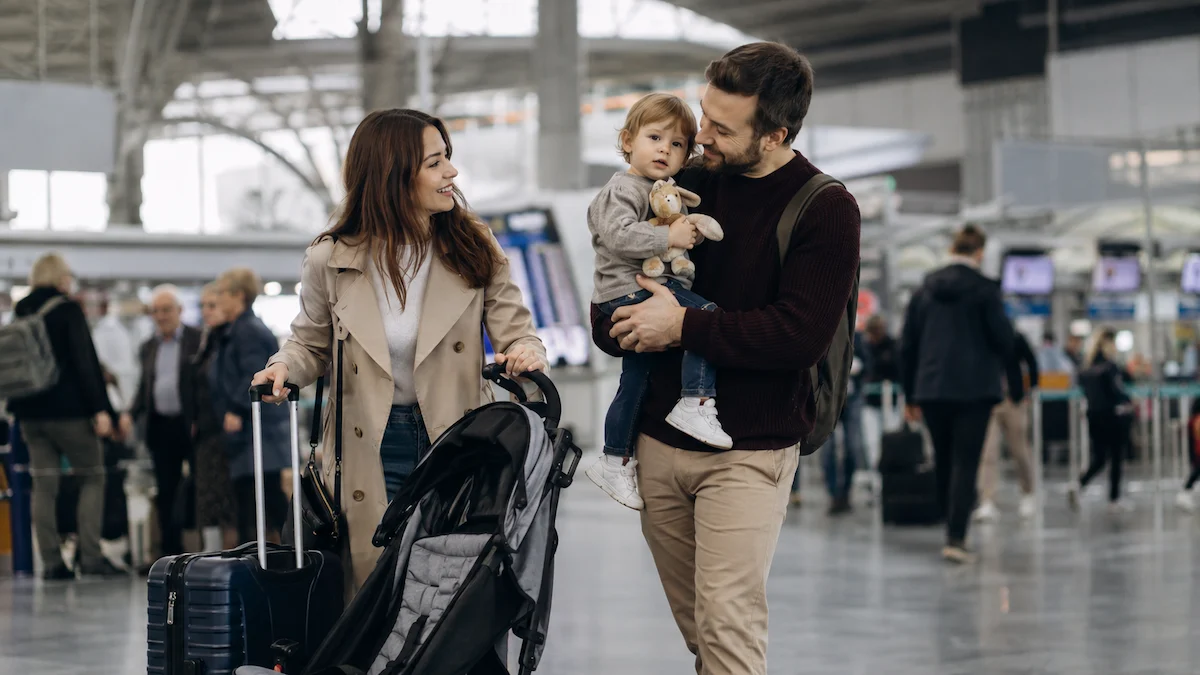

We travel often; our kids started travelling long distances when they were just 40 days old. I still remember standing in an airport security queue with a screaming toddler, a nearly empty snack bag, and a carrier bag I had somehow never used until that exact moment. Nothing on my packing list had prepared me for that.
Traveling with toddlers is rarely about forgetting things. It is about packing the wrong things well and the right things badly. A trip can survive a forgotten toy. It rarely survives a missing nappy bag buried at the bottom of a suitcase.
Traveling with toddlers rewards preparation more than almost any other stage of parenting travel. Babies mostly sleep through a lot of it. Older kids can carry their own bag and follow instructions. Toddlers sit in between, mobile enough to cause chaos and too young to reason with mid meltdown.
Table of Contents
What Should You Pack When Traveling With Toddlers
When traveling with toddlers, pack nappies or pull ups, wipes, spare clothes, familiar snacks, any medicine your child needs, a comfort item, entertainment, and your travel documents. Keep everything you might need during the journey itself in one easy to reach bag, rather than buried in checked luggage.
The exact list changes with your child’s age, toilet training stage, and how you are travelling. A short car trip needs far less than a long haul flight.
How to Start Planning Before You Pack a Single Bag
Good trips start with thinking through the journey itself, not the suitcase. How long will you actually be travelling? How many changes or connections are there? Will you have easy access to food and toilets along the way?
A toddler who confidently uses the toilet at home may suddenly need several emergency stops on a long car journey. A child who rarely naps might fall asleep somewhere inconvenient and wake up furious when you have to move them.
Documents deserve early attention too. Keep passports, travel insurance details, and any prescriptions together in one pouch, with a digital backup as well as the paper copies.
GOV.UK’s foreign travel checklist is a useful general starting point if you are travelling internationally and want to make sure nothing has been missed.
We used to take a handbag as a hand luggage so we can keep essential things beside us including a few nappies and clothes.
How to Sort Your Packing Into Three Simple Groups
Rather than one long list, it helps to split packing into three categories. Things your toddler might need during the journey itself, things they need once you arrive, and things that would be genuinely difficult to replace.
That distinction alone prevents one of the most common travel mistakes, an essential item sitting in the wrong bag exactly when you need it most. We make sure to pack urgent and non-urgent things separately which reduces more chaos while traveling.
If you forget a toy, the trip survives. If you forget essential medication or the correct child restraint, that is a very different problem.
What to Keep in Your Toddler’s Travel Bag
Your toddler’s travel bag should never be buried underneath everything else. You want to reach it in a car, at a gate, or on a platform without unpacking half your luggage.
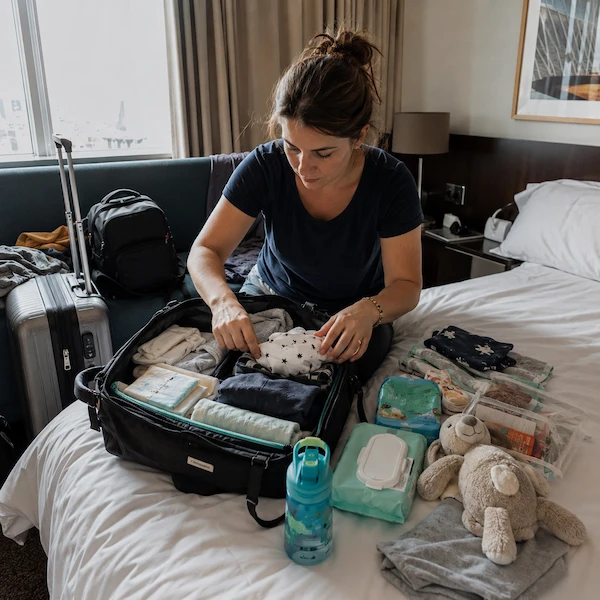
A practical bag usually needs nappies or pull ups, wipes, a couple of complete changes of clothes, snacks, a spill proof cup, a comfort item, a small toy or two, and any medication your child needs.
Spare clothes deserve extra thought. Do not pack only a spare top, since a spill, a nappy leak, or a toilet accident can affect trousers and socks too. Packing each full outfit into its own small bag means you can grab one bundle instead of searching through everything when something happens.
It is also worth packing a spare outfit for yourself, since parents often prepare for the toddler’s mess and forget who usually ends up holding them when it happens. We used to keep a separate bag our spare clothes even if the travel short distance.
How to Pack Food and Snacks That Actually Get Eaten
Toddlers can become surprisingly particular about food when they are tired, so familiar snacks matter more than exciting ones on travel days.
Simple options like crackers, dried fruit, a favourite pouch, or a squashed snack from home tend to work far better than something new bought at the last minute. Pack more than you think you will need, since delays happen and an unused snack is a far smaller problem than a hungry, tired toddler with nothing familiar to eat.
Avoid introducing new foods on travel days specifically. There is already enough unfamiliar going on without adding food to the list.
Most of the times we prepare lunch from home and have breakfast at home before leaving. So, the kids sleep peacefully inside the car until we reach our destination.
How to Pack Entertainment Without Overpacking Toys
A toddler does not need a full toy box for one journey. Too many choices at once can actually make entertainment less effective, not more.
A better approach is a small handful of items introduced gradually, rather than all at once. A board book, a sticker book, chunky crayons, and one familiar toy usually cover more ground than a bag full of options.
Our daughter used to look through a storybook, spending time examining the pictures. It really helped her stay calm while traveling.
Keeping a couple of items hidden until boredom sets in works well too. A toy that has not been seen for two hours can feel new again. If you are using a tablet, download everything before you leave, since relying on a connection working perfectly on travel day is rarely a safe bet.
And do not forget the charger. A tablet on three percent battery is not entertainment, it is a countdown to a meltdown. Sometimes, we take power bank to handle unavoidable power outrage situations.
How to Choose Travel Gear Without Buying Too Much
Before buying any new travel gear, it is worth asking whether it solves a problem you genuinely expect to have, rather than one that just sounds plausible in a shop.
Our baby gear checklist covers this same instinct in more depth, but the short version applies here too. A lightweight stroller suits airports and tired toddlers well, while a carrier often works better for stairs, crowded platforms, or uneven ground. Most families do not need both for one trip.
If your accommodation can provide a cot or highchair, it is worth asking before you pack your own. Renting or borrowing bulky items at your destination is often genuinely cheaper than transporting them, especially if your budget for the trip is already tight.
Think about the return journey too, since gear that felt manageable when your luggage was empty can feel very different once it is full of clothes and souvenirs.
How to Keep Your Toddler Safe in the Car
Car safety is not just another item on the packing list. Your child needs an appropriately sized restraint, correctly fitted, and used exactly as the manufacturer instructs.
Never use a car seat that has been in a crash, even if it looks undamaged. If you are hiring a car at your destination, do not assume the seat provided will automatically suit your child. Check its condition and fit before accepting it, and practise installing your own seat at home if you are bringing one, rather than discovering a fitting problem in an unfamiliar car park.
For longer drives, plan regular breaks. A toddler who has been strapped in for hours often needs to move, eat, and use the toilet before the next stretch. We used to take a small break after one hour continuous drive.
Do not add unofficial cushions or head supports simply because they look more comfortable. Some accessories can change how a restraint performs if you are ever in a collision, so it is worth sticking to what the manufacturer actually recommends.
How to Get Through a Flight While Traveling with Toddlers
Flying with a toddler is often less about constant entertainment and more about managing several small problems before they build up.
Offering a drink during take off and landing can help some toddlers with the change in air pressure. Keeping your hand luggage organised into clear sections, food in one, changing supplies in another, entertainment in a third, saves a lot of fumbling later.
During our elder daughter’s first flight, when she was four and a half months old, she started crying during takeoff. A flight attendant advised me to feed her. After that, I made sure to feed her during every takeoff and landing so she wouldn’t cry.
Pack more nappies, wipes, and spare clothing than you think the flight will need. Delays and missed connections can turn a short journey into a much longer one without warning.
If your toddler is toilet training, pack extra underwear even if things have been going smoothly at home. Travel disrupts routines, and accidents during this stage are common, not a sign anything has gone wrong.
If flying is the main part of your trip rather than just one leg of it, our flying with a baby or toddler guide goes much deeper into flight timing, bassinets, lap infant versus a separate seat, and getting through airport security.
How to Protect Sleep and Naps While Traveling with Toddlers
Sleep is often the first routine to fall apart once you start travelling, and you cannot always recreate home exactly, but a few familiar touches help.
Bringing the same comfort item your toddler normally sleeps with can make an unfamiliar room feel a little less strange. If your child still naps, think realistically about where that nap will actually happen, rather than assuming a busy airport or car will work the same way a quiet bedroom does.
Our family routines guide covers how much daily structure shifts once a baby or toddler is in the picture, and travel tends to compress that same disruption into just a few days instead of spreading it out.
Being flexible with the schedule, rather than protecting a perfect nap at all costs, usually leads to a calmer trip overall.
Short naps are still worth something. A fifteen minute doze in a car seat will not fully replace a proper nap, but it usually takes the edge off enough to get through the next few hours without a complete meltdown.
How to Handle Toilet Training on the Road
Toilet training can make travel feel more complicated, but a bit of preparation removes most of the stress.
Always have a rough idea of where the next toilet is, whether you are in an airport, a station, or a shopping centre. Carrying spare underwear and trousers in your day bag, along with a small waterproof bag for anything wet, covers most situations.
Do not rely on your toddler to reliably tell you when they need to go. Excitement and unfamiliar surroundings can throw off even a toddler who manages well at home.
Keeping expectations realistic matters too. A holiday is rarely the moment to push hard on toilet training progress.
How to Settle In Quickly Once You Arrive While Traveling with Toddlers
The best accommodation is not necessarily the one with the nicest photos. Practical details matter more once you are actually there with a toddler.
Is there a kitchen, a washing machine, a separate sleeping area? Are there stairs, a balcony, or anything else worth a quick safety check on arrival? A beautiful apartment with an open staircase can be far less relaxing than a simpler place where you are not watching every step your toddler takes.
Packing one small first night bag makes arrival noticeably smoother too. Pyjamas, a nappy or two, a toothbrush, one change of clothes, and a comfort item, all in one bag, means you are not emptying every suitcase onto the floor at midnight looking for a toothbrush.
What to Leave at Home
One of the most common mistakes is packing for every possible scenario rather than the ones actually likely to happen.
You probably do not need six outfits for a three day trip, or every toy your toddler owns. Before adding something to the suitcase, it is worth asking a simple question. Will this genuinely get used enough to justify carrying it?
If the honest answer is no, it is usually fine to buy, borrow, or simply go without for the length of the trip.
Common Mistakes Parents Make When Traveling With Toddlers
Packing too much clothing is one of the most common mistakes, especially when laundry is actually available at your destination.
Putting essentials like nappies, medicine, and spare outfits into checked luggage rather than a carry bag is another, since these are exactly the things you need quick access to.
Relying on a single form of entertainment is a quieter mistake. Batteries die and favourite toys mysteriously vanish under seats, so a couple of simple backups are worth having.
Scheduling every hour of a holiday is a trap too. Toddlers need breaks built in, and one missed nap can knock a tightly planned day sideways fast.
Buying new gear without checking it fits your actual trip is another quiet mistake. A travel cot, stroller, or organiser is only useful if it genuinely suits your vehicle, your airline’s rules, and your child’s size, not just how good it looked online.
We bought clothes, shoes, a carrier bag, and other items that we never ended up using on any trip. It makes you realize how important it is to think twice before buying ‘travel essentials’ recommended by influencers.
Forgetting the return journey is easy to overlook too. Leave a little spare room in the luggage, since the trip home still needs nappies, snacks, and clean clothes, even once the suitcase is already fuller than it was on the way out.
Most of these mistakes share the same root cause. They come from planning for the version of traveling with toddlers you imagine, rather than the one you are actually likely to have.
Final Thoughts
Traveling with toddlers gets easier once you stop trying to prevent every possible problem and start preparing for the handful that are actually likely to happen.
Pack accessible snacks, spare clothes, comfort items, and anything genuinely hard to replace. Check car seat safety, protect naps where you reasonably can, and give yourself far more time than you would without a toddler in tow.
Most importantly, leave room for the day to go sideways occasionally. A good family trip does not need a perfectly behaved toddler or a flawless schedule. It just needs enough preparation that the messy, tired moments do not derail the whole thing.
Frequently Asked Questions
What is the most important thing to pack when traveling with a toddler?
The things that would be genuinely hard to replace matter most, like medication, a suitable child restraint, and travel documents. Everything else is manageable if it gets left behind.
How many outfits should I pack for a toddler?
One outfit per day plus two or three spares is a reasonable starting point, more if your toddler is toilet training or prone to spills.
Should I bring a stroller or a carrier?
It depends on where you are actually going. A stroller suits airports and long walks well, while a carrier tends to work better on stairs or crowded, uneven ground.
Is it normal for sleep to fall apart while travelling?
Yes, this is extremely common. Keeping familiar comfort items and staying flexible about timing usually helps more than trying to protect a perfect nap schedule.
Should I bring my own car seat when travelling?
If you are travelling by car, yes, since it gives you confidence in the seat’s condition and fit. Just check any transport specific rules before you travel with it.
How do I stop a toddler from getting bored on a long journey?
Introduce a small number of toys gradually rather than all at once, and keep a couple in reserve for when boredom genuinely sets in.
Is traveling with toddlers ever actually enjoyable, or just survivable?
Genuinely enjoyable, once expectations are realistic. Most of the stress comes from expecting the trip to run like it did before children, rather than planning around how travel with a toddler actually goes.