

What Are the Best Family Routines for Busy Parents
The best family routines are simple habits repeated in the same order every day. Preparing the night before, following a consistent morning sequence, planning meals weekly, and giving children age appropriate jobs all reduce daily decisions and save real time for busy parents.
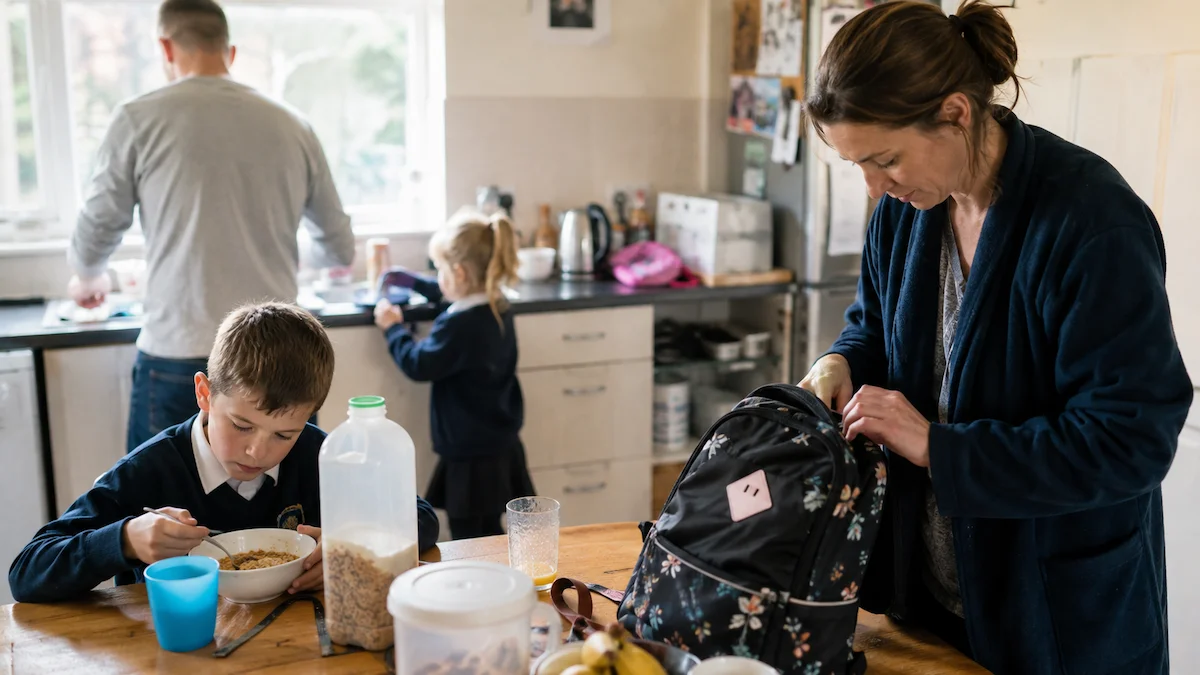
Every parent has had one of those mornings. Someone cannot find their shoes, breakfast gets eaten standing up, and the school bag is still not packed five minutes before you need to leave.
By the end of the day, you are left wondering where all your time actually went. The honest answer is usually not that you are bad at managing time. It is that you do not have routines yet.
A good routine does not mean scheduling every minute of the day. It means removing the hundreds of small decisions that quietly drain your energy, so mornings feel calmer and evenings do not spiral into chaos.
Table of Contents
Why Busy Families Feel Constantly Behind
Most parents are not actually short on time. They are short on structure, and the difference matters more than it sounds.
Think about how many small questions get asked in a single morning. Where are your shoes? Did you brush your teeth? Have you packed your lunch? Each one takes a minute, but together they steal far more than that.
This is often called decision fatigue. Every choice, however small, uses up a bit of mental energy, and by the afternoon there is less of it left for the things that actually matter.
A routine fixes this by removing the choice entirely. Once a sequence becomes familiar, nobody has to think about what comes next, including you. Initially we were like that but eventually we built a routine which reduced a lot of pressure.
There is also a wider benefit beyond your own energy. The American Academy of Pediatrics has written about why predictable routines support children specifically, not just the parents running them, since knowing what happens next tends to help kids feel more secure too.
Where Your Family’s Time Actually Goes Each Day
Most families do not lose big chunks of time all at once. They lose a few minutes over and over, and it adds up fast across a week.
Searching for lost items is one of the biggest culprits. Shoes, school bags, keys, water bottles, and homework all seem to vanish at the worst possible moment.
Repeating the same instructions is another quiet time drain. Saying “brush your teeth” or “get your bag” every single day, without a routine backing it up, means you become the reminder system instead of the routine.
Deciding what to cook at the last minute is a smaller but very real drain too. It sounds like a two minute decision, but after a long day it often feels like the hardest part of the evening.
Grouping similar tasks together tends to work better than switching between them constantly. Packing tomorrow’s lunches right after dinner, while the kitchen is already out, takes far less time than doing it separately an hour later.
How to Build a Routine That Actually Lasts
The biggest reason routines fail is that parents try to change everything at once. A new morning routine, a new meal plan, and a new bedtime routine all start on the same Monday, and by Thursday none of it survives.
To be honest we have started many routines at the same time out of curiosity but everything failed unexpectedly.
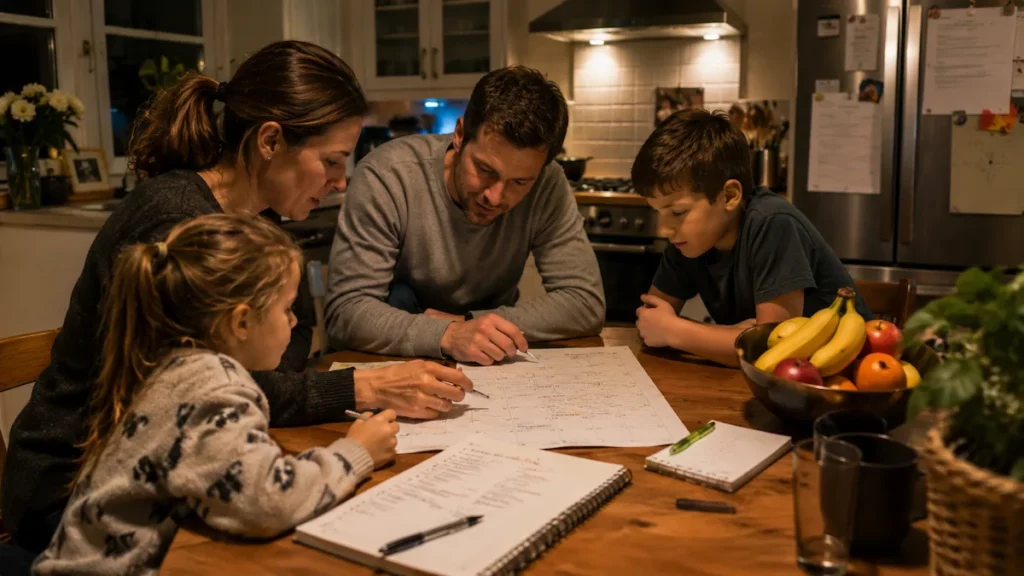
A routine that lasts is simple enough that a tired parent, or a tired child, can still follow it without thinking too hard. If it needs a chart, a timer, and constant supervision, it will not hold up on a genuinely busy day.
It also needs to be consistent rather than perfect. Missing a day does not undo the routine. Picking it back up the next day is what actually matters.
Every family is different too, and a routine copied exactly from someone else rarely fits. Shift work, multiple kids, and different ages all change what realistically works for your household.
Therefore, you must come up with your own routines rather than copying others because you are the expert when it comes to your own household.
How to Set Up an Evening Routine That Makes Mornings Easier
Most parents try to fix mornings first. Experienced parents usually fix the evening before instead, since most morning chaos actually starts the night before.
A short evening routine covering the basics makes a bigger difference than it sounds. Laying out tomorrow’s clothes, packing bags, prepping lunches, and putting keys and shoes by the door all remove decisions from the morning entirely.
Our first time parent guide covers why the early weeks feel especially chaotic, but this evening prep habit genuinely helps at every stage, not just with a newborn.
It can feel like extra work at the end of a long day, but most parents find the evening feels calmer once everyone already knows what tomorrow needs from them.
How to Run a Morning Routine Without the Nagging
A morning routine works best when it happens in the same order every single day, since the order is what actually removes the need for reminders.
A simple sequence like waking up, getting dressed, eating breakfast, brushing teeth, packing the bag, and putting on shoes covers most of what a morning needs. The exact timing matters far less than the order staying the same.
For younger children, a simple picture chart on the fridge can do a lot of the reminding for you, since they can check it themselves instead of waiting to be told.
Have you thought why fridge? because that is the first place most kids go soon after waking up including mine.
Once the sequence becomes familiar, most parents notice fewer arguments and a lot less rushing, simply because nobody is guessing what happens next.
Consistent wake up times help too, even on days without anywhere to be. The NHS has guidance on children’s sleep that touches on why regular timing, not just a good bedtime routine, makes mornings noticeably easier across the board.
How to Plan Family Meals Without the Nightly Decision
Deciding what to cook every single evening is a small decision that somehow always feels exhausting by the time it needs making. Planning once a week removes it completely.
I used to plan tomorrow’s meal today night which has helped me to reduce rush and tensions.
Choosing seven or so meals you already know your family enjoys, and rotating them, works better than trying to plan something new every night. The goal is not variety. It is not having to decide at all.
Cooking a bit extra whenever you are already cooking helps too. A double batch of pasta sauce or an extra portion of chilli becomes tomorrow’s lunch or a future dinner without any real extra effort.
Keeping a short list of meals that take fifteen minutes or less is worth having ready for the evenings that genuinely fall apart, since it removes the temptation to order takeaway purely out of exhaustion.
A few reliable options, like beans on toast, an omelette, or pasta with a jar of sauce, are enough. Nobody needs a fancy answer to “what’s for dinner” on a night when everything else has already gone wrong.
How to Hand Age Appropriate Jobs to Your Kids
Many parents keep doing tasks their kids are actually capable of learning, usually because it feels faster in the moment. It often is, at first, which is exactly why the habit sticks around longer than it should.
Toddlers can usually manage putting toys in a basket or carrying a plastic plate to the sink. It will not be fast or tidy to begin with, and that is fine.
My elder kid was able to do many simple tasks when she was around two years, it is not a burden she did it willingly; thanks to my husband he was the one who taught and developed many amazing habits when it comes to our children.
Preschool aged children can often pack a simple snack, help set the table, or put dirty clothes in the laundry basket. Around school age, most kids can pack their own bag, empty a dishwasher, or fold simple laundry.
Our baby gear checklist touches on how quickly needs change stage to stage, and the same is true here. A job that felt impossible for your child six months ago is often something they can just do now.
The first few attempts always take longer than doing it yourself. Within a few weeks, most of these jobs stop being something you have to think about at all.
Older kids, roughly ten and up, can usually take on more, like vacuuming a room, preparing a simple meal, or helping a younger sibling through their own routine.
A useful rule of thumb is that if a child can do a task safely, it is worth letting them learn it, even if the first few tries are slow.
How to Stop Laundry and School Items From Taking Over
Laundry rarely feels finished because it tends to get dealt with all at once instead of spread out. Assigning it to specific days, like uniforms on Monday and towels on Wednesday, keeps the piles from building into something overwhelming.
Earlier most of the times we did our laundry on weekends and it was really time consuming.
Folding straight after drying, rather than leaving it in the basket, prevents clean washing from quietly turning into new clutter.
School items cause a similar kind of stress when they do not have a fixed home. One spot near the door, used for bags, shoes, water bottles, and anything else needed for tomorrow, means nobody is searching for anything five minutes before you need to leave.
We have clearly assigned place for everything so everyone knows where to find it if they want something.
How to Run a Simple Weekly Family Planning Session
A short weekly check in, even just ten minutes, prevents most of the forgotten appointments and last minute surprises that throw a week off course.
Going over school events, work commitments, appointments, and who is doing the school run, all in one sitting, means everyone starts the week with the same picture instead of piecing it together as it goes.
Writing it somewhere everyone can see, whether that is a shared calendar or a whiteboard on the fridge, matters more than which tool you actually use.
Shopping benefits from the same approach. A list organised by the layout of your usual shop, rather than written randomly, cuts down on the walking back and forth that eats more time than people expect.
It does not need to feel formal. Ten minutes over a cup of tea on a Sunday evening, covering what is coming up and what needs buying, is enough to stop a busy week from unravelling by Wednesday.
How to Manage Screens Without a Daily Fight
Screens are not the enemy, but unstructured screen time has a habit of quietly eating into routines without anyone noticing.
Holding off on screens until morning tasks are done, rather than banning them outright, tends to cause far fewer arguments than an all or nothing approach.
Common Mistakes That Stop Family Routines Working
Trying to overhaul everything at once is the most common mistake. Pick the part of the day causing the most stress, usually mornings or bedtime, and start there instead.
Expecting the routine to run perfectly every day is another trap. Illness, late meetings, and simply tired kids will disrupt it regularly, and that does not mean it has failed.
Making the routine too complicated is a quieter mistake. A list with twelve steps is much harder for a child, or a tired parent, to actually follow than one with five.
Doing every task yourself instead of slowly handing pieces to your kids is a mistake that costs more time in the long run than it saves in the moment.
How to Reset Your Routine After Holidays or Illness
Every family loses their routine occasionally. School holidays, travel, a stomach bug that wipes out the whole house, all of it knocks things off track, and that is completely normal.
The mistake is trying to restart everything on the same day. Bringing back wake up and bedtime first, then breakfast and morning steps a day or two later, and meal planning after that, tends to stick far better than trying to force it all back at once.
Most families feel settled again within about a week of gently rebuilding, rather than demanding everything snap back into place overnight.
Signs Your Routine Is Actually Working
The change is usually gradual rather than dramatic, so it helps to know what to look for. Fewer reminders needed, calmer mornings, and school items rarely going missing are all good signs.
The biggest shift often is not extra free time. It is simply feeling less mentally exhausted by the end of the day, because so much of it no longer needs active thought.
Final Thoughts
Busy parents do not need to become more productive. They need fewer small decisions to make every single day, and that is exactly what a good routine removes.
Start with one part of the day, not all of them at once. Let it feel natural before adding the next piece.
Over time, those small repeated habits add up to something bigger than saved minutes. They add up to a home that feels calmer, for you and for your kids.
Frequently Asked Questions
What is the best routine to start with if I am overwhelmed?
Start with the evening routine. It has the biggest knock on effect for how the next morning feels, and it is usually the easiest one to build first.
How long does it take for a routine to actually stick?
Most families notice it becoming automatic after a few consistent weeks, though younger children sometimes take a little longer than older ones.
Should weekends follow the same routine as weekdays?
Not exactly the same, but keeping similar wake up times and a loose bedtime routine makes Monday mornings noticeably easier.
What if my partner and I work different shifts?
Focus on keeping the same order of tasks rather than the same exact times. Children tend to respond well to a familiar sequence even when the clock changes.
Are routines still useful for older kids and teenagers?
Yes, though they usually need more flexibility and input into what the routine actually looks like, rather than having it set entirely by a parent.
With kids, I’ve seen firsthand how the little things, like a missed lunch or a lost school shoe, can quickly turn a morning stressful. I especially liked the reminder about prepping the night before, that alone seems like it could save us a lot of headaches.
One thing I’m wondering is: in your experience, which change tends to make the biggest difference for busy families, comfort things like a shared calendar and reminder apps, or practical habits like meal planning and a proper laundry schedule?
Hi Alice,
That’s a great question! In my experience, practical habits like meal planning and a proper laundry schedule make the biggest difference, because they help avoid stress and last minute scrambling. Calendars and reminder apps are helpful too, especially for keeping everyone on the same page. The best approach is a mix of both, but the practical habits are what actually save the most time. Thank you very much for your valuable feedback.
Very useful.thankyou
Thank you very much for your feedback.
Hello, I was trying to find your social media and found this instead. This is very good to find, especially because I could use this article to finally get our mornings under control. Good work here.
Hi Michael,
Thank you very much for your valuable feedback. Good luck getting your mornings sorted!