
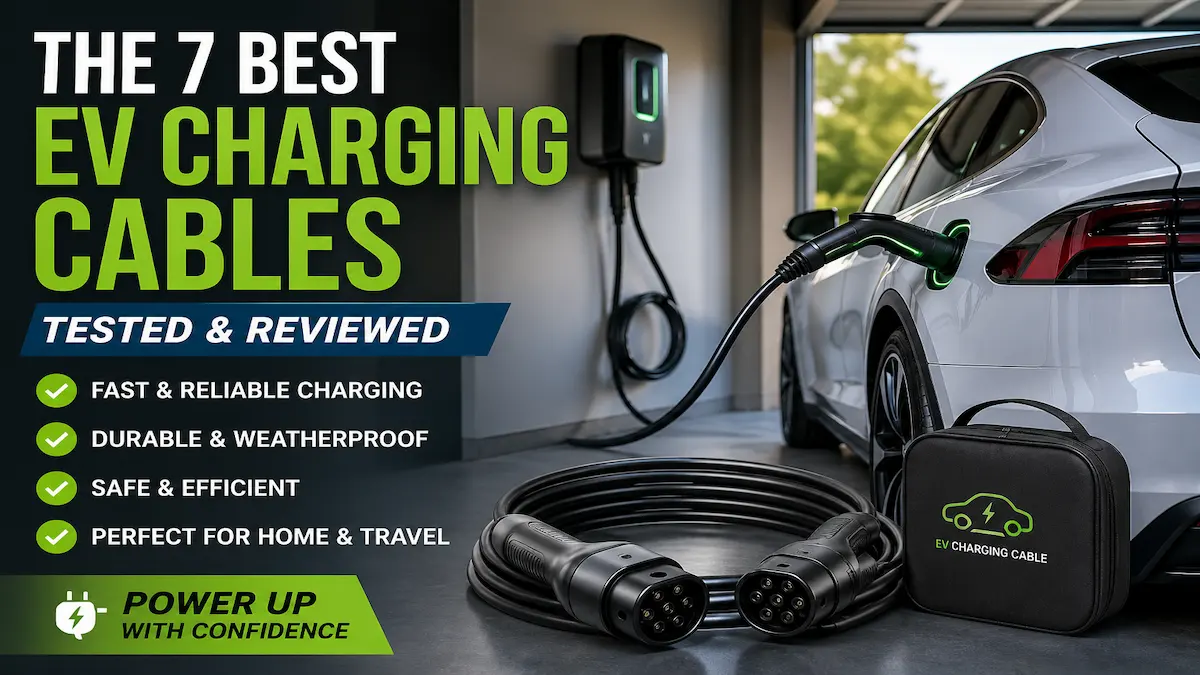

TL;DR: What is a Best EV Charging Cable?
The best EV charging cables combine safety certifications, durable construction, weather resistance, and compatibility with your vehicle’s charging system. A high-quality charging cable improves charging reliability, reduces overheating risks, withstands daily use, and can last for years, while low-quality alternatives may cause charging interruptions, premature wear, or safety concerns.
In workshop environments, electrical accessories frequently fail not because they lacked impressive specifications on paper but because they were not built to withstand real-world use. Repeated bending, exposure to moisture, heat cycling, and connector wear gradually take their toll.
Many EV owners discover that a cheaper charging cable may work perfectly for the first few months before reliability issues begin to appear.
This guide takes a different approach. Rather than focusing solely on specifications, we will look at real-world ownership factors including durability, weather resistance, ease of use, maintenance, common mistakes, and long-term value.
Investing in a well-built cable often saves money by reducing replacement costs and preventing charging problems.
What’s Inside? (Quick Glance)
Why the Best EV Charging Cables Actually Matter
A customer came in with intermittent charging faults on his EV. The car was fine. The Most EV buyers spend weeks researching vehicles, batteries, charging stations, and driving range. Yet many spend only a few minutes choosing the charging cable that will be used almost every day. That can be an expensive mistake.
A charging cable is one of the most heavily used components in any EV charging setup. It is repeatedly connected and disconnected, exposed to rain and sunlight, dragged across driveways, coiled for storage, and expected to safely transfer significant amounts of electricity for years.
When charging problems occur, owners often blame the vehicle or charging station first. However, cable-related issues are surprisingly common. Damaged insulation, worn connectors, overheating pins, internal conductor failures, and moisture ingress can all create charging interruptions that are difficult to diagnose.
The deeper problem most drivers are trying to solve is reliability. Nobody wants to walk outside before work, discover their EV did not charge overnight, and spend the morning troubleshooting equipment.
That is why choosing the best EV charging cable is not simply about convenience. It is about confidence that your vehicle will charge safely and consistently whenever you need it.
What to Know About EV Charging Cables
Before comparing products, it helps to understand the basics. Many first-time EV owners assume all charging cables are essentially the same. They are not.
Small differences in cable design can significantly affect charging reliability, safety, convenience, and lifespan.
Connector Types
One of the first things to check is connector compatibility. Depending on your vehicle and region, you may encounter several charging standards. Type 2 connectors are common across many modern EVs and public charging networks.
Tesla vehicles may use Tesla-specific connectors or approved adapters depending on the market. Some older vehicles may use different charging standards altogether.
Before purchasing a charging cable, always verify:
- Vehicle charging port type
- Charger connector type
- Maximum charging capacity
- Adapter requirements
A high-quality cable is useless if it does not fit your vehicle correctly.
Charging Speed Myths
Many buyers assume that purchasing a higher-rated cable automatically increases charging speed. Unfortunately, it is not that simple.
Charging speed depends on multiple factors including:
- Vehicle onboard charger
- Charging station output
- Battery temperature
- Charging cable rating
The cable can only support the charging process. It cannot force your vehicle to charge faster than its design allows.
For example, if your EV is limited to 7 kW AC charging, purchasing a cable capable of supporting much higher power levels will not suddenly improve charging speed. Understanding this helps avoid overspending on capabilities you may never use.
Why Cable Length Matters
Cable length often seems like a minor detail until the first charging session. Many owners discover that the cable barely reaches the charging port depending on how the vehicle is parked.
A slightly longer cable provides flexibility and convenience, particularly in households where multiple vehicles share charging equipment.
For most home charging setups, a cable between six and eight metres provides a practical balance between reach and manageability. Too short becomes frustrating. Excessively long cables can become cumbersome and harder to store.
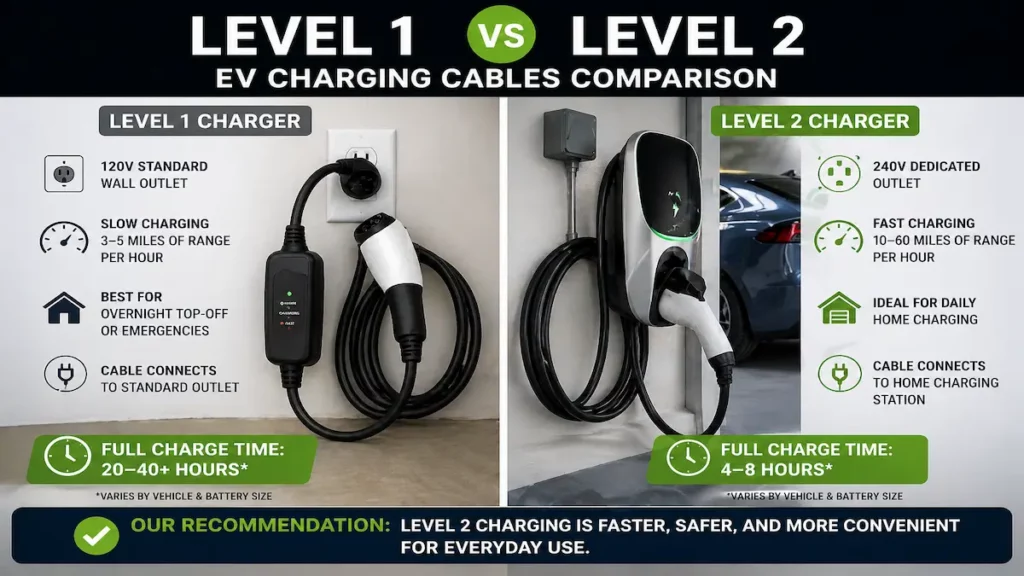
If you’re upgrading your setup, check out this guide:
https://pickyaura.com/car-electronics-and-gadgets/car-tech-gadgets/ It covers practical upgrades that actually improve your daily driving.
What Makes a High-Quality EV Charging Cable?
Not all charging cables are built to the same standard. Several characteristics separate premium cables from lower-quality alternatives.
Durable Insulation
The outer jacket protects internal conductors from environmental damage. Better cables use thicker, more robust materials that resist cracking, abrasion, UV exposure, and temperature extremes. This becomes particularly important for outdoor charging setups.
Flexible Construction
A cable that remains flexible is easier to handle, store, and use daily. Stiff cables place additional strain on connectors and can become frustrating during colder weather. After handling many electrical components over the years, flexibility is often one of the easiest ways to identify higher-quality construction.
Weather Resistance
Rain, dust, sunlight, and temperature fluctuations gradually degrade charging equipment. Outdoor charging installations benefit significantly from cables specifically designed to withstand harsh environmental conditions.
Safety Certifications
One area that should never be ignored is certification. Recognised safety standards indicate that the product has undergone testing for electrical performance, insulation integrity, and protective systems.
When comparing two similar products, certification should always outweigh small differences in price.
EV Charging Cable Comparison
If you just want the short version before reading the full guide, these are the EV charging cables and portable charging options that stand out most for reliability, compatibility, durability, and long-term value.
| EV Charging Cable / Charger | Best For | Key Strength | Potential Drawback |
|---|---|---|---|
| ChargePoint Home Flex Cable | Best overall for most EV owners | Excellent build quality, strong reliability, weather-resistant design | Costs more than budget options |
| Tesla Mobile Connector | Best for Tesla owners | Seamless Tesla compatibility, portable, easy to store | Best suited to Tesla ecosystem |
| Lectron Portable EV Charger | Best portable option for travel | Flexible charging options for trips and emergencies | Not as heavy-duty as a dedicated home cable |
| Grizzl-E Premium Charging Cable | Best heavy-duty outdoor option | Rugged build, strong cold-weather performance, durable connectors | Bulkier than lighter cables |
| JuiceBox Charging Cable | Best for smart charging setups | Works well with energy monitoring and scheduled charging | Higher upfront cost |
| Mustart Level 2 Charging Cable | Best value for money | Good balance of price and performance | Long-term durability may not match premium brands |
| Duosida Level 2 Charging Cable | Best budget choice | Low entry cost and easy availability | Build quality and long-term lifespan can vary |
Top Rated EV Charging Cables
1. ChargePoint Home Flex Cable: Best Overall EV Charging Cable
For most EV owners, the ChargePoint Home Flex cable is the safest all-round recommendation because it gets the fundamentals right. It is durable, flexible enough for regular use, compatible with a wide range of EV charging setups, and backed by a brand with a strong reputation in home and public charging.
What makes it stand out is that it feels like a product designed for long-term ownership rather than short-term convenience. The connector quality is solid, the cable jacket feels robust without becoming awkward to handle, and it is well suited to drivers who charge at home several times a week. In practical terms, this is the kind of cable you buy when you want to stop thinking about charging equipment and simply trust it to work.
That matters more than many first-time EV owners realise. A charging cable is not something you use once in a while like an emergency accessory. It becomes part of your weekly routine. You are uncoiling it, plugging it in, looping it back onto a hook, leaving it exposed to heat or cold, and expecting it to keep working without fuss. A better-built cable makes that routine easier and usually lasts longer under repeated use.
The Home Flex option also suits drivers who want a premium home setup without stepping into overly specialised commercial-grade equipment. If your main goal is dependable Level 2 charging at home and you would rather buy once than replace a cheaper cable later, this is one of the strongest options in the category.
The main drawback is price. It is not the cheapest route into EV charging, and budget-focused buyers may feel tempted by lower-cost alternatives. But if you view the cable as part of your long-term charging infrastructure rather than a disposable accessory, the extra cost makes more sense.
Why it stands out: dependable daily charging, strong construction, good weather resistance, and the kind of long-term reliability most EV owners actually need.
2. Tesla Mobile Connector: Best Option for Tesla Owners
If you drive a Tesla, the Mobile Connector is one of the easiest recommendations in this guide because it solves a very specific problem well: portable, brand-matched charging without compatibility guesswork.
Tesla owners often have slightly different charging habits from the broader EV market because the ecosystem is more integrated. Many already rely on Tesla home charging hardware or Superchargers, so a portable connector often becomes the backup solution kept in the boot rather than the primary cable used every day. That makes portability, simplicity, and dependable compatibility especially important.
The Tesla Mobile Connector is compact, easy to store, and designed to work smoothly within Tesla’s own system. That sounds obvious, but it matters. One of the most common frustrations with third-party charging accessories is uncertainty around adapters, connector fit, and charging behaviour. Tesla’s own solution removes much of that friction, which is why it remains such a practical choice for Tesla drivers who want something straightforward.
It is especially useful for owners who travel beyond dense charging networks, stay in holiday accommodation, visit family, or simply want a fallback option in the vehicle at all times. Even if you rarely use it, having a portable charging solution available can turn a stressful low-battery situation into a manageable inconvenience.
Where it is slightly less compelling is for non-Tesla households or buyers trying to future-proof around multiple vehicle types. Its value is strongest when you are firmly inside the Tesla ecosystem. If you are likely to switch between brands or need one cable solution for different EVs, a more universal option may be the better long-term fit.
Still, for Tesla owners who want a reliable, compact, no-drama charging companion, it is hard to argue against it.
Why it stands out: seamless Tesla compatibility, compact portability, and excellent peace of mind as a travel or backup charging solution.
3. Lectron Portable EV Charger: Best Portable EV Charging Cable for Travel
The Lectron portable EV charger is the sort of product that makes the most sense once you have already owned an EV for a while and understand where charging gaps can appear in real life. On paper, public charging coverage keeps improving. In practice, there are still plenty of situations where having your own portable charging solution in the car is reassuring.
That is where Lectron earns its place. It is particularly useful for road trips, regional driving, holiday accommodation, visiting friends or family, or any situation where you may need to charge from a non-standard location. Instead of relying entirely on public infrastructure, you have a backup option available if charging plans change.
For some EV owners, this will not be their main home charging cable at all. It will be their “just in case” tool, and that is perfectly fine. In fact, that is one of the smartest ways to think about it. A portable charger does not have to beat a dedicated wall-connected home cable in every area. It simply needs to be reliable, practical, and flexible enough to help when you are away from your normal setup.
What I like about this category in general is that it reduces the feeling of being boxed in by charging infrastructure. New EV owners often worry that every journey needs to be carefully planned around public chargers. Carrying a portable charging cable will not remove that need completely, but it gives you an extra layer of insurance that can make EV ownership feel less restrictive.
The trade-off is that portable charging gear is rarely the most elegant permanent charging solution. If you charge at home every night and want the best possible long-term convenience, a dedicated home cable or fixed charger setup usually makes more sense. But as a travel-focused or backup charging solution, Lectron is one of the more practical options available.
If you are building a full charging setup rather than just replacing a cable, it also makes sense to pair this with a proper home solution. That is why our guide to the best portable EV chargers can be useful alongside this article.
Why it stands out: ideal for travel, emergencies, and flexible charging away from home, especially for drivers who do not want to depend entirely on public chargers.
4. Grizzl-E Premium Charging Cable: Best Heavy-Duty Charging Cable for Outdoor Use
If your EV is parked outside most of the time, or you live in a climate where charging equipment has to deal with rain, heat, dust, or winter cold, durability becomes far more important than it does in a sheltered garage setup. That is where the Grizzl-E Premium charging cable makes a strong case for itself.
This is one of the options in the guide that feels aimed at owners who are less interested in polished lifestyle branding and more interested in rugged dependability. The appeal is simple: it is built to take more abuse than the average cable. That matters if your cable is regularly dragged across a driveway, left exposed to changing weather, or handled with cold hands early in the morning before work.
A cable can look fine when brand new and still become frustrating after a year if it turns stiff in winter, traps dirt around the connector, or starts showing wear around the strain relief points. Heavy-duty cables tend to cost more, but they can be worth it for drivers whose charging conditions are genuinely demanding. In those situations, a bargain cable that needs replacing sooner is not actually a bargain.
The Grizzl-E option makes the most sense for outdoor home charging, multi-driver households where the cable gets used constantly, or owners who simply want a more robust setup from the beginning. It is also a sensible pick for anyone who has already had a cheaper cable deteriorate and does not want to repeat the experience.
The downside is that rugged cables are often bulkier and a little less elegant to handle than lighter alternatives. If your charging setup is indoors, protected, and lightly used, you may not need this level of toughness. But if your environment is hard on charging equipment, this is exactly the kind of upgrade that pays off quietly over time.
Why it stands out: excellent fit for outdoor charging, harsher climates, and owners who value durability over saving a bit upfront.
5. JuiceBox Charging Cable: Best Smart Charging Compatible Option
The JuiceBox charging cable earns its place not because the cable itself is radically different from every other option here, but because it fits neatly into a smarter home charging setup. For EV owners who actively monitor energy usage, schedule charging around electricity tariffs, or want more visibility into their charging habits, that matters.
A lot of EV charging advice focuses on hardware only, but ownership costs are influenced just as much by how and when you charge as by the charger itself. If you are on a time-of-use electricity tariff, for example, charging during off-peak hours can make a noticeable difference over a year. That makes smart charging compatibility more than just a nice feature. In some households, it is part of keeping EV ownership affordable.
JuiceBox-style setups appeal most to drivers who like having control. Being able to schedule charging, monitor energy use, and track patterns through an app turns charging into something more intentional rather than just plugging in and hoping you remember later. That is especially helpful in households with solar systems, variable tariffs, or more than one electric vehicle.
The main thing to understand is that this kind of solution makes the most sense when the wider charging setup can actually benefit from smart features. If your priority is simply getting the most rugged, no-frills cable possible for a basic overnight charge, a different option may offer better value. But if you are building a modern home charging setup where efficiency, monitoring, and charging schedules matter, JuiceBox becomes more attractive.
This is also the type of cable setup that can feel more valuable over time. At first glance it may seem like you are paying extra for features you do not need. Six months later, when you are using off-peak charging and checking energy usage through an app, the value becomes clearer.
Why it stands out: best suited to drivers who want smart scheduling, energy monitoring, and a more optimised home charging routine.
6. Mustart Level 2 Charging Cable: Best Value for Money
The Mustart Level 2 charging cable sits in one of the most important parts of the market because not every EV owner wants to pay premium-brand money for a cable, but they also do not want to gamble on the absolute cheapest option available. That middle ground is where value products either shine or disappoint.
Mustart works because it offers a more accessible price without feeling like a throwaway purchase. It is a sensible option for newer EV owners, second vehicles, or households that want reliable charging performance without immediately stretching to one of the more expensive premium choices. In other words, it is not trying to be the most rugged or the most feature-packed cable in the guide. It is trying to be a practical buy for real owners with real budgets.
That is a worthwhile role, because many EV drivers are still figuring out what their long-term charging routine will actually look like. Someone who has just moved into EV ownership may not yet know whether they need a permanent home charging setup, a portable backup cable, or a more weather-resistant solution. In those cases, a cable like Mustart can be a sensible way to avoid overspending too early.
Where buyers should stay realistic is on long-term durability compared with the top-end options in this guide. Value-focused products can absolutely perform well, but when a product is priced lower than premium competitors, there is usually a reason. It might be less refined materials, less rugged weather resistance, or simply a shorter expected service life under heavy daily use.
That does not make it a poor buy. It just means you should match expectations to the role. For moderate use, sheltered charging, and owners who want a sensible balance of cost and performance, Mustart is one of the more appealing value picks.
Why it stands out: a smart middle-ground choice for buyers who want dependable charging without paying premium prices.
7. Duosida Level 2 Charging Cable: Best Budget EV Charging Cable
Budget charging cables are always tricky to recommend because the wrong cheap electrical accessory can create far more frustration than the money saved is worth. That said, some buyers genuinely need a low-cost solution, and the Duosida Level 2 charging cable is one of the names that regularly comes up in that part of the market.
The appeal is straightforward: lower entry cost. For drivers who need a basic replacement cable, a backup charging option, or a starter solution while they work out a longer-term charging setup, that can be enough to put it on the shortlist. Not every EV owner wants to spend heavily on accessories straight away, particularly if they are already dealing with the cost of the vehicle, home charger installation, or other essentials.
Where budget options become risky is when buyers expect premium-level durability for budget money. That is rarely how it works. In practical use, lower-cost charging cables can be perfectly serviceable for lighter duty, but they may not offer the same flexibility, connector quality, weather resistance, or lifespan as better-built alternatives. If the cable will be used every day outdoors, or if it needs to survive years of heavy handling, this is where premium products start to justify themselves.
Duosida makes the most sense when the budget is tight and the use case is relatively modest. For example, it could work as a temporary charging solution, a spare cable, or a lower-cost option for drivers who charge less frequently and keep the cable in a protected environment. It is less convincing as the cable you want to rely on heavily for the next five years in all conditions.
If you go this route, checking safety certifications, connector compatibility, and seller reputation matters even more than usual. Budget buying only works when you avoid the worst corners of the market.
Why it stands out: one of the more accessible options for budget-focused buyers, provided expectations stay realistic and compatibility is checked carefully.
Drivers interested in building a complete charging setup should also consider our guide to the best portable EV chargers: https://pickyaura.com/ev-accessories-and-tools/best-portable-ev-chargers/
EV Charging Cable Buying Guide: How to Choose EV Charging Cable
The best EV charging cable depends on your vehicle, charging habits, parking arrangement, climate, and long-term expectations. Choosing correctly involves considering several important factors rather than focusing on a single specification.
Match the Cable to Your Vehicle
Compatibility should always be the first consideration. Before purchasing any charging cable, verify:
- Connector type
- Vehicle charging capacity
- Charger output rating
- Regional charging standards
Many return requests occur simply because buyers assume all EV charging cables are universal. They are not. Taking a few minutes to confirm compatibility can prevent significant frustration later.
Consider Your Charging Environment
Where you charge matters almost as much as what you charge. If your vehicle is parked outdoors throughout the year, environmental durability becomes essential. Look for:
- UV-resistant insulation
- Water-resistant connectors
- Robust strain relief
- Flexible cold-weather performance
Drivers charging inside enclosed garages may place less emphasis on weather protection, but outdoor users should prioritise it.
Think About Daily Convenience
The best cable is one that fits naturally into your routine. A slightly longer cable often provides more flexibility when parking positions change.
Similarly, a lightweight and flexible cable is generally easier to handle than a stiff alternative that constantly fights against you.
Convenience may seem minor during the buying process, but it becomes important when you use the cable several times every week.
Common EV Charging Cable Mistakes
Many charging issues are entirely preventable. The following mistakes are among the most common.
Buying Based on Price Alone
Low-cost charging cables can be tempting. However, the cheapest option is not always the most economical long term.
Replacing a failed cable, dealing with charging interruptions, or purchasing a second cable after disappointment often costs more than buying a quality product initially.
Ignoring Future Needs
Some buyers select equipment that only meets their current requirements. If you plan to upgrade vehicles in the future, investing in a slightly more capable charging cable may provide greater long-term value.
Poor Storage Habits
Charging cables are often damaged through improper storage rather than electrical failure. Common mistakes include:
- Tight coiling
- Sharp bends
- Leaving cables exposed to direct sunlight
- Allowing connectors to sit in dirt or standing water
Simple storage practices can significantly extend service life.
Ignoring Early Warning Signs
Many cable failures provide warnings before complete failure occurs. Pay attention to:
- Intermittent charging
- Excessive connector heat
- Visible wear
- Cracked insulation
- Unusual charging interruptions
Addressing issues early can prevent larger problems later.
EV Charging Cable Troubleshooting Guide
One area rarely covered by competing articles is troubleshooting. Yet many EV owners search for charging cables because they are already experiencing problems.
Vehicle Not Charging
If charging suddenly stops, start with the simplest checks first. Inspect the cable for visible damage. Verify all connectors are fully seated. Check whether the charging station is functioning correctly.
If another compatible cable is available, testing with a second cable can quickly identify whether the original cable is the source of the problem.
Charging Starts Then Stops
Intermittent charging often points to:
- Connector wear
- Moisture contamination
- Overheating protection systems
- Damaged internal conductors
Repeated interruptions should never be ignored.
Connector Feels Hot
Some warmth during charging is normal. However, excessive heat is not. If connectors become unusually hot, discontinue use and investigate immediately. Overheating can indicate poor electrical contact, damaged connectors, or internal cable problems.
EV Charging Safety Considerations
Safety should always take priority over convenience. According to the International Electrotechnical Commission (IEC), charging equipment should comply with recognised electrical standards and be used according to manufacturer recommendations.
Similarly, the National Fire Protection Association highlights the importance of maintaining charging equipment and inspecting it regularly for signs of wear. If you notice:
- Burn marks
- Damaged insulation
- Loose connectors
- Excessive heat
- Burning smells
Stop using the cable until the issue is identified. Electrical problems rarely improve on their own.
EV Charging Cable Maintenance Tips
Even the best EV charging cables benefit from basic maintenance. Fortunately, maintenance requirements are simple. Inspect the cable periodically for cuts, abrasions, crushed sections, or exposed wiring.
Pay particular attention to the connectors, as these areas experience the most frequent handling. If charging suddenly becomes intermittent, inspect the cable before assuming the charger or vehicle is at fault.
Keep connectors clean and dry whenever possible. Dust, dirt, and moisture can interfere with reliable electrical contact and may contribute to long-term wear.
When storing the cable, avoid tight loops that place unnecessary strain on the internal conductors. Simple habits like these can significantly extend service life.
Final Thoughts
If there’s one thing I’ve learned working hands-on with vehicles, it’s this; you don’t wanna gamble with charging gear. The best EV charging cables aren’t just about choosing the best EV charging cable is not simply about finding a connector that fits your vehicle.
The right cable improves reliability, enhances safety, reduces ownership costs, and provides confidence that your vehicle will charge whenever you need it.
For most drivers, the ChargePoint Home Flex offers the best overall balance of performance, durability, and long-term value. Tesla owners will appreciate the convenience of the Tesla Mobile Connector, while drivers seeking rugged outdoor durability should consider the Grizzl-E Premium cable.
Frequently Asked Questions
What is the best EV charging cable for home charging?
For most EV owners, the best charging cable combines safety certification, durability, weather resistance, and compatibility with their charging setup. ChargePoint and Grizzl-E products are often regarded as strong options for long-term home charging.
Do all EV charging cables work with every electric vehicle?
No. Connector standards vary between manufacturers and regions. Always verify compatibility before purchasing.
Is a longer EV charging cable better?
A longer cable provides greater flexibility but may be heavier and slightly more difficult to store. Most home users find a 20 to 25-foot cable offers a practical balance.
How long do EV charging cables last?
A quality EV charging cable can last many years when properly maintained. Lifespan depends on usage frequency, environmental exposure, storage habits, and build quality.
Can a damaged charging cable affect charging speed?
Yes. Internal conductor damage, connector wear, or corrosion can contribute to charging interruptions and reduced charging performance.
Are aftermarket EV charging cables safe?
Some are, while others may not meet recognised safety standards. Always choose products from reputable manufacturers with appropriate certifications.
How should EV charging cables be stored?
Store cables loosely coiled in a clean, dry location. Avoid sharp bends, excessive twisting, and prolonged exposure to direct sunlight whenever possible.
It’s very useful
Thank you very much for your thoughts.