
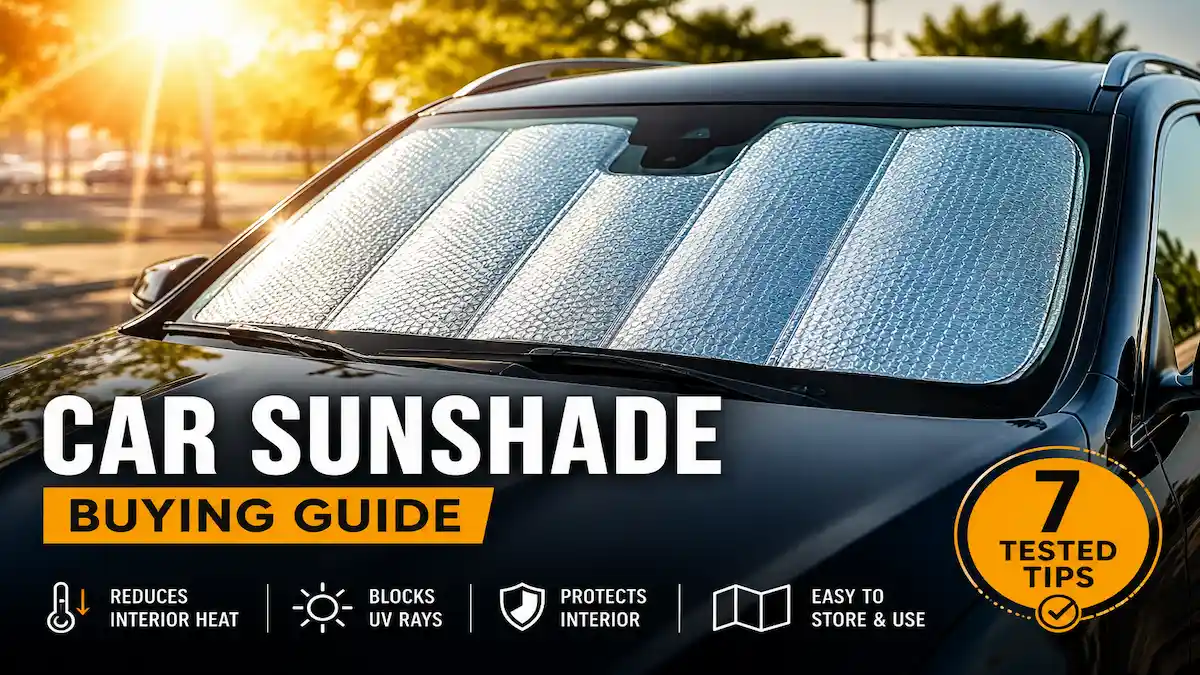

TL;DR: What are the Benefits of Innovative Car Sunshades?
A quality car sunshade helps keep your vehicle cooler by reflecting sunlight before it enters the cabin. The best option fits your windscreen properly, uses reflective multi-layer materials, folds away easily, and provides maximum UV protection. Choosing the right sunshade not only improves comfort but also helps prevent fading, cracking, and heat damage to your vehicle’s interior over time.
If you’ve ever opened your car door after it sat in direct sunlight for hours, you already know how brutal cabin heat can get. Steering wheels become untouchable, seat belts burn your skin, and electronics suffer quietly in the background.
A quality sunshade won’t solve everything, but honestly, it makes a massive difference.
This car sunshade buying guide explains how different designs work, what features are genuinely worth paying for, and how to choose one that suits your driving habits.
Whether you commute daily, park outside at work, or simply want to preserve your car’s interior for years to come, making the right choice now can save money and frustration later.
For readers looking to improve overall cabin protection, you can also read our related guide on car interior protection at Pickyaura and explore practical upgrades that help extend your vehicle’s lifespan.
Table of Contents
Why a Car Sunshade Is More Than Just a Summer Accessory
Most people buy a sunshade because they want a cooler cabin. That’s certainly one of the biggest benefits, but it’s only part of the story.
Modern vehicles contain a surprising amount of plastic, leather, vinyl, rubber, adhesives, and electronic components. All of these materials react differently to constant exposure to heat and UV radiation.
Every hot afternoon spent baking in direct sunlight gradually accelerates wear that might otherwise take years to appear.
In workshop inspections, I’ve seen vehicles of similar age with completely different interior conditions. Often the deciding factor wasn’t mileage or servicing. It was simply how well the owner protected the cabin from prolonged sun exposure.
Cars that were parked outside every day without protection commonly showed faded dashboards, brittle trim pieces, loose headliners, and cracked leather far earlier than expected.
Even if cosmetic damage doesn’t bother you, excessive cabin temperatures can shorten the life of sensitive electronics. Infotainment displays, digital instrument clusters, reversing camera screens, and dashboard adhesives all perform best within normal operating temperatures.
Constant overheating puts additional stress on these components. Using a reflective windshield sunshade won’t eliminate heat completely, but it significantly reduces the amount of solar energy entering the cabin.
That means lower interior temperatures, less UV exposure, and a more comfortable vehicle every time you get behind the wheel.
According to the Cancer Council Australia, ultraviolet radiation remains strong even on days that don’t feel particularly hot, making year-round UV protection important rather than just something to consider during summer.
How Effective Are Car Sunshades
One of the questions drivers ask most often is whether car sunshades genuinely work or if they’re simply another automotive accessory with exaggerated claims. The short answer is yes, provided you choose a quality product that fits correctly.
Research and real-world testing consistently show that reflective windshield sunshades help reduce dashboard temperatures and limit heat build-up inside parked vehicles.
While no sunshade can keep your cabin at outside air temperature, many noticeably reduce the extreme heat that develops after several hours in direct sunlight.
In practical terms, you’ll usually notice several benefits:
- The steering wheel is cooler to hold.
- Dashboard surfaces stay noticeably cooler.
- Leather or fabric seats become more comfortable.
- Air conditioning cools the cabin more quickly.
- Interior materials experience less long-term UV exposure.
One customer whose vehicle I serviced worked as a rideshare driver and regularly parked in open airport waiting areas throughout the day. During summer, his cabin became unbearably hot between trips.
After replacing a thin single-layer shade with a properly sized reflective model, he commented that the difference was obvious after only a few days. The interior still warmed up, but nowhere near the level it had previously.
Small improvements repeated every day can have a significant effect over the lifetime of a vehicle.
How Car Sunshades Work/ How Car Sunshades Reduce Heat Inside Your Vehicle
Understanding how a sunshade works makes it easier to choose one that actually performs well.
When sunlight passes through the windscreen, it enters the cabin as short-wave solar radiation. Interior surfaces absorb this energy and convert it into heat. Because much of that heat becomes trapped inside the vehicle, cabin temperatures continue climbing long after the outside temperature has stabilised.
This process is similar to the greenhouse effect. A reflective windshield sunshade interrupts that cycle by blocking and reflecting a large portion of incoming solar radiation before it reaches your dashboard and seats.
Most quality sunshades achieve this by combining several protective layers, including reflective aluminium surfaces, insulating foam, reinforced backing materials, and UV-resistant coatings.
Together, these layers reduce the amount of heat transferred into the cabin while also limiting direct ultraviolet exposure.
The better the coverage across the entire windscreen, the greater the reduction in cabin temperature. Even small gaps around the edges allow sunlight to enter, which is why choosing the correct size is just as important as selecting quality materials.
It’s also worth remembering that a sunshade works alongside other protective measures rather than replacing them. Parking in shaded areas, slightly venting windows where safe to do so, and applying quality window tint within legal limits all contribute to keeping cabin temperatures lower.
Types of Car Sunshades
Not every windshield sunshade suits every driver. The right choice depends on how often you use it, where you park, and how much protection you expect.
Understanding the strengths and weaknesses of each design makes choosing much easier.
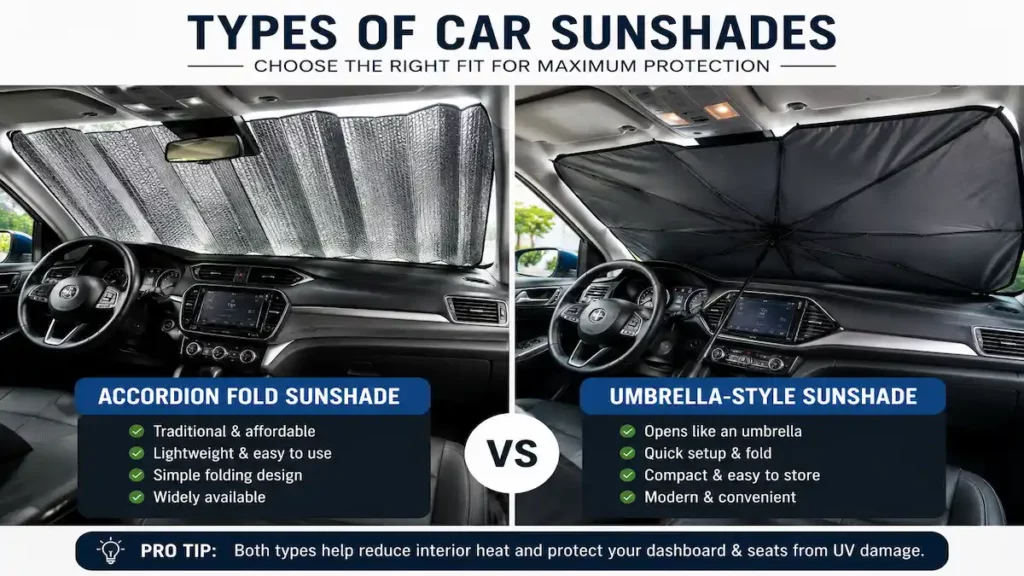
Accordion Fold Sunshades
Accordion-style sunshades have been around for decades and remain one of the most common options available.
They fold flat using reinforced panels, making them affordable and easy to store behind a seat or in the boot. Most are lightweight and available in universal sizes that suit a wide variety of vehicles.
Their biggest advantage is simplicity. There’s very little that can fail mechanically, and they usually cost less than other designs.
The downside is that lower-quality versions tend to lose their shape over time. After repeated folding and exposure to heat, some begin to sag or leave noticeable gaps around the edges of the windscreen. Those gaps reduce overall heat protection and make the shade less effective.
For occasional use or drivers on a tighter budget, however, a well-made accordion sunshade still offers excellent value.
Umbrella-Style Sunshades
Umbrella-style sunshades have become increasingly popular over the past few years, and after testing several models in customer vehicles, it’s easy to understand why.
Instead of folding into panels, they open and close in much the same way as a conventional umbrella. When folded, they occupy very little space and fit neatly into a storage sleeve.
For drivers who park frequently throughout the day, convenience becomes a major advantage. Installation usually takes only a few seconds, making it much more likely that you’ll actually use it every time you leave the vehicle.
One courier whose ute I serviced admitted he’d stopped using his old folding shade because he found it awkward to unfold during busy delivery schedules.
After switching to an umbrella-style design, using it became part of his routine without slowing him down. The easier a product is to use, the more consistently it protects your vehicle.
Custom-Fit Car Sunshades
Custom-fit sunshades are manufactured specifically for individual vehicle makes and models.
Rather than relying on a universal shape, they’re designed around the exact dimensions of your windscreen. This provides much better edge coverage and reduces the gaps where sunlight can enter.
For owners of newer vehicles, premium SUVs, or cars with large digital dashboards, custom-fit shades often provide the highest level of protection.
Although they cost more initially, the improved fit, durability, and thermal performance often justify the extra investment, particularly if your vehicle spends long hours parked outdoors.
Retractable Car Sunshades
Retractable sunshades are permanently mounted inside the vehicle and slide or roll across the windscreen whenever they’re needed. Many drivers like them because they’re always available, eliminating the need to unfold or store a separate accessory.
Their biggest advantage is convenience, especially if you use your vehicle several times a day. However, not all retractable models offer the same level of heat reflection as premium removable sunshades. Some use thinner materials that prioritise ease of use over maximum insulation.
I’ve also seen older retractable units develop sticking mechanisms or loose tracks after years of constant heat exposure. While they’re practical, a removable reflective sunshade generally provides better long-term thermal performance if protecting your interior is the priority.
How to Choose the Right Car Sunshade
Choosing a sunshade isn’t just about finding one that fits your budget. The right product should suit your vehicle, climate, and daily routine.
Many buyers focus only on appearance or price, but those factors rarely determine how well a sunshade performs over several summers. Paying attention to a few key details will help you make a much better decision.
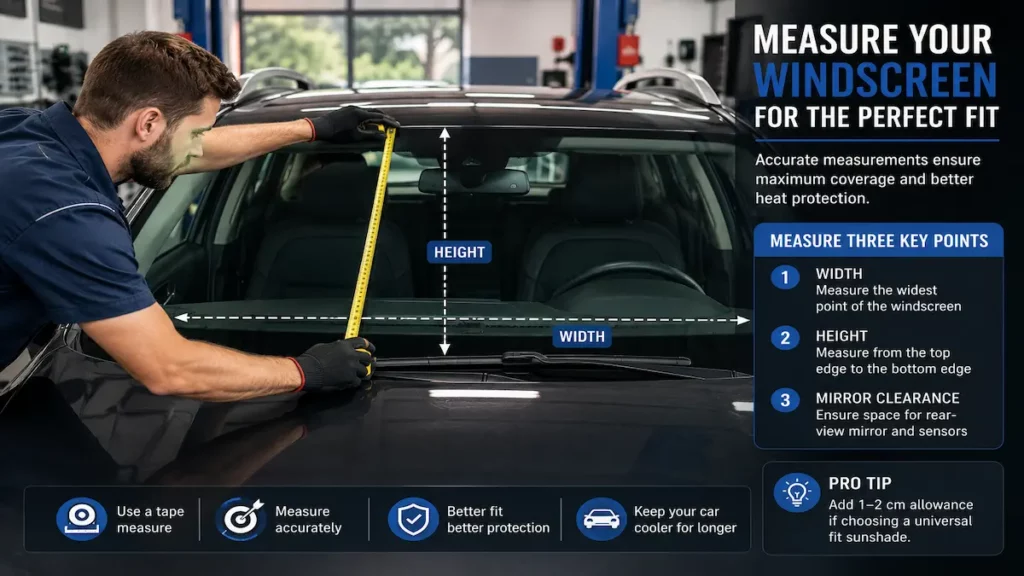
Measure Your Windscreen Before Buying
One of the biggest mistakes drivers make is assuming all “universal fit” sunshades perform equally well.
A shade that’s too narrow leaves gaps around the edges, allowing sunlight to reach your dashboard. If it’s too large, it may buckle, interfere with the rear-view mirror, or fail to sit flat against the glass.
Before ordering, measure:
- Windscreen width
- Windscreen height
- Space around the rear-view mirror
- Shape of the upper windscreen corners
Even a few centimetres can noticeably affect heat protection.
Many vehicle manufacturers produce windscreens with unique curves, particularly on modern SUVs and electric vehicles. Taking a couple of minutes to check measurements can prevent disappointment later.
Choose Multi-Layer Reflective Materials
The material used inside a sunshade has a direct impact on its ability to reduce heat. Single-layer polyester shades may look attractive online, but they often struggle during prolonged exposure to strong sunlight.
Thinner materials absorb heat more quickly and usually wear out faster. For better performance, look for features such as:
- Reflective aluminium outer layers
- Multi-layer insulation
- UV-resistant backing
- Reinforced stitching
- Heat-resistant construction
Over the years, I’ve handled inexpensive sunshades that began peeling after only one summer. Others lost their reflective coating, making them far less effective than when they were new.
Spending a little more on quality materials usually provides better value than replacing a cheap shade every year.
Prioritise Ease of Use
Even the most effective sunshade won’t protect your car if it stays folded in the boot. This sounds obvious, but it’s surprisingly common.
Drivers often buy products that look impressive online, only to stop using them because installation becomes frustrating. If unfolding, positioning, and storing the shade takes too much effort, many people gradually abandon the habit.
That’s one reason umbrella-style sunshades have become so popular. After a long day at work, convenience matters.
If the product can be installed in seconds, you’re much more likely to use it consistently, which ultimately provides better protection for your vehicle.
Consider Where You’ll Store It
Storage is often overlooked until after purchase. Large reflective sunshades designed for SUVs can become awkward inside smaller vehicles. If they don’t fit comfortably behind the seats or inside the boot, they quickly become inconvenient.
Think about your daily routine before choosing a size. Compact folding models are often better suited for:
- Daily commuters
- Small hatchbacks
- Shared family vehicles
- Ride-share drivers
- Delivery drivers
The easier it is to store, the more likely you’ll use it every time you park.
Look Beyond Marketing Claims
Many packaging labels promise “maximum heat protection” or “premium UV defence”, but those claims don’t always reflect real-world performance.
Instead of relying solely on advertising, check whether the manufacturer provides useful information such as:
- UV-blocking capability
- Reflectivity percentage
- Material thickness
- Number of protective layers
- Warranty period
Products that openly explain how they’re constructed generally inspire more confidence than those relying purely on marketing language.
Reading verified customer reviews can also reveal how a sunshade performs after months of regular use rather than during its first week.
Features That Actually Make a Difference in Car Sunshade
Manufacturers often advertise dozens of features, but only a handful genuinely improve day-to-day performance.
Reinforced Edges
Strong edging prevents the material from fraying and helps the shade retain its shape after repeated folding.
This small feature often determines whether a sunshade lasts several years or starts falling apart after one summer.
Double-Sided Reflective Construction
Reflective layers on both sides improve heat rejection and provide more consistent protection when parked for long periods.
They’re especially useful if your vehicle spends the day in open car parks without natural shade.
Durable Folding Mechanism
Whether you choose a folding or umbrella-style design, the opening mechanism should feel solid rather than flimsy.
Weak hinges and thin support frames usually fail first, particularly in hotter climates where plastic components expand and contract regularly.
Lightweight Design
Heavier isn’t always better. A lightweight sunshade is easier to install quickly and less likely to become an inconvenience during daily use.
Drivers who park multiple times each day generally appreciate products that require minimal effort.
Secure Fit Around the Rear-View Mirror
Modern vehicles often include large sensor housings behind the rear-view mirror for driver assistance systems.
A well-designed sunshade should fit neatly around these components without leaving large gaps that allow sunlight to enter.
Common Car Sunshade Buying Mistakes
Many disappointing purchases happen because drivers focus on the wrong things.
Avoiding these common mistakes will help you choose a sunshade you’ll actually be happy with.
Buying Solely on Price
Everyone likes saving money, but extremely cheap sunshades often sacrifice durability. Low-cost products commonly:
- Lose their shape
- Tear around folding points
- Peel reflective coatings
- Provide poor heat insulation
One vehicle I inspected had tiny metallic flakes scattered across the dashboard vents after the owner’s bargain sunshade deteriorated. Cleaning those fragments out wasn’t nearly as simple as replacing the shade.
Ignoring Side Window Protection
The windscreen lets in the largest amount of sunlight, but side windows also contribute significantly to rising cabin temperatures.
If your car spends long hours outdoors, adding removable side window shades can noticeably improve comfort.
Families travelling with young children or pets often find this additional protection especially worthwhile.
Forgetting Local Climate Conditions
Not every driver needs the same level of heat protection. If you live in an area with long, hot summers or regularly park in direct sunlight throughout the day, investing in thicker multi-layer reflective materials makes far more sense than buying the cheapest available option. Climate should always influence your buying decision.
Assuming Every Universal Fit Shade Performs the Same
Universal sizing is convenient, but quality varies enormously. Two products with similar dimensions may perform completely differently because of differences in materials, construction, and overall design. Looking beyond size alone usually leads to a much better purchase.
How to Get the Most from Your Car Sunshade
Buying a good sunshade is only half the job. Using it correctly every time you park makes the biggest difference. Even the highest-quality reflective shade can’t protect your interior if it’s left in the boot on the hottest days.
I’ve noticed that drivers who make using a sunshade part of their daily routine usually have interiors that age much more gracefully. Their dashboards retain their colour, leather stays softer, and plastic trim develops fewer cracks despite years of exposure.
Whenever possible, install the sunshade before leaving the vehicle rather than thinking you’ll do it later. It only takes a few seconds and immediately starts reducing heat build-up.
Parking direction also matters. If shade isn’t available, try parking so the rear of the vehicle faces the sun during the hottest part of the day. This reduces the amount of direct sunlight entering through the windscreen.
Looking After Your Car Sunshade
A well-made sunshade should last several years, but only if it’s looked after properly. Fortunately, maintenance is simple.
Avoid forcing folding mechanisms if the material feels stiff after sitting in extreme heat. Let it cool slightly before folding to reduce stress on hinges and seams.
If the reflective surface becomes dusty, wipe it gently with a soft damp cloth. Avoid abrasive cleaners or harsh chemicals that may damage the reflective coating.
When storing the shade, keep it dry and avoid placing heavy tools or equipment on top of it. Continuous pressure can permanently bend support frames and reduce its ability to sit flat against the windscreen.
It’s also worth inspecting the stitching and edges every few months. Small tears are much easier to repair before they become large enough to affect performance.
Is a Car Sunshade Enough to Protect Your Interior?
A windshield sunshade is one of the best investments you can make, but it works even better when combined with other protective measures.
For maximum interior protection, consider:
- Parking in shaded areas whenever possible.
- Using legal-quality window tint to reduce UV exposure.
- Applying UV protectant to dashboards and plastic trim.
- Conditioning leather seats regularly.
- Using steering wheel and seat covers during extreme summer weather.
Think of your sunshade as part of an overall interior protection strategy rather than a single solution.
Car Sunshade Buying Guide for Different Drivers
The best sunshade depends on how you use your vehicle. A product that’s perfect for one driver may not be the best choice for someone else.
Daily Commuters
If you park at work every day, convenience should be your priority. An umbrella-style sunshade is usually the best option because it opens and closes quickly.
When you’re rushing between appointments or commuting during busy weekdays, you’ll appreciate how little effort it requires.
Families
Family vehicles often spend long periods parked at schools, shopping centres, and sporting events.
Choose a larger multi-layer reflective sunshade that provides excellent windscreen coverage. Adding side window shades can also help keep rear passengers, particularly young children, much more comfortable during summer.
Outdoor Workers
Construction workers, tradespeople, delivery drivers, and anyone whose vehicle sits outside for most of the day should invest in maximum heat protection.
Custom-fit or heavy-duty reflective sunshades generally provide the best long-term value because they’re designed to withstand constant exposure to intense sunlight.
Ride-Share and Taxi Drivers
Professional drivers may park dozens of times throughout the day. Ease of use becomes extremely important, so lightweight umbrella-style models are often the most practical choice.
Saving even a few seconds each stop quickly adds up over the course of a working week.
Owners of New or Luxury Vehicles
Premium interiors contain expensive leather, soft-touch materials, digital displays, and high-quality trim.
A custom-fit sunshade offers superior coverage while maintaining a cleaner appearance. Considering the cost of replacing interior components, the additional investment is usually worthwhile.
Is a More Expensive Car Sunshade Worth Buying?
For many drivers, the answer is yes, but only to a point. The most expensive model isn’t automatically the best, just as the cheapest option rarely offers the greatest value.
Premium sunshades generally provide:
- Better fit
- Stronger materials
- Longer lifespan
- Improved UV protection
- Better heat reduction
- Easier daily operation
From a technician’s perspective, preventative spending usually works out cheaper than repairing heat-related interior damage.
Replacing a cracked dashboard, faded leather upholstery, damaged infotainment screen, or deteriorated trim can cost hundreds or even thousands of pounds or dollars depending on the vehicle.
Compared with those repairs, investing in a quality sunshade is relatively inexpensive. That said, you don’t necessarily need the most premium model available.
A well-built mid-range reflective sunshade from a reputable manufacturer usually delivers the best balance between cost, durability, and performance.
Final Thoughts
Choosing the right car sunshade isn’t simply about making your vehicle cooler on a hot afternoon. It’s about protecting one of your biggest investments from gradual damage that’s easy to overlook until repairs become expensive.
Throughout my years working on vehicles, I’ve seen countless interiors affected by prolonged heat and UV exposure. Cracked dashboards, faded seats, peeling trim, and ageing infotainment screens often develop much sooner than owners expect.
Many of those problems could have been slowed significantly with something as simple as using a quality reflective sunshade every time the vehicle was parked.
When choosing a sunshade, focus on proper fit, durable multi-layer materials, and ease of use rather than the lowest price.
A well-designed product that’s convenient enough to use every day will provide far better value than a cheaper alternative that spends most of its life folded away.
Protecting your vehicle doesn’t always require expensive accessories. Sometimes the simplest habits make the biggest difference, and consistently using a quality car sunshade is one of them.
You can also learn more about vehicle glazing and safety standards through the National Highway Traffic Safety Administration (NHTSA).
Frequently Asked Questions
Do car sunshades really keep a car cooler?
Yes. While they won’t keep the cabin at the same temperature as outside air, a quality reflective sunshade significantly reduces heat entering through the windscreen. This helps lower dashboard temperatures, keeps steering wheels and seats cooler, and allows your air conditioning to cool the cabin more quickly.
Which type of car sunshade works best?
For most drivers, umbrella-style and custom-fit reflective sunshades provide the best balance of convenience, durability, and heat protection. The ideal choice depends on your vehicle, parking habits, and budget.
Are custom-fit sunshades worth the extra cost?
If your vehicle spends long periods parked outdoors, custom-fit models are usually worth considering. Their precise fit reduces light gaps around the edges, improving heat reduction and UV protection while also giving a neater appearance.
Can a car sunshade stop dashboard cracking?
Although no accessory can completely prevent ageing, using a reflective sunshade consistently helps reduce prolonged UV exposure and excessive heat. Over time, this lowers the risk of fading, warping, and cracking that commonly affects dashboards and interior trim.
How long should a quality sunshade last?
A well-constructed sunshade made from durable reflective materials can often last several years with regular use. Lifespan depends on build quality, storage habits, and how frequently it’s exposed to extreme heat.
Should I use a sunshade during winter?
Yes. UV rays remain present throughout the year, even when temperatures are lower. Using a sunshade regularly helps protect interior materials from long-term sun damage regardless of the season.
Can a sunshade reduce fuel consumption?
Indirectly, yes. Because the cabin starts at a lower temperature, the air conditioning doesn’t have to work as hard to cool the interior. While the fuel savings are modest, reducing unnecessary strain on the climate control system can improve overall efficiency over time.
Are reflective silver sunshades better than fabric ones?
In most situations, reflective multi-layer silver sunshades outperform basic fabric designs because they reflect a greater amount of solar radiation rather than absorbing it. They’re generally the better choice for hot climates and vehicles parked in direct sunlight.