
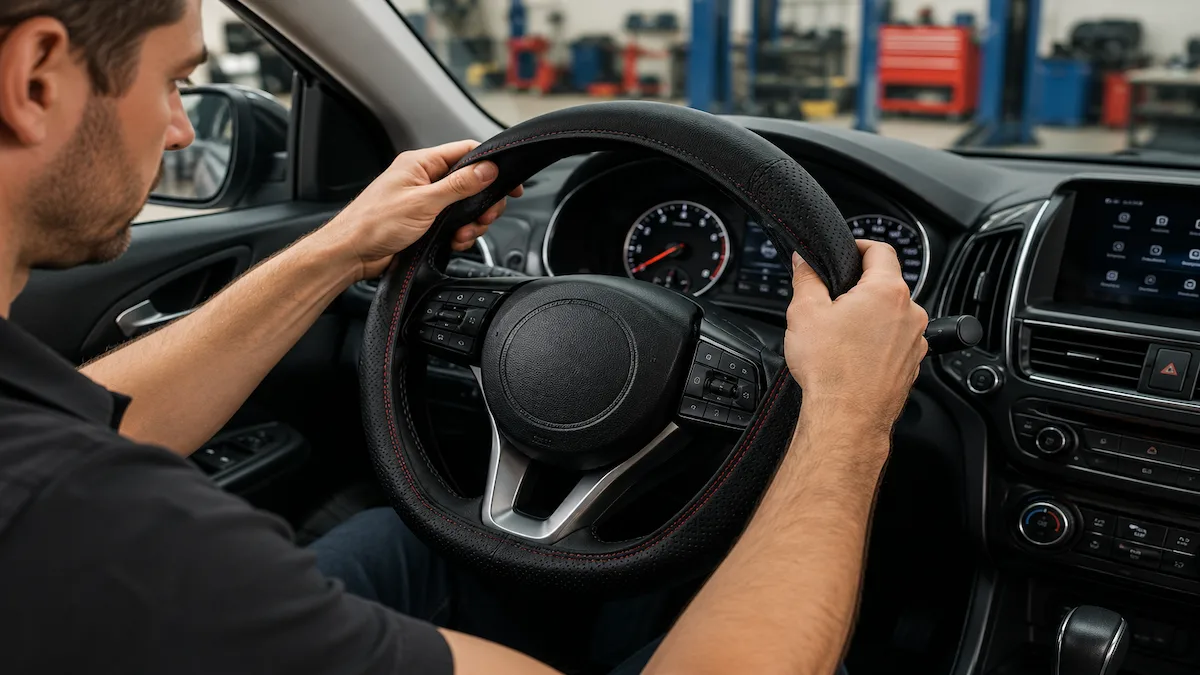

TL;DR: How to Choose a Steering Wheel Cover
Choosing the right steering wheel cover starts with measuring your steering wheel correctly and selecting a material that matches your driving conditions. A well-fitted cover improves grip, protects the original steering wheel from wear, reduces hand fatigue and makes driving more comfortable, while a poor-quality or loose cover can reduce steering control and wear out quickly.
A steering wheel cover is more than a cosmetic upgrade. It protects the factory steering wheel from UV damage, sweat and daily wear while improving grip and driving comfort.
The best option depends on your steering wheel size, preferred material, local climate and driving habits. Prioritising fit, durability and safety will give you the best long-term value.
If you’ve ever grabbed a steering wheel that’s too hot to touch on a sunny afternoon or noticed the original leather starting to crack and peel, you’re not alone.
Many drivers begin shopping for a steering wheel cover because their current wheel has become uncomfortable or worn, only to discover that there are hundreds of options claiming to be the best.
The problem is that not every steering wheel cover improves the driving experience. Some feel bulky, some become slippery after a few months, while others never fit securely in the first place.
Choosing purely on appearance often leads to disappointment, especially when comfort and safety should be the priority.
This steering wheel cover buying guide explains what really matters before you buy. You’ll learn how to choose the correct size, compare popular materials, understand which features are genuinely useful and avoid common mistakes that waste money.
By the end, you’ll have the confidence to choose a cover that feels comfortable every time you drive and protects your steering wheel for years.
If you’re refreshing your vehicle’s interior, our Floor Mat Buying Guide on Pickyaura is also worth reading because floor mats and steering wheel covers are two of the accessories that have the biggest impact on everyday driving comfort.
Table of Contents
Why Steering Wheel Covers Matter
Many people assume a steering wheel cover is simply a styling accessory. While it certainly changes the appearance of your cabin, its biggest benefits are practical rather than cosmetic.
Your steering wheel is one of the few parts of the vehicle that you touch throughout every journey. Whether you’re commuting to work, travelling across the country or sitting in slow-moving traffic, your hands remain in constant contact with it.
That makes comfort, grip and durability far more important than many drivers initially realise. A quality steering wheel cover provides an additional layer between your hands and the factory steering wheel.
This helps protect the original surface from oils, sweat, dirt and ultraviolet exposure that gradually cause leather, vinyl and polyurethane wheels to deteriorate.
I’ve inspected plenty of vehicles where the steering wheel showed more wear than the driver’s seat. That’s not unusual because the wheel experiences thousands of small movements every week.
Once the outer material begins peeling or cracking, repairing it usually costs significantly more than buying a quality cover early.
Another advantage is improved grip. During wet weather or long drives, sweaty hands can make smooth factory steering wheels feel slippery. The right cover provides extra traction without making the wheel feel oversized or awkward to hold.
Temperature control is another overlooked benefit. Dark factory steering wheels absorb a surprising amount of heat when parked in direct sunlight. Certain cover materials stay noticeably cooler, making the vehicle far more comfortable when you first get in.
Instead of viewing a steering wheel cover as decoration, it’s better to think of it as protective equipment that also improves comfort and confidence behind the wheel.
How to Choose a Steering Wheel Cover Properly
Selecting the right steering wheel cover isn’t complicated once you know what to look for. Rather than focusing on colours or patterns first, start with the features that affect safety, comfort and long-term durability.
Measure Your Steering Wheel Before Buying
One of the most common reasons people return steering wheel covers is incorrect sizing. Many assume all passenger cars use the same wheel diameter, but even a small difference can affect how securely the cover fits.
Before ordering, measure the steering wheel from one outer edge straight across to the opposite side through the centre. You should also note the thickness of the wheel itself, as some vehicles have noticeably chunkier steering wheels than others.
Most passenger vehicles use steering wheels measuring between 14.5 and 15.5 inches in diameter, but always check the manufacturer’s sizing guide rather than relying on assumptions.
A correctly fitted cover should feel snug from the moment it’s installed. Once fitted, it should remain completely stationary while steering. If it shifts even slightly during cornering, it can reduce steering precision and become distracting while driving.
On the other hand, an excessively tight cover may require excessive force during installation. Stretching it too aggressively can weaken stitching or distort the material, reducing its lifespan before you’ve even started using it.
Whenever customers asked me to install steering wheel covers, sizing was always the first thing I checked. Surprisingly, many covers labelled as “universal” varied noticeably in fit despite claiming to suit the same wheel sizes.
Choose a Material That Matches Your Driving Conditions
The material you choose has a greater impact on everyday comfort than almost any other feature. Every material offers different strengths, and the best choice depends on how and where you drive.
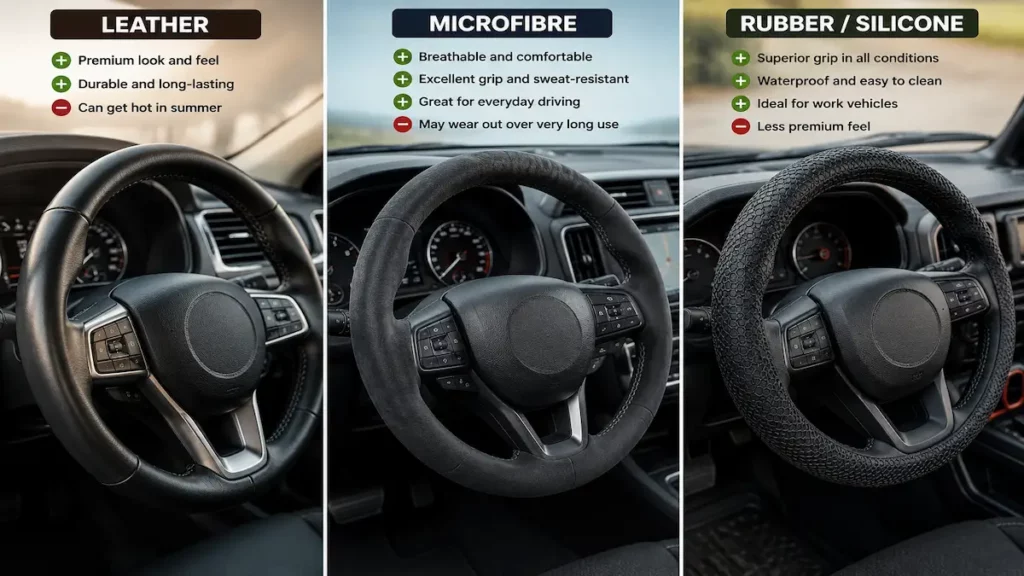
Genuine Leather
Genuine leather remains one of the most popular choices because it offers a premium appearance and develops a natural feel over time.
It suits drivers who want their vehicle interior to maintain a factory-quality finish while adding an extra layer of protection to the steering wheel underneath.
When properly maintained, genuine leather is extremely durable. It also provides a balanced grip that feels natural during motorway driving and everyday commuting.
However, leather isn’t perfect for every situation. Dark leather absorbs heat quickly when parked in direct sunlight and may feel slippery if your hands become sweaty during long summer journeys.
Occasional cleaning and conditioning are also necessary to prevent the leather from drying out.
Drivers who appreciate premium interiors often find these small maintenance tasks worthwhile because leather ages gracefully when looked after properly.
Microfibre
Microfibre has become increasingly popular because it combines comfort, grip and breathability exceptionally well.
Unlike smoother leather surfaces, microfibre creates additional friction between your hands and the steering wheel, helping maintain better control without feeling rough or abrasive.
One of the biggest advantages is temperature regulation. Microfibre generally remains cooler during hot weather and reduces sweaty palms on long drives, making it a practical choice for daily commuting.
A rideshare driver once mentioned that changing from leather to microfibre completely changed how comfortable his shifts felt. Spending eight or ten hours behind the wheel every day meant even small improvements in grip and ventilation became surprisingly noticeable.
For drivers who spend significant time on the road, microfibre often provides the best balance between comfort and practicality.
Rubber and Silicone
If maximum grip is your priority, rubber or silicone steering wheel covers deserve serious consideration.
These materials perform particularly well in vehicles regularly exposed to wet weather, muddy conditions or demanding work environments. They maintain traction even when hands are damp, making them popular among tradespeople and off-road enthusiasts.
They’re also extremely easy to clean. Dust, mud and grease usually wipe away without much effort, helping the cover maintain its appearance despite frequent use.
The trade-off is appearance. Rubber and silicone generally don’t offer the same premium look as leather, and some drivers find thicker designs slightly bulky during everyday driving. For utility vehicles, however, practicality usually outweighs aesthetics.
Synthetic Leather
Modern synthetic leather has improved significantly over recent years. Higher-quality options now closely resemble genuine leather while requiring less maintenance and costing considerably less.
They’re suitable for drivers wanting an attractive appearance without the ongoing care genuine leather demands.
The biggest difference usually appears over the long term. Lower-quality synthetic materials may crack, peel or become stiff after years of exposure to sunlight, so paying a little more for reputable brands often proves worthwhile.
which Material Offers the Best Overall Value?
There isn’t one perfect material for every driver because everyone’s priorities differ. If premium appearance matters most, genuine leather remains difficult to beat.
If comfort, grip and everyday practicality come first, breathable microfibre usually delivers the best all-round performance.
Drivers regularly tackling harsh weather or demanding work conditions may benefit more from textured rubber or silicone.
Rather than asking which material is universally best, consider which one best suits your driving habits. A cover that feels comfortable every single day is always a better investment than one chosen purely because it looked impressive online.
Best Steering Wheel Covers for Different Types of Drivers
The best steering wheel cover isn’t necessarily the most expensive one. It’s the one that matches how you use your vehicle every day. A commuter sitting in city traffic has different priorities from someone towing a caravan, driving off-road or spending hours behind the wheel for work.
Thinking about your driving style before buying will help you avoid paying for features you’ll never use while ensuring you don’t overlook the ones that genuinely improve comfort and control.
For Daily Commuting
If most of your driving involves commuting to work, school runs or weekend errands, comfort should be your biggest priority. Frequent steering inputs during stop-start traffic can make even a slightly uncomfortable steering wheel noticeable after a while.
A breathable microfibre cover with medium padding usually offers the best combination of grip and comfort. It keeps your hands cooler, provides enough cushioning to reduce fatigue and doesn’t make the steering wheel feel excessively thick.
Drivers often focus on appearance when shopping online, but after months of everyday use, it’s usually comfort that determines whether they’re happy with their purchase.
For Long-Distance Driving
Long motorway journeys place different demands on your hands and wrists. Holding the steering wheel for several hours can lead to fatigue, particularly if the wheel becomes hot or slippery.
An ergonomically designed cover with lightly padded grip sections helps reduce pressure on your palms without making steering feel disconnected. Breathable materials are especially valuable because they minimise moisture build-up over extended journeys.
One thing I’ve noticed over the years is that drivers often underestimate how much a steering wheel contributes to fatigue. Small improvements in grip and comfort become surprisingly noticeable after several hundred kilometres behind the wheel.
For Performance Driving
Drivers who enjoy spirited driving usually prefer direct steering feedback. Thick, heavily padded steering wheel covers can dull that connection between the driver and the vehicle.
A thinner leather or high-quality microfibre cover allows you to maintain a secure grip while preserving steering feel. Precision matters far more than extra cushioning when you’re navigating winding roads or simply enjoy responsive handling.
Avoid oversized universal covers, as even slight movement between the cover and steering wheel can reduce confidence when making quick steering inputs.
For 4WD and Off-Road Vehicles
Off-road driving introduces dust, mud, water and constant vibration, so durability becomes far more important than appearance.
A heavy-duty rubber or textured silicone cover with reinforced stitching stands up better to harsh conditions and remains grippy even when your hands are wet or dirty. Waterproof materials are also easier to clean after muddy weekends or remote camping trips.
Drivers who regularly use their vehicles for work often appreciate practical materials that continue performing well even after years of tough use.
Universal vs Custom-Fit Steering Wheel Covers
One of the biggest decisions you’ll make is whether to buy a universal cover or invest in a custom-fit model. Both have advantages, but understanding the differences helps you avoid disappointment.
Universal steering wheel covers are designed to fit a range of steering wheel sizes. They’re affordable, widely available and usually easy to install. For many drivers, a good-quality universal cover performs perfectly well provided it’s matched to the correct steering wheel diameter.
However, universal doesn’t always mean perfect. Manufacturing tolerances vary between brands, and some covers fit more securely than others. I’ve fitted universal covers that felt almost factory-installed, while others developed slight movement after only a few months of use.
Custom-fit steering wheel covers are made for specific steering wheel dimensions. Because they match the wheel more precisely, they generally provide a cleaner appearance, improved grip and better long-term durability.
The installation process can take longer, especially for stitched leather designs, but the finished result often looks as though it came fitted from the factory.
For drivers planning to keep their vehicle for many years, a custom-fit cover is usually worth the additional investment. If you’re simply looking for affordable protection, a reputable universal cover can still provide excellent value.
Features That Actually Matter For Steering Wheel Cover
Marketing descriptions often highlight flashy designs or decorative stitching, but those details rarely improve the driving experience. The features below make a genuine difference during everyday use.
Secure Non-Slip Grip
Grip should always come before appearance. Whether you’re driving through heavy rain, navigating winding roads or simply making an emergency manoeuvre, your hands need to remain firmly connected to the steering wheel.
Textured finishes, quality materials and secure fitment all contribute to maintaining control. If a cover feels smooth and slippery while you’re holding it in the shop, it’s unlikely to improve once installed.
UV Resistance
Sunlight is one of the biggest causes of steering wheel deterioration. Vehicles parked outdoors for long periods experience constant ultraviolet exposure, gradually drying out leather, fading colours and weakening stitching.
Choosing UV-resistant materials helps preserve both the cover and the original steering wheel beneath it. In hotter climates especially, this small feature can noticeably extend the life of your interior.
Breathability
Sweaty hands reduce grip and make driving less comfortable. Breathable materials such as microfibre allow moisture to escape more effectively than sealed synthetic surfaces, keeping the steering wheel feeling dry even during warmer weather.
Drivers who spend long hours on the road usually notice this benefit much more than occasional weekend motorists.
Easy Cleaning
Many people don’t realise how quickly steering wheels accumulate dirt. Every journey transfers small amounts of skin oils, sunscreen, moisturiser, dust and grime onto the wheel. Over time this build-up affects both appearance and grip.
Choosing a material that’s easy to wipe clean makes regular maintenance much simpler and helps preserve the cover’s original texture.
Comfortable Thickness
Extra padding isn’t always better. Some inexpensive covers add so much bulk that they change the steering wheel’s shape completely. While this may initially feel soft, it often reduces steering feedback and makes smaller steering wheels feel awkward to hold.
A medium-thickness cover usually provides the best balance between comfort and control.
Steering Wheel Cover Buyer’s Guide
Buying a steering wheel cover becomes much easier when you focus on the features that affect long-term ownership instead of short-term appearance.
Start by deciding how you mainly use your vehicle. Someone driving a family SUV every day has different needs from a delivery driver or weekend off-road enthusiast. Your driving environment should influence the material you choose far more than colour or decorative stitching.
Next, confirm the steering wheel size before ordering. Even quality covers perform poorly if they’re the wrong size. Spending two minutes measuring your steering wheel can prevent the frustration of dealing with a loose or impossible-to-fit cover later.
It’s also worth considering how much maintenance you’re prepared to do. Genuine leather offers outstanding durability and a premium finish but benefits from occasional conditioning.
Microfibre requires far less attention while remaining comfortable throughout the year. Rubber and silicone are among the easiest materials to keep clean, making them excellent options for work vehicles.
Price is another factor many buyers overthink. The cheapest steering wheel cover isn’t usually the best value if it starts peeling or slipping within a year. Equally, the most expensive option isn’t automatically the best choice either.
A well-made cover from a reputable manufacturer typically lasts several years when looked after properly. Spending a little more initially often proves cheaper than replacing poor-quality covers repeatedly.
Common Mistakes to Avoid When Buying a Steering Wheel Cover
Most disappointing purchases happen because buyers overlook a few simple details rather than choosing the wrong material.
One of the biggest mistakes is buying purely for appearance. Decorative patterns, bright colours and chrome accents might look impressive in online photographs, but they don’t necessarily improve grip or comfort.
A steering wheel is something you use every day, so functionality should always come first.
Another common mistake is assuming every universal cover fits equally well. Even when two products claim to suit the same steering wheel size, the actual fit can vary noticeably depending on manufacturing quality.
Ignoring stitching quality is another expensive mistake. Poor stitching often begins separating long before the outer material wears out. Once the seams fail, the cover can twist slightly during steering, reducing both comfort and safety.
I’ve also seen drivers choose extremely thick padded covers expecting extra comfort, only to return a few weeks later because the steering felt less precise. After switching to a slimmer textured cover, most immediately noticed improved control.
Finally, don’t forget to consider your local climate. Materials that perform brilliantly in cooler weather may become uncomfortable during hotter months.
Choosing a cover suited to your typical driving conditions usually leads to greater satisfaction over the long term.
Installation Tips Most Buying Guides Forget
Installing a steering wheel cover often frustrates first-time buyers because a properly fitting cover is intentionally tight. That snug fit is exactly what prevents movement while driving, so don’t assume a firm installation means you’ve bought the wrong size.
One simple trick that makes fitting much easier is allowing the cover to warm slightly before installation. Leaving it in direct sunlight for around ten minutes or placing it in a warm room softens the material, making it noticeably easier to stretch over the steering wheel.
Begin by securing the cover over the top section of the steering wheel. Once the upper portion is fully seated, work evenly down both sides instead of pulling aggressively on one edge. This distributes tension more evenly and helps prevent unnecessary stress on the stitching.
Avoid using screwdrivers or other tools to force the cover into place. They can easily damage the inner lining or puncture the outer material, shortening the cover’s lifespan before you’ve even driven the vehicle.
After installation, rotate your hands around the entire steering wheel while the vehicle is stationary. The cover should remain completely secure without shifting or bunching. If any movement is noticeable, remove it and confirm you’ve purchased the correct size.
Taking a few extra minutes during installation helps ensure the cover performs safely for years to come.
For steering wheel safety and vehicle ergonomics, you can also check:
How to Make Your Steering Wheel Cover Last Longer
Even the highest-quality steering wheel cover needs occasional care to maintain its appearance and performance.
Cleaning it regularly with a damp microfibre cloth removes oils and dirt before they become embedded in the surface. For leather covers, using a suitable leather conditioner every few months helps prevent drying and cracking.
Whenever possible, parking in shaded areas or using a quality car sunshade reduces UV exposure and helps both the cover and the original steering wheel last longer. If you haven’t chosen one yet, Pickyaura’s Car Sunshade Buying Guide explains what to look for when protecting your vehicle’s interior.
Avoid harsh household cleaners because they can damage protective coatings or cause certain materials to become slippery over time.
With basic maintenance, a quality steering wheel cover can continue looking and performing well for many years.
When Should You Replace Your Steering Wheel Cover?
A steering wheel cover isn’t designed to last forever. Even high-quality materials gradually wear down through daily use, exposure to sunlight and constant contact with your hands. Knowing when it’s time to replace it helps maintain both comfort and steering control.
One of the first warning signs is movement. If the cover begins rotating independently of the steering wheel during turns, it no longer provides the secure fit it should. Even a slight amount of movement can become distracting and reduce confidence behind the wheel.
Visible damage is another clear indicator. Cracked leather, peeling synthetic materials or worn rubber textures all reduce grip. While cosmetic wear may seem minor initially, damaged surfaces usually deteriorate quickly once they begin breaking down.
Pay attention to how the steering wheel feels during longer journeys as well. If your hands become tired more quickly than they used to or you notice yourself constantly adjusting your grip, the cover may no longer be providing adequate support.
In workshops, I’ve occasionally seen drivers continue using badly worn covers because they assumed they were “only cosmetic”. After replacing them with a properly fitted cover, many immediately noticed how much more secure and comfortable the steering felt.
Replacing a worn steering wheel cover is a relatively inexpensive upgrade that can make every journey more enjoyable while continuing to protect the original steering wheel underneath.
Final Thoughts
Choosing the right steering wheel cover isn’t about finding the flashiest design or the cheapest price. It’s about improving the way your vehicle feels every time you get behind the wheel.
By focusing on correct sizing, suitable materials and secure fitment, you’ll enjoy better grip, greater comfort and long-term protection for one of the most frequently used parts of your vehicle. Small details such as breathable fabrics, UV resistance and quality stitching make a noticeable difference over years of ownership.
From the vehicles I’ve worked on over the years, one thing has remained consistent: drivers who invest in quality interior accessories early usually spend less replacing worn components later.
A steering wheel cover is a simple upgrade, but choosing the right one can improve every journey while helping preserve your vehicle’s interior for the future.
Frequently Asked Questions
What is the best material for a steering wheel cover?
For most drivers, breathable microfibre offers the best balance of grip, comfort and durability. Genuine leather is ideal if you prefer a premium factory-style finish, while rubber or silicone suits work vehicles and off-road driving where maximum grip is important.
Are steering wheel covers safe?
Yes, provided they’re the correct size and fitted securely. A properly installed steering wheel cover should not move independently of the steering wheel. If it slips during steering, it should be replaced immediately because it can reduce steering control.
How do I know which steering wheel cover size I need?
Measure the steering wheel diameter from edge to edge through the centre and compare it with the manufacturer’s sizing guide. Most passenger vehicles use steering wheels between 14.5 and 15.5 inches, but checking your measurements before buying ensures the best fit.
Can a steering wheel cover damage the original steering wheel?
A quality cover fitted correctly actually helps protect the original steering wheel from UV exposure, sweat, oils and everyday wear. Damage is more likely to occur if a poor-quality cover traps moisture or constantly rubs because it doesn’t fit properly.
Is genuine leather better than synthetic leather?
Genuine leather generally lasts longer and develops a more natural feel over time, but it requires occasional maintenance. High-quality synthetic leather offers a similar appearance with lower maintenance, making it a practical choice for many drivers.
How long does a steering wheel cover last?
A well-made steering wheel cover typically lasts between three and seven years, depending on material quality, driving frequency, sun exposure and how well it’s maintained. Regular cleaning and protection from prolonged sunlight can significantly extend its lifespan.
Do thicker steering wheel covers improve comfort?
Not always. While moderate padding can reduce hand fatigue, excessively thick covers often reduce steering feel and make the wheel feel awkward to hold. A medium-thickness cover usually provides the best balance between comfort and control.
Can I install a steering wheel cover myself?
Yes. Most steering wheel covers can be installed at home without specialist tools. Warming the cover slightly before fitting and working evenly around the steering wheel usually makes the process much easier.