
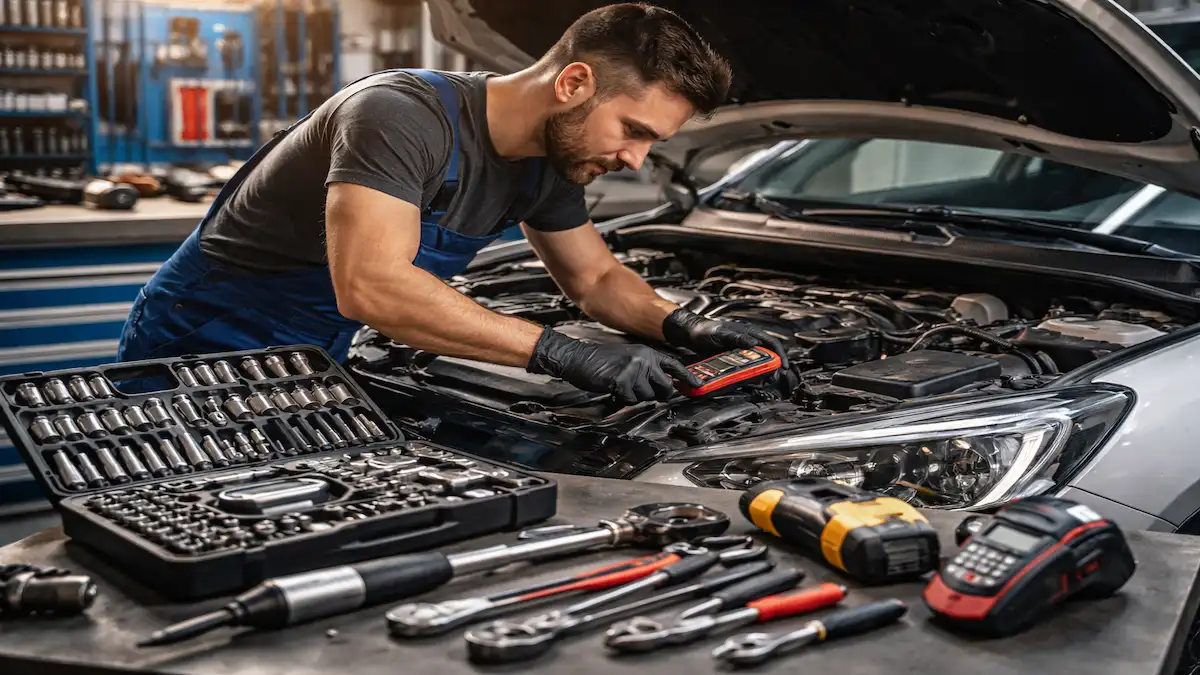
TL;DR: What are the Car Tools Every DIY Mechanic Needs
DIY car tools for mechanics include essentials like socket sets, torque wrenches, jacks, and diagnostic scanners. These tools help perform routine servicing, prevent costly repairs, and improve safety. Choosing high-quality, vehicle-compatible tools ensures accurate work and long-term reliability for both beginners and experienced car owners.
Car maintenance tools for DIY mechanics are essential for anyone who wants to reduce repair costs, diagnose issues early, and maintain vehicle reliability without relying on workshops. From basic socket sets to advanced diagnostic scanners, having the right tools ensures safer, faster, and more accurate repairs at home.
If you’ve ever tried fixing a car without the right tools, you already know it’s frustrating and risky. As an automotive diagnostic technician, I’ve seen people damage bolts, strip threads, or even cause safety hazards just because they used the wrong tool. Truth is: Good tools don’t just make the job easier and they prevent costly mistakes.
Maintaining your car doesn’t always require a professional mechanic. With the right tools, you can handle basic repairs, save money, and keep your vehicle running smoothly. Whether you’re a beginner or an experienced DIY enthusiast, having a well-equipped garage is essential for safe and efficient car maintenance.
What is Inside? (Quick Glance)
Why DIY Car Maintenance Matters
Even basic tools can handle 80% of routine maintenance tasks. Doing your own car maintenance helps you:
- Save money on labor costs
- Fix small issues before they become expensive
- Learn more about your vehicle
- Avoid unnecessary trips to the workshop
Best Car Maintenance Tools/ Must-Have Tools for Car Enthusiasts
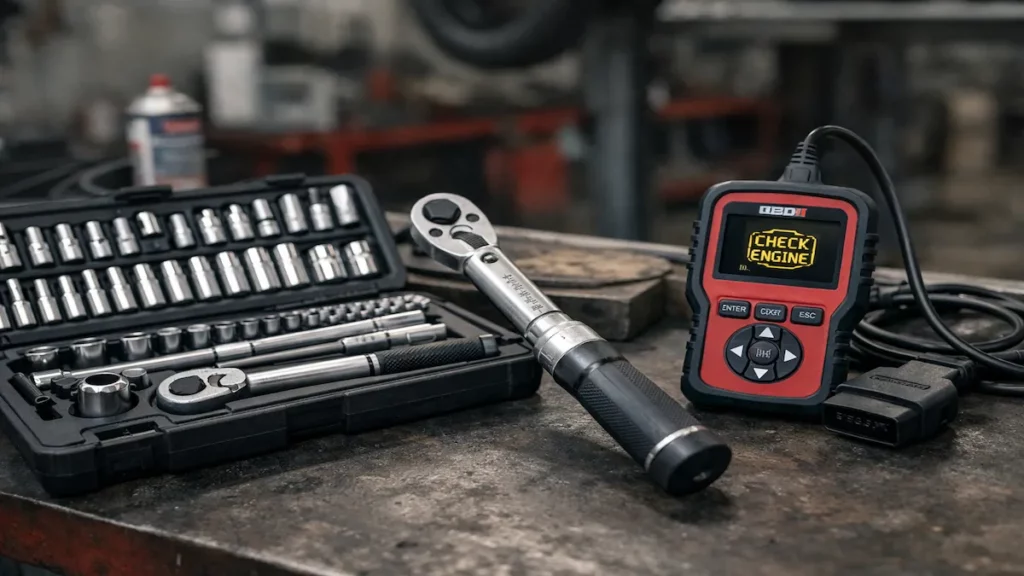
1. Socket Set (Metric & SAE)
A complete socket set is the backbone of any toolkit.
2. Torque Wrench
This ensures bolts are tightened to manufacturer specifications. Overtightening wheel nuts is one of the most common mistakes I see. Trust me, you don’t want a snapped stud on the road.
3. Hydraulic Jack & Jack Stands
Never rely on a jack alone jack stands are a must for safety.
4. OBD2 Scanner
Modern cars rely heavily on electronics and an OBD2 scanner reads error codes instantly. A customer thought his engine was failing. It turned out to be a simple sensor issue diagnosed in 2 minutes with a scanner.
5. Screwdriver Set
Basic, but essential for interior and minor repairs.
6. Pliers Set
Useful for gripping, cutting, and pulling components.
7. Oil Filter Wrench
Makes oil changes faster and cleaner.
8. Brake Bleeder Kit
Essential for brake maintenance.
Air in brake lines can make your pedal feel soft but this tool fixes that quickly.
9. Multimeter
Used for diagnosing electrical issues.
10. Funnel & Drain Pan
Keeps your workspace clean during fluid changes.
11. Work Light / Headlamp
Visibility is everything when working under the hood.
12. Mechanic Gloves
Protect your hands from cuts and chemicals.
Car maintenance Tools Buying Guide
Before you buy car maintenance tools, you must remember these things;
1. Build Quality
Cheap tools break, and sometimes at the worst possible moment.
2. Compatibility
Make sure tools match your vehicle type.
3. Brand Reliability
Stick with trusted brands when possible.
4. Storage & Organization
A good toolbox saves time and frustration.
How to Choose Car Maintenance Tools
- Start with basic tools before advanced ones
- Always follow your car’s manual
- Invest in quality tools—they last longer
- Never compromise on safety equipment
Common Mistakes DIY Mechanics Makes
1. Using Wrong Size Tools
I’ve seen rounded-off bolts more times than I can count. Always use the correct size.
2. Skipping Torque Specs
People often say, “That’s tight enough.” No it’s not.
3. Ignoring Safety Gear
Working under a car without jack stands? That’s a serious risk.
Learn more about maintenance basics:
https://pickyaura.com/category/diy-car-care-and-maintenance/
If you’re serious about saving money and avoiding costly repairs, start building your toolkit today. Don’t wait until something breaks because by then, it’s already expensive. Improve safety with tools:
https://pickyaura.com/car-safety-and-security/essential-car-safety-gadgets/
For official maintenance standards, check:
https://www.nhtsa.gov/road-safety
Final Thoughts
Car maintenance tools for DIY mechanics aren’t just about convenience, they’re about control, safety, and saving money. After years in the workshop, I can confidently say: the right tools make all the difference between a smooth repair and a costly mistake. Invest wisely, and your car will thank you. You don’t need a professional garage to maintain your car—just the right tools. The more you invest in tools, the less you’ll spend on repairs.
With these essentials, you can:
- Handle routine maintenance
- Save hundreds of dollars yearly
- Gain confidence in your mechanical skills
Frequently Asked Questions
What tools do I need to start DIY car maintenance?
Start with a socket set, jack stands, torque wrench, and an OBD2 scanner. These cover most basic repairs and diagnostics.
Are cheap car tools worth it?
No. Cheap tools wear out quickly and can damage components, costing more in the long run.
Can I maintain my car without professional help?
Yes, many tasks like oil changes, brake pads, and diagnostics can be done at home with proper tools.
What is the most important tool for DIY mechanics?
A socket set is the most essential, followed closely by a torque wrench for safety.
How much can I save doing car maintenance yourself?
You can save hundreds to thousands per year depending on how often you maintain your vehicle.
As a single mom trying to keep my old reliable car running on a tight budget, having a clear list of essential tools makes the world of DIY repairs feel so much less intimidating. It’s incredibly empowering to know I can handle the basics myself instead of panicking every time a dashboard light comes on or waiting hours at a mechanic with kids in tow. I’m definitely starting my own little toolkit so I can stay self-sufficient and keep my family safe on the road!
That’s really inspiring to hear, you’re doing an amazing job!
Starting your own toolkit is a great step, and even a few basic tools can go a long way in keeping your car running smoothly. It’s all about small, confident steps, and you’re already on the right track. Wishing you safe and stress-free driving ahead!
Very useful.thankyou
Thank you very much for your feedback.