

TL;DR: How to Choose a Car Rental Service
The best way to choose a car rental service is to compare the total rental cost rather than the advertised daily rate, check customer reviews, understand insurance coverage, inspect fuel and mileage policies, and select a vehicle that matches your travel needs. Reliable rental companies provide transparent pricing, well-maintained vehicles, and responsive customer support, helping travellers avoid hidden fees and unexpected problems.
Finding a rental car used to be relatively straightforward. Today, travellers have more choices than ever, from traditional rental companies and airport-based providers to app-based vehicle sharing platforms and independent local operators. While greater competition often leads to better pricing, it has also created a situation where comparing rental services can feel surprisingly complicated.
A rental advertised for $25 or $30 per day can quickly become a $60 or $70 per day rental once insurance, taxes, airport fees, additional drivers, and optional extras are added. Many travellers discover this only when they arrive at the pickup counter.
Over the years, I’ve inspected vehicles that previously belonged to rental fleets and worked on countless cars that spent years in commercial service. One lesson consistently stands out: the quality of a rental experience often depends more on the company behind the vehicle than the vehicle itself.
A reputable rental provider will offer transparent pricing, clear policies, properly maintained vehicles, and customer support that actually helps when something goes wrong. A poor provider can turn what should be a simple journey into an expensive headache.
Whether you’re planning a family holiday, a business trip, a weekend getaway, or a long-distance road trip, understanding how to evaluate a car rental company can save money, reduce stress, and help ensure a safer travel experience.
What’s Inside? (Quick Glance)
Why Your Choice of Rental Company Matters
Many people assume that all rental companies operate in roughly the same way. In reality, there can be significant differences between providers.
Some companies prioritise customer service and vehicle maintenance, while others compete almost entirely on price. Although a low daily rate might seem attractive initially, hidden costs and poor service can quickly outweigh any apparent savings.
Consumer advocacy organisations such as CHOICE Australia have repeatedly highlighted issues including unclear rental agreements, damage disputes, excessive fees, and confusing insurance terms. These issues often arise because customers focus on price alone rather than evaluating the entire rental experience.
A quality rental service should provide:
- Transparent pricing
- Clear rental agreements
- Well-maintained vehicles
- Fair damage policies
- Flexible booking options
- Responsive customer support
The goal isn’t simply to find the cheapest rental car. The goal is to find the best overall value.
Start by Defining Your Actual Vehicle Requirements
One of the most common mistakes travellers make is choosing a vehicle before considering how they will actually use it.
A compact hatchback may be ideal for city driving and airport transfers, but it can quickly become uncomfortable during a week-long family holiday with multiple passengers and luggage. Conversely, renting a large SUV when travelling alone often results in higher fuel costs and unnecessary expense.
Before comparing providers, consider several practical factors. Think about how many passengers will travel in the vehicle. Consider how much luggage space will be needed. Evaluate the type of roads you’ll encounter and whether fuel efficiency or interior comfort should be prioritised.
For example, a traveller exploring urban destinations may benefit from a smaller vehicle that is easy to park and economical to operate. Someone planning a multi-day road trip may place greater value on comfort, luggage capacity, and highway driving performance.
If you’re planning a long-distance journey, it may also be worth reviewing related travel preparation guides on Pickyaura, such as your roadside emergency kit guide and vehicle safety preparation resources before departure. https://pickyaura.com/blog-or-tips/travel-gear-convenience-accessories/ and https://pickyaura.com/automotive-tools/car-maintenance-tools-for-diy/
Understand the Real Cost of Car Rental
One of the biggest misconceptions in the rental industry is that the advertised daily rate represents the actual rental cost. In reality, the base rate often accounts for only part of the final bill.
Travel industry experts at Skyscanner Car Hire Advice regularly note that rental pricing can vary significantly depending on taxes, location surcharges, insurance products, and optional extras.
When comparing rental companies, always examine the complete pricing breakdown. Common additional charges include airport concession fees, vehicle registration recovery fees, premium location surcharges, toll administration fees, young driver fees, and additional driver charges.
These costs may seem relatively minor individually. Combined, however, they can dramatically increase the total cost of a booking. A practical approach is to compare the total amount payable rather than focusing exclusively on the advertised daily rate.
The smarter way is to use comparison platforms like DiscoverCars.com, where you can see pricing alongside ratings. That combination is what actually helps you make a safe decision. Alternatively, checking major aggregate search engines like Kayak or Tripadvisor can help you spot hidden price drops across multiple regional companies simultaneously.
Check Discoverycars.com review here
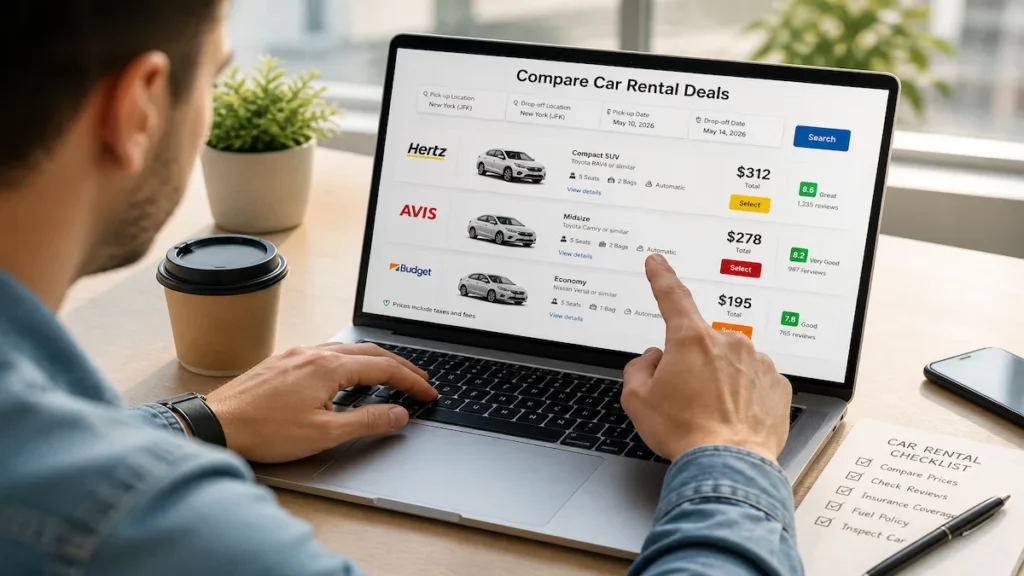
Airport Rental vs City Rental Locations
Airport rental locations offer convenience, but convenience often comes at a price. Many airport-based providers pay significant fees to operate within airport terminals. These costs are frequently passed on to customers through additional surcharges.
For travellers who are comfortable using public transport, shuttle services, or rideshare options, renting from an off-airport location can sometimes produce substantial savings. The decision depends largely on your schedule, luggage requirements, and travel priorities.
Business travellers with limited time may find airport pickup worth the additional cost. Leisure travellers with flexible schedules often benefit from comparing nearby city locations before booking.
Learn How Rental Insurance Actually Works
Insurance is arguably the most confusing aspect of renting a vehicle. Many travellers arrive at the rental counter uncertain about what protection they already have and what additional coverage may be necessary.
As a result, they often purchase expensive protection packages simply to avoid uncertainty. The first step is understanding that rental insurance terminology differs between companies and countries.
You may encounter terms such as:
- Collision Damage Waiver (CDW)
- Loss Damage Waiver (LDW)
- Theft Protection
- Third-Party Liability Cover
- Windscreen Protection
- Tyre Protection
- Roadside Assistance Packages
While these products can provide valuable protection, they are not always essential. Before travelling, check whether your personal vehicle insurance, travel insurance policy, or credit card benefits already provide rental vehicle coverage.
Resources from organisations such as Consumer Reports and NerdWallet Travel Advice can help travellers understand common rental insurance structures before booking.
Pay Attention to Vehicle Condition
In workshop vehicles I’ve serviced over the years, ex-rental cars often reveal an interesting reality. Many rental vehicles are maintained according to strict service schedules, but they also experience frequent driver changes, varying driving habits, and heavy usage.
This makes pre-rental inspections extremely important. Never assume that a vehicle’s condition has already been documented accurately.
Before leaving the pickup area:
- Walk around the entire vehicle.
- Photograph every panel.
- Check the wheels.
- Inspect the windscreen.
- Verify fuel levels.
- Confirm there are no warning lights on the dashboard.
Photographs take only a few minutes but can prevent lengthy disputes later. This is particularly important when renting SUVs, luxury vehicles, vans, or vehicles intended for longer journeys.
Mileage Limits Can Become Expensive
Many renters automatically assume unlimited mileage is included. That assumption can become costly. Some providers impose daily mileage limits or total trip restrictions. Once these limits are exceeded, additional charges may apply for every kilometre or mile driven.
If you’re planning a road trip, always verify whether unlimited mileage is included. Travellers who underestimate their expected distance can sometimes spend more on mileage penalties than they saved by choosing a cheaper rental company.
The Importance of Reading Recent Reviews
Online reviews should never be treated as perfect indicators of quality. However, they can reveal patterns. A few negative reviews are normal for any large rental company. What matters is identifying repeated complaints.
Look for recurring issues involving:
- Unexpected charges
- Damage claims
- Poor vehicle condition
- Long pickup delays
- Unresponsive customer service
- Refund disputes
Recent reviews are generally more valuable than older feedback because management, policies, and fleet conditions can change significantly over time. When multiple customers consistently report the same issue, it’s usually worth paying attention.
If you want to double-check reputation, external platforms like Trustpilot give a broader view of customer experiences. Additionally, booking your fleet vehicle through massive, trusted networks like Expedia or Booking.com lets you review vetted supplier scorecards directly side-by-side before committing your credit card.
Understand Fuel Policies Before You Sign
Fuel policies seem simple, yet they generate a surprising number of customer complaints.
The most renter-friendly option is usually a full-to-full policy. Under this arrangement, you collect the vehicle with a full tank and return it with a full tank. You only pay for the fuel you actually use.
Other providers may offer prepaid fuel programmes. While these can appear convenient, they often result in travellers paying for fuel that remains unused when the vehicle is returned.
Some companies also apply administrative fees if the vehicle is returned without the required fuel level. These charges are frequently much higher than standard fuel prices.
Before leaving the rental counter, make sure you understand exactly how fuel will be handled. A few minutes spent reviewing the policy can prevent an unpleasant surprise later.
If you’re planning a long-distance road trip, it’s also worth reviewing travel preparation essentials such as Pickyaura’s guides on emergency roadside equipment, vehicle safety accessories, and navigation tools before departure.
Traditional Rental Companies vs Peer-to-Peer Rentals
Over the past decade, peer-to-peer vehicle rental platforms have become increasingly popular. Rather than renting from a large corporate fleet, these services allow vehicle owners to rent directly to travellers.
The concept offers some advantages. Travellers may gain access to unique vehicles, competitive pricing, and more convenient pickup locations. However, consistency can vary significantly.
Large rental companies typically follow standardised maintenance schedules, inspection procedures, and customer service processes. Peer-to-peer services often depend on individual vehicle owners.
According to guidance published by NerdWallet Travel Resources, peer-to-peer rentals can provide excellent value but may involve greater variability in vehicle condition, cancellation policies, and support availability.
Travellers seeking predictability often prefer established rental providers. Those looking for specialised vehicles may find peer-to-peer platforms attractive. The best choice depends on your priorities.
Watch for Hidden Fees and Common Rental Scams
Most rental companies operate honestly, but certain practices continue to frustrate customers. Understanding common issues can help you avoid them.
One frequent problem involves unnecessary insurance upselling. Customers are sometimes encouraged to purchase additional protection without fully understanding their existing coverage.
Another issue occurs when pre-existing vehicle damage is not properly documented. Without photographs or written records, disputes may arise after the vehicle is returned.
Additional charges can also appear in the form of:
- Administrative fees
- Toll processing fees
- Cleaning charges
- Late return penalties
- Additional driver fees
- Cross-border travel fees
The safest approach is simple: read the agreement carefully and ask questions whenever something is unclear. A reputable company should be willing to explain every charge before you sign.
Consider Customer Support Before Booking
Most travellers focus on vehicle selection and pricing. Far fewer consider what happens if something goes wrong. Yet customer support often becomes the most important factor during an actual rental experience.
Flight delays, mechanical issues, navigation problems, accidents, and unexpected schedule changes can occur at any time.
When evaluating providers, look for:
- 24-hour support availability
- Roadside assistance options
- Emergency contact numbers
- Clear breakdown procedures
- Flexible return arrangements
In my experience around vehicles, even well-maintained cars can occasionally experience problems. What separates a good rental company from a poor one is often how efficiently those problems are resolved.
Booking Timing Matters More Than Many Travellers Realise
Many people assume rental prices remain relatively stable. In reality, pricing often fluctuates based on demand, location, seasonality, and vehicle availability. Booking early generally provides several advantages.
Travellers gain access to a wider selection of vehicles, better pricing, and more flexible cancellation options. Waiting until the last minute may limit choices and increase costs, especially during holiday periods.
Travel experts at The Points Guy Travel Advice frequently recommend reserving rental vehicles as soon as travel plans are confirmed, particularly during peak travel seasons.
Many providers also allow free cancellation. This enables travellers to secure a booking while continuing to monitor prices. If rates drop later, rebooking may be possible.
International Car Rental Considerations
Renting a vehicle overseas introduces additional factors that domestic travellers may not encounter. Driving laws, insurance requirements, road signs, and licence requirements can vary significantly between countries.
Before travelling internationally, verify:
- Driver licence requirements
- International Driving Permit requirements
- Local insurance obligations
- Road toll systems
- Fuel types
- Parking regulations
Government travel resources such as Smartraveller Australia and similar official travel advisory websites provide valuable destination-specific guidance. Researching these details beforehand reduces the likelihood of unexpected complications upon arrival.
Choosing the Right Vehicle Category
Vehicle selection affects more than comfort. The wrong choice can increase fuel consumption, parking difficulties, and overall travel costs. Compact vehicles often provide the best value for city travel due to their efficiency and ease of parking.
Mid-size sedans typically balance comfort and affordability for couples and small families. SUVs may be beneficial when carrying additional luggage or travelling through regions with challenging weather conditions.
For larger groups, people movers or minivans frequently offer greater practicality than attempting to fit everyone into a standard SUV. Instead of choosing the largest vehicle available, focus on selecting the smallest vehicle that comfortably meets your needs.
Technology Features Worth Considering
Modern rental vehicles frequently include technology that can improve convenience and safety. Depending on your destination, useful features may include:
- Apple CarPlay
- Android Auto
- Built-in navigation
- Adaptive cruise control
- Blind-spot monitoring
- Parking sensors
- Reverse cameras
For travellers unfamiliar with a region, navigation technology can significantly reduce stress. Similarly, drivers planning long motorway journeys may appreciate advanced driver assistance features.
When comparing rental categories, check whether these technologies are included rather than assuming they are standard.
Buyer Guide: How to Save on Car Rentals
When you put everything together, choosing the right rental service becomes a simple process. Compare platforms, filter by ratings, understand the total cost, review insurance carefully, and inspect the vehicle before driving.
You always remember to book at the right time because, prices increase closer to your travel date. Best strategy:
- Book 2–4 weeks early
- Avoid peak seasons
- Use flexible cancellation
- Consolidate Your Networks: If you often use Expedia Car Rentals, check to see if bundling your booking with local airport transport or regional hotel packages lowers your final daily inventory rate.
- Cross-Reference Aggregators: Always keep a tab open for Booking.com or Kayak to see if top-tier rental brands (like Hertz, Avis, or Enterprise) are running exclusive online flash sales.
It sounds straightforward and it is but only if you don’t rush it. Most problems come from rushing.
Final Thoughts
Choosing a car rental service involves much more than finding the lowest advertised daily rate.
The best rental companies combine transparent pricing, fair policies, reliable customer support, and properly maintained vehicles. Taking time to compare total costs, understand insurance options, inspect vehicle condition, review fuel policies, and research customer feedback can help travellers avoid many of the problems commonly associated with vehicle rentals.
From a practical automotive perspective, preparation is often the difference between a smooth rental experience and an expensive mistake. The companies that provide clear information upfront, maintain their vehicles properly, and support customers when issues arise are usually worth paying slightly more for.
Whether you’re hiring a compact city car, a family SUV, or a vehicle for an extended road trip, careful research before booking will almost always save money, reduce stress, and improve the overall travel experience.
Here’s a little transparency: Our website contains affiliate links. This means if you click and make a purchase, we may receive a small commission. Don’t worry, there’s no extra cost to you. It’s a simple way you can support our mission to bring you quality content.
Frequently Asked Questions
How do I choose a reliable car rental service?
Look at supplier ratings, compare total pricing, and check insurance details before booking.
What is the biggest mistake when renting a car?
Choosing the cheapest option without checking reviews or vehicle condition.
Is it better to book rental cars online?
Yes, online booking usually offers better pricing and more options.
How can I avoid hidden fees in car rentals?
Read the terms carefully, especially fuel policies and insurance coverage.
Is it cheaper to rent a car at the airport?
Not always. Airport locations often charge additional concession and facility fees. Off-airport locations may provide lower overall costs, although travellers should factor in transportation expenses required to reach the rental office.
Should I buy rental company insurance?
It depends on your existing coverage. Check whether your personal vehicle insurance, travel insurance policy, or credit card benefits already provide rental vehicle protection before purchasing additional coverage.
What is the best fuel policy?
For most travellers, a full-to-full policy offers the best value because you pay only for the fuel you actually use.
How far in advance should I book a rental car?
Booking several weeks or months in advance typically provides better vehicle availability and pricing, especially during busy travel seasons.
Are peer-to-peer rental platforms safe?
Many travellers have positive experiences with peer-to-peer rentals. However, vehicle quality, support availability, and policies may vary more than with traditional rental companies.
Very useful..thank you and keep it up
Hi,
Thank you very much for your feedback.
Very useful….thank you
You are most welcome. Thank you very much for your feedback.
I really enjoyed reading this article on choosing a car rental service because it highlights how important it is to look beyond just the price when booking a vehicle. The topic is very relevant for travelers, since the right rental choice can greatly affect comfort, cost, and overall travel experience.
A couple of questions came to mind while reading. What key factors should travelers prioritize most when comparing rental companies insurance options, vehicle quality, customer feedback, or overall pricing transparency? Also, what are some reliable ways to avoid unexpected charges when picking up or returning a rental car?
I also wondered whether booking directly with a rental company tends to offer better value and clearer terms compared to using third-party comparison platforms.
I think this is a very useful topic because many people focus mainly on finding the cheapest deal, but understanding the fine print and service quality is just as important for a smooth rental experience. Thanks again for sharing these helpful insights.
Hi Iyere,
Great questions and you’re absolutely right that price alone can be misleading. If you had to prioritise, insurance coverage clarity and pricing transparency should come first, because that’s where most hidden costs show up. After that, vehicle condition and customer reviews help you avoid poor service or unreliable cars. To avoid surprise charges, always check fuel policy, mileage limits, and take photos of the car at pickup and return. It also helps to ask the agent to confirm any extra fees before you sign.
As for booking direct vs third-party platforms direct bookings usually give clearer terms and easier dispute handling, while comparison sites can be better for finding deals, as long as you double-check the fine print.
The part about photographing the rental car before leaving the pickup area really stood out to me because I think this is something many travelers forget when they are tired after a flight or in a hurry. I always worry about small scratches or marks that may not seem important at first, but could become a problem later. What would you recommend doing if you notice minor damage during pickup, but the rental employee says it is “too small” to write down on the agreement? Is taking photos enough, or should we insist that every mark is officially recorded before driving away?
Hi Hanna,
Thank you very much for your feedback. If an employee refuses to write it down, ask them to stand next to the vehicle and point to the pre-existing mark while you take a quick video or photo. Alternatively, get a quick video of you pointing to the scratch while saying aloud, “Just documenting this minor scratch on the driver’s side door at pickup.” Rental companies rarely contest visual evidence that is clearly time-stamped inside their own parking lot. It takes an extra two minutes, but it completely eliminates the post-vacation anxiety of a surprise repair bill!