

TL;DR: What is a Car Bonnet Protectors
Car bonnet protectors are exterior accessories designed to shield the hood and windshield from stone chips, bugs, and road debris. They improve durability, maintain paint quality, and reduce cleaning effort. Available in acrylic, ABS plastic, and vinyl, they are a practical upgrade for both highway driving and long-term vehicle protection.
If you regularly drive on highways or rough roads, a car bonnet protector is one of the smartest upgrades you can install. It protects your hood from stone chips, bug splatter, and paint damage while improving long-term resale value. Choosing the right type depends on your driving conditions, vehicle model, and durability needs. From my 10+ years working in automotive workshops, I’ve seen firsthand how this small upgrade can save thousands in paint repairs and maintain resale value.
From stone chips to bug splatter, your car’s front end takes constant damage especially on highways or rough roads. That’s where bonnet protectors come in.
What is Inside? (Quick Glance)
What Is Car Bonnet Protector?
A car bonnet protector (also called a bug deflector or hood guard) is mounted along the leading edge of your car’s bonnet. It works by redirecting airflow upward, reducing the impact of debris hitting your paint.
In my experience, I’ve seen cars without protectors come in with paint chipped badly within 6–12 months, especially highway-driven vehicles. Honestly, most drivers don’t think about their driving conditions. If you’re doing highway driving every week like many of my customers, you need an acrylic protector.
I’ve had people come back saying, “I wish I installed this earlier,” after seeing the damage it could’ve prevented. Instead of hitting your bonnet directly, objects are redirected upward using airflow. AUSGO
Benefits of Using a Best Car Bonnet Protector
1. Protects Paint from Chips & Scratches
Let me be real most people ignore this until it’s too late.
2. Reduces Bug Damage
Bug acids can permanently stain clear coat if left too long. I’ve seen cars where bug splatter literally etched into the paint after just a few hot days.
3. Improves Resale Value
Buyers notice front-end damage first. A clean bonnet = better perceived condition.
4. Cost-Effective Protection
You’re spending a small amount now to avoid bigger repairs later. Simple as that.
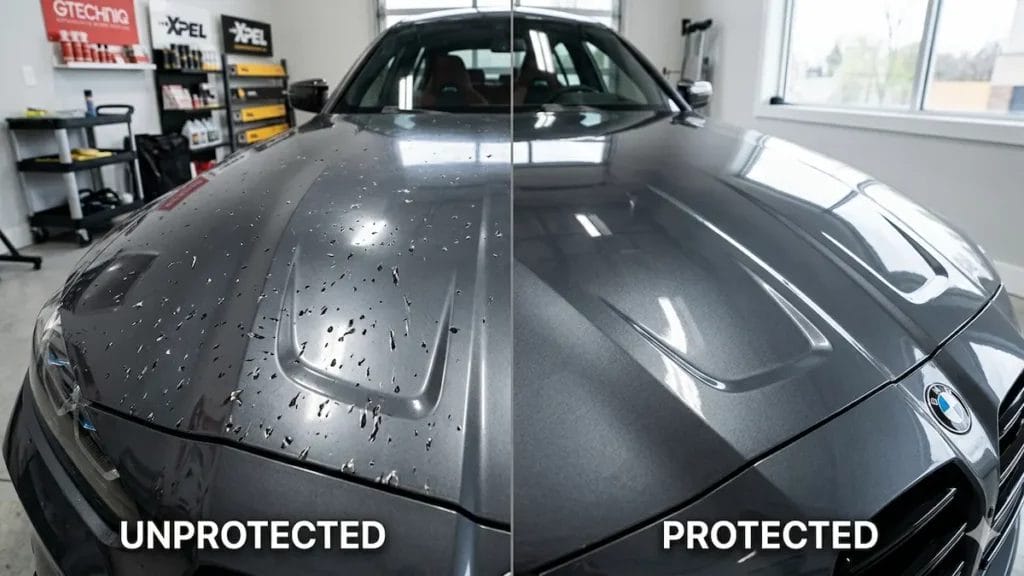
Best Materials for Car Bonnet Protectors (Comparison Table)
| Type | Description | Pros | Cons | Best For |
|---|---|---|---|---|
| Acrylic Bonnet Protectors | Made from lightweight plastic, available in clear or tinted styles | Affordable, easy to install, stylish look | Less durable than polycarbonate | Daily driving, city use |
| Polycarbonate Protectors | Strong, impact-resistant material designed for heavy-duty protection | Extremely durable, resistant to cracks and chips | Slightly more expensive | Highway driving, off-road use |
| Custom-Fit (OEM) Protectors | Designed specifically for your car model for a precise fit | Perfect fit, better aerodynamics, premium look | Higher cost | Long-term use, premium users |
| Paint Protection Film (PPF) | Transparent film applied directly to the bonnet surface | Invisible protection, full coverage, preserves original look | Expensive, professional installation needed | Luxury cars, high-end protection |
| Vinyl Bonnet Bras | Flexible covers that wrap around the entire bonnet | Full coverage, protects from scratches and debris | Can trap moisture, less stylish | Maximum protection, older vehicles |
| Carbon Fiber Style Protectors | Decorative protectors with carbon fiber look | Stylish, enhances appearance | Mainly aesthetic, less protective | Style-focused users |
| Magnetic Bonnet Covers | Removable covers that attach using magnets | Easy to install/remove, no tools needed | Less secure at high speeds | Temporary use, short trips |
Car Bonnet Protector Buying Guide
1. Fitment Matters Most
Always choose vehicle-specific models. Universal ones rarely sit right. A proper fit ensures stability and better protection. Tradies choice
2. Material Quality
- Go acrylic for durability
- Avoid thin plastic that flexes
3. Look for UV Resistance
Essential in hot climates to prevent:
- Fading
- Yellowing
4. Mounting System Matters
- Clip-on → best option
- Adhesive → cheaper but less reliable
5. Consider Driving Conditions
| Driving Type | Best Choice |
|---|---|
| City | Acrylic |
| Highway | Polycarbonate |
| Off-road | Heavy-duty / custom-fit |
| Luxury car | PPF |

How to Choose a Car Bonnet Protector: Car Bonnet Protection Guide
Cheap, Poorly Fitted Protectors
I’ve seen protectors rubbing against paint due to bad installation — causing MORE damage than protection.
Skipping Cleaning Before Installation
Dust trapped underneath = scratches over time.
If you’re serious about keeping your car looking clean and protecting its value, don’t wait. Get one of the best car bonnet protectors today and avoid costly repairs later.
For additional technical insight, refer to paint protection basics from 3M
Go through these article if you need more clarifications https://www.consumerreports.org/cars/car-safety/how-to-protect-your-car-paint/ https://www.autoblog.com/
If you’re serious about protecting your car, you should also check: https://pickyaura.com/car-safety-and-security/how-to-choose-car-anti-theft-devices/
Final Thoughts
If you drive regularly especially on highways a bonnet protector isn’t optional, it’s smart protection. Choosing the right one will keep your car looking clean, protected, and valuable for years.
If you’re serious about protecting your car, investing in the best car bonnet protectors is a no-brainer. From my experience as an automotive technician, this simple upgrade prevents costly paint damage and keeps your car looking newer for longer. It’s one of those small decisions that makes a big difference over time.
If you want:
- Best overall: Acrylic or polycarbonate
- Premium protection: Custom-fit or PPF
- Budget option: Basic acrylic
Car Bonnet Protector FAQs
Are bonnet protectors worth it?
Yes. They prevent stone chips, bug damage, and paint wear—saving you money long-term.
Do bonnet protectors affect fuel efficiency?
No noticeable impact. Most are designed with aerodynamics in mind.
Can bonnet protectors damage paint?
Not if installed correctly and cleaned regularly.
What is the best material for bonnet protectors?
Polycarbonate is the most durable, while acrylic offers great value.
How long do bonnet protectors last?
High-quality ones can last 5+ years with proper care.
I think many car owners focus on appearance upgrades first, but protective accessories like this can save money over time by helping prevent scratches and paint damage. It is always smart to protect a vehicle before problems happen rather than repair them later. I appreciate how clearly you explained the benefits and options. Do you think bonnet protectors also help with resale value by keeping the front end in better condition?
Hi Monica, thank you for your thoughtful comment! You hit on a very important point that many people overlook
To answer your question: Yes, absolutely. Bonnet protectors play a significant role in maintaining resale value. The front “nose” of a car is the first thing a buyer or dealer inspects. If it is peppered with stone chips or has significant paint thinning from road debris, it immediately suggests the car hasn’t been meticulously cared for.
By keeping that specific area in showroom condition, you are essentially protecting your future “trade-in” or private sale price. It’s much cheaper to invest in a quality protector now than to pay for a professional front-end respray right before you try to sell the vehicle. I really appreciate you highlighting the “protection vs. repair” mindset. It’s the smartest way to manage a vehicle over the long term!