
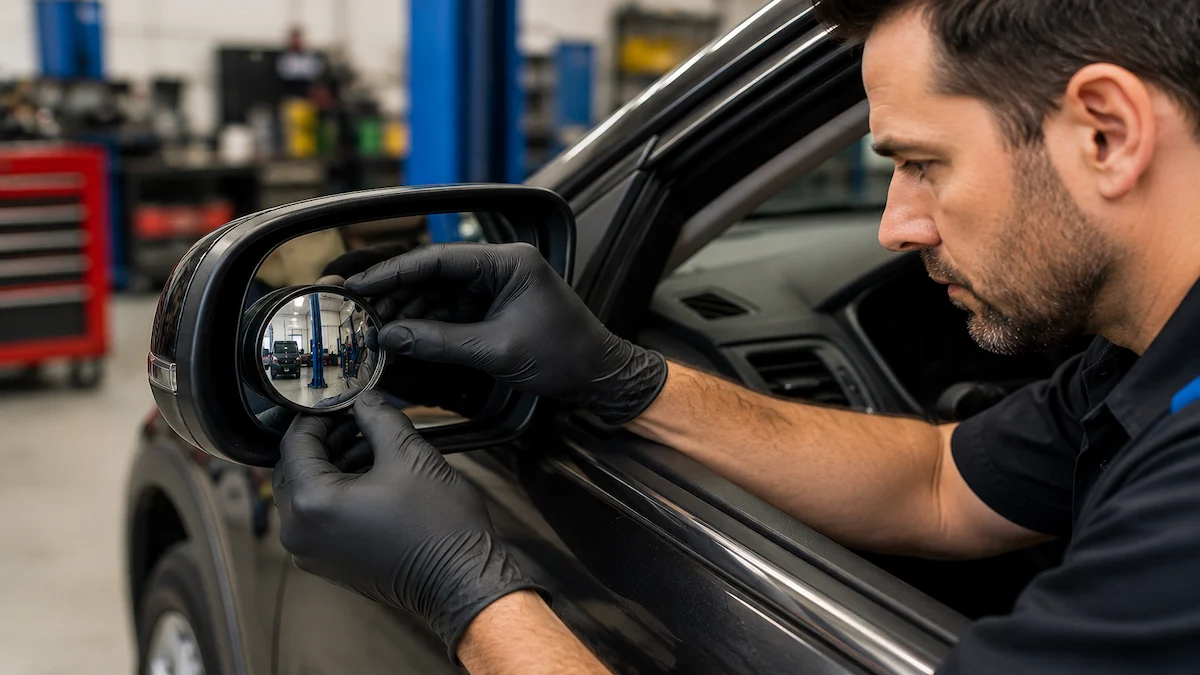
TL;DR: How to Install Blind Spot Mirror
To install blind spot mirrors correctly, clean the vehicle’s side mirror thoroughly with alcohol, test the placement before removing the adhesive backing, attach the mirror in the chosen position, apply firm pressure for 30-60 seconds, and allow the adhesive to cure for at least 24 hours before washing the vehicle. Proper placement improves visibility, reduces blind zones, and makes lane changes and parking safer.
Blind spot mirrors are one of the easiest vehicle safety upgrades you can install yourself. The entire process usually takes less than ten minutes, requires no specialist tools, and can noticeably improve visibility when changing lanes, reversing, or parking.
However, the biggest mistake most drivers make is focusing on installation rather than placement. In many vehicles I’ve worked on over the years, drivers complained that their blind spot mirrors weren’t helping much. Almost every time, the issue wasn’t the mirror itself. It was installed in the wrong position.
This guide will show you how to install blind spot mirrors correctly, how to choose the best location, and how to test whether they’re actually improving your visibility after installation.
Table of Contents
Before You Start: Adjust Your Factory Mirrors Correctly
Before attaching anything to your mirrors, make sure your factory side mirrors are adjusted properly.
Many drivers unknowingly create larger blind spots by aiming their mirrors too far inward. As a result, they see too much of their own vehicle and not enough of the adjacent lanes.
Blind spot mirrors work best when they’re supplementing properly adjusted side mirrors rather than compensating for poor mirror setup.
Sit in your normal driving position and adjust your mirrors according to your vehicle manufacturer’s recommendations before beginning the installation.
Why Placement Matters More Than Mirror Quality
One of the biggest misconceptions is that buying a more expensive blind spot mirror automatically delivers better visibility. In reality, placement has a far greater impact than price.
A premium mirror installed incorrectly can create distorted views, block your factory mirror, and still leave dangerous blind zones uncovered.
On the other hand, even a basic blind spot mirror can perform extremely well when positioned correctly.
That’s why testing placement before removing the adhesive backing is arguably the most important step in the entire installation process.
Tools You Need to Install Blind Spot Mirror
One reason blind spot mirrors are so popular is that installation requires very little equipment.
- Clean Microfiber cloth
- Glass cleaner or isopropyl alcohol
- Blind spot mirrors
- Dry cloth
Avoid household cleaning products that leave oily residue behind. Residue can weaken adhesive bonding and shorten the life of the installation.
Most quality blind spot mirrors include automotive-grade adhesive backing and do not require additional glue or mounting hardware.
Before installation, it’s worth reading our internal guide on choosing the right blind spot mirror model for your vehicle. Different mirror sizes and shapes can produce noticeably different results depending on the vehicle and driving style.
Don’t forget to check blind spot mirror buying guide here
Choosing the Best Position for Your Driving Style
There is no single perfect location that works for every driver. The best position depends on how you use your vehicle.
Best Position for Highway Driving
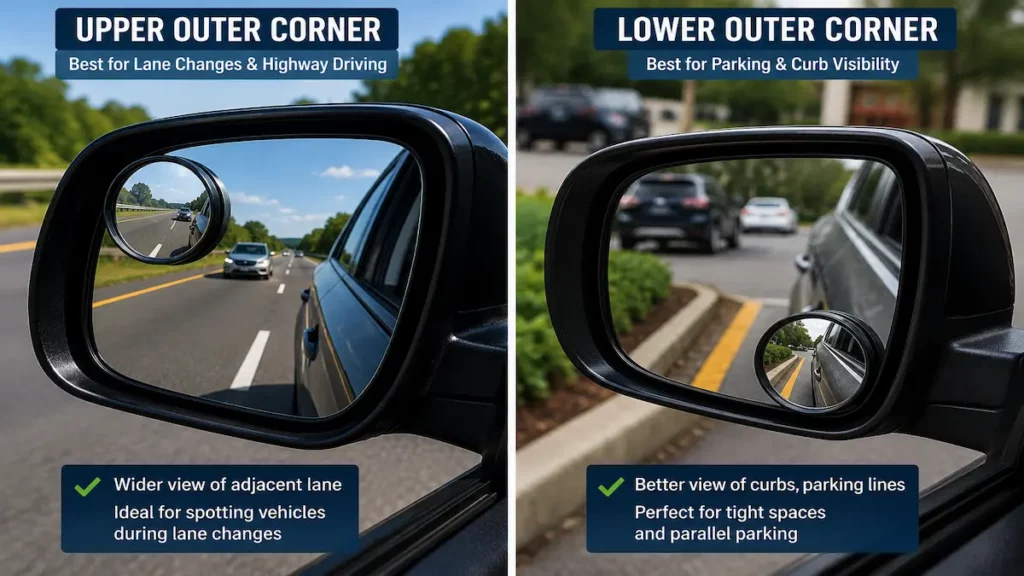
Drivers who spend most of their time on motorways typically benefit from placing the blind spot mirror in the upper outer corner.
This position helps reveal vehicles approaching from adjacent lanes while maintaining a clear view through the factory mirror.
Best Position for City Driving
Urban drivers often prefer a slightly lower position because it provides better awareness of nearby vehicles, cyclists, and roadside hazards.
Best Position for Parking and Reversing
If parking visibility is your primary goal, the lower outer corner is usually the most effective location.
This placement helps reveal kerbs, parking lines, wheel position, and obstacles that may otherwise remain hidden.
Best Position for SUVs, Trucks and Utes
Larger vehicles naturally have larger blind zones.
In workshop vehicles I’ve serviced over the years, many SUV and ute owners preferred lower corner placement because it improved visibility around rear wheels and parking manoeuvres.
How to Install Blind Spot Mirrors Step by Step
Step 1: Clean the Side Mirror Thoroughly
This is the most overlooked part of the entire installation process. Many installation failures happen because dirt, wax, road grime, or cleaning residue remains on the mirror surface. Even if the mirror appears clean, contaminants can prevent the adhesive from bonding properly.
Spray a small amount of isopropyl alcohol onto a microfiber cloth and thoroughly clean the entire mirror surface. Pay special attention to the corners where the blind spot mirror will be installed. Allow the mirror to dry completely before continuing.
I once inspected a vehicle where the owner complained that his blind spot mirrors kept falling off every few weeks. After examining the mirror surface, we discovered he had recently applied a silicone-based detailing product near the side mirrors. The adhesive never had a chance to bond properly because the surface remained contaminated. A quick cleaning solved the problem immediately.
Step 2: Test Different Placement Positions First
Before removing the adhesive backing, sit in your normal driving position and hold the blind spot mirror against different areas of the side mirror.
This simple step prevents one of the most common installation mistakes. The ideal location depends on how you drive and what visibility concerns you want to address.
Drivers who spend most of their time on motorways often prefer the upper outer corner because it provides excellent visibility of neighbouring traffic lanes.
Drivers who frequently park in tight spaces may prefer the lower outer corner because it offers a better view of kerbs, parking lines, and nearby obstacles. There is no universal position that works for every driver.
What matters is finding a location that expands visibility without obstructing the main mirror view. Spend a few minutes experimenting before committing to a permanent position.
Step 3: Choose the Best Blind Spot Mirror Position
For most passenger vehicles, two positions work particularly well. The upper outer corner tends to favour lane-change visibility and motorway driving. The lower outer corner typically favours parking visibility and low-speed manoeuvring.
Drivers towing trailers often prefer lower placement because it provides a clearer view of trailer wheels and surrounding obstacles.
Commercial vehicle operators frequently choose positions based on vehicle size and daily operating conditions.
The best installation is the one that complements your driving habits rather than following a one-size-fits-all recommendation.
Step 4: Remove the Adhesive Backing
Once you’ve confirmed the desired location, carefully peel away the protective adhesive backing. Avoid touching the adhesive surface with your fingers. Natural skin oils can reduce bonding strength and shorten adhesive life.
Most reputable blind spot mirrors use automotive-grade adhesive that performs well in heat, rain, and everyday driving conditions. Cheaper products often use lower-quality adhesive that may fail prematurely.
Step 5: Apply Firm Pressure and Allow the Adhesive to Bond
After positioning the blind spot mirror, press it firmly against the side mirror for at least 30 to 60 seconds.
The goal is to create full contact between the adhesive pad and the mirror surface. Applying even pressure helps eliminate tiny air gaps that can weaken the bond over time.
Resist the temptation to reposition the mirror after it has been attached. Even a slight adjustment can reduce adhesive strength.
Most manufacturers recommend allowing the adhesive to cure before exposing it to heavy moisture. As a general rule, wait at least 24 hours before washing the vehicle and 48 hours before using a pressure washer. This simple precaution can significantly extend the life of the installation.
Check here for mirror adjustment safety: https://www.nhtsa.gov/road-safety/blind-zones-and-mirrors?
How to Adjust Blind Spot Mirrors After Installation
Installing the mirror is only half the job. Proper adjustment is what determines whether it actually improves visibility. Sit in your normal driving position and look at the blind spot mirror while the vehicle is parked.
You should be able to see areas that are not already visible in the main side mirror. Ideally, the blind spot mirror should complement your factory mirror rather than duplicate the same view.
A properly adjusted mirror creates a smooth visual transition between your rear-view mirror, side mirror, blind spot mirror, and peripheral vision.
If your mirror is adjustable, make small changes and reassess visibility from your normal seating position. Large adjustments often create distorted views that become distracting while driving.
One mistake I frequently see is drivers aiming the blind spot mirror too far outward. While this increases lane visibility, it can also create gaps between the main mirror and the blind spot mirror. The objective is balanced coverage, not maximum outward angle.
How to Test Whether You Installed Them Correctly
Many installation guides stop after the mirror is attached. That’s a mistake. The real question is whether the mirror is actually improving visibility.
Parking Test
Park in an empty car park and observe kerbs, parking lines, and nearby objects. The blind spot mirror should reveal areas not visible through the main mirror.
Lane Visibility Test
During normal driving, verify that neighbouring lanes transition smoothly between the factory mirror and blind spot mirror view.
Reverse Parking Test
Check whether reversing visibility has improved. You should notice better awareness of wheel position and surrounding obstacles.
Night Driving Test
Verify that reflections remain clear and useful after dark. Poor-quality mirrors often become difficult to use at night.
Common Blind Spot Mirror Installation Mistakes
Even though installation is straightforward, a few mistakes repeatedly cause problems.
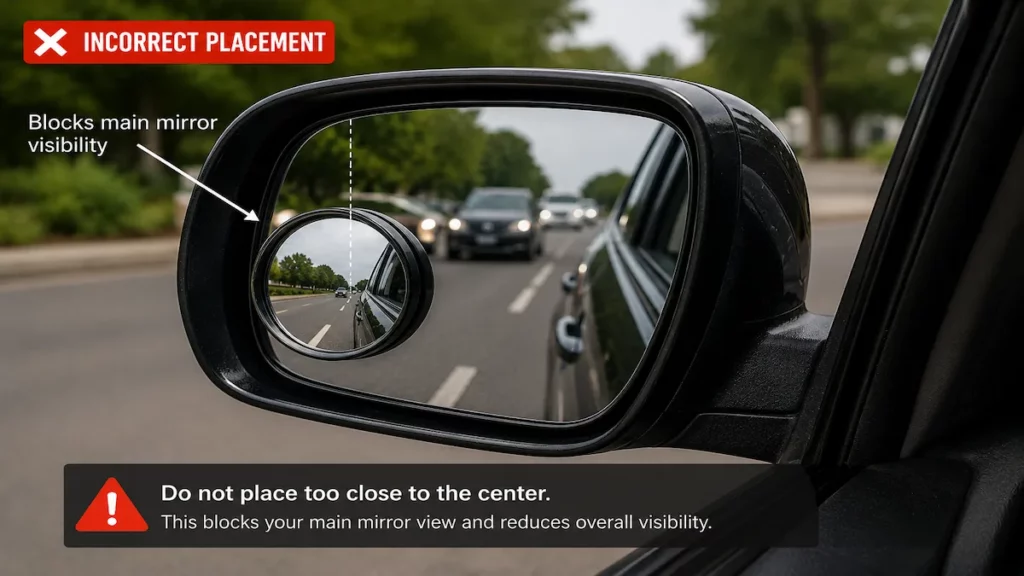
Installing the Mirror Too Close to the Centre
The centre of the factory mirror is where drivers naturally focus most of their attention. Installing a blind spot mirror here often blocks important visibility and makes the mirror feel cluttered. The outer corners almost always provide better results.
Skipping Surface Preparation
Dirty mirrors remain one of the leading causes of adhesive failure. Road film, wax, silicone detailing products, and dust can all interfere with bonding. A thirty-second cleaning step can prevent months of frustration.
Choosing an Oversized Mirror
Bigger is not always better. Very large convex mirrors can distort distances and make objects appear farther away than they actually are.
For most passenger vehicles, a modest-sized blind spot mirror provides the best balance between expanded visibility and image accuracy.
Buying Cheap Adhesive-Based Mirrors
Not all blind spot mirrors are created equal. In workshop vehicles I’ve inspected, inexpensive mirrors often developed fogging, distorted reflections, or adhesive failures within months. Higher-quality mirrors typically cost only slightly more but often last for years.
Ignoring Factory Mirror Adjustment
Blind spot mirrors should supplement correctly adjusted factory mirrors. If the side mirrors themselves are poorly adjusted, adding blind spot mirrors will not fully solve visibility problems.
Before installation, make sure your primary mirrors are adjusted correctly according to manufacturer recommendations.
Weather and Adhesive Considerations
Weather conditions can affect installation quality. If possible, install blind spot mirrors when the mirror surface is dry and temperatures are moderate.
Extremely cold conditions can reduce adhesive performance during installation. Heavy rain immediately after installation may also affect bonding strength.
If installing during hot weather, avoid attaching the mirror directly after the vehicle has been sitting in intense sunlight for hours.
Are Adjustable Blind Spot Mirrors Better Than Fixed Mirrors?
This is one of the most common questions drivers ask before purchasing. The answer depends on how the vehicle is used.
Adjustable blind spot mirrors allow drivers to fine-tune the viewing angle after installation. This flexibility can be particularly useful for larger vehicles, towing applications, and drivers who frequently switch between city driving and motorway travel.
For example, a driver towing a caravan may benefit from adjusting the mirror to monitor trailer wheels and surrounding traffic more effectively. Fixed blind spot mirrors, however, offer their own advantages.
Because they contain fewer moving parts, they are generally more durable and less likely to loosen over time. They are also usually less expensive and easier to maintain. For everyday passenger vehicles, either style can work well when installed correctly.
When Should You Replace Blind Spot Mirrors?
Blind spot mirrors are inexpensive, but they do not last forever. Over time, exposure to sunlight, heat, moisture, road debris, and cleaning chemicals can affect both the mirror and the adhesive.
Replace the mirror if you notice any of the following:
- Cracked mirror surfaces that distort reflections.
- Fogging or cloudiness inside the mirror.
- Adhesive separation or movement.
- Noticeable image distortion.
- Physical damage from impacts or automatic car washes.
Quality mirrors often remain usable for several years, while lower-cost versions may require replacement much sooner.
Regular inspections during vehicle cleaning can help identify issues before they affect visibility.
Real-World Benefits Drivers Notice After Installation
Many automotive accessories promise dramatic improvements but deliver little real-world value. Blind spot mirrors are different. After installing them for customers over the years, I consistently hear similar feedback.
Drivers often mention that lane changes feel less stressful because they can monitor adjacent traffic more confidently. Parking becomes easier because kerbs and parking lines are easier to see.
Reversing into tight spaces requires fewer corrections. Heavy traffic driving feels less overwhelming because surrounding vehicles remain visible for longer periods.
One customer who regularly commuted on congested motorways described blind spot mirrors as the best twenty-dollar upgrade he had ever purchased.
While that may sound like an exaggeration, many drivers experience similar improvements in day-to-day confidence once the mirrors are installed correctly.
Safety Considerations You Should Know
Blind spot mirrors improve visibility, but they are not a substitute for safe driving habits. Drivers should continue performing shoulder checks before changing lanes and remain aware of surrounding traffic conditions.
Blind spot mirrors work best as part of a layered safety approach that includes:
- Correctly adjusted factory mirrors.
- Regular shoulder checks.
- Defensive driving techniques.
- Maintaining safe following distances.
- Attention to road conditions and traffic flow.
Used correctly, blind spot mirrors reduce risk. Used carelessly, they can create a false sense of security. The safest drivers combine technology, proper mirror setup, and good driving habits.
Final Thoughts
Learning how to install blind spot mirrors correctly is one of the simplest ways to improve vehicle visibility without spending significant money.
The installation process itself is straightforward, but proper placement, thorough surface preparation, and careful adjustment make the difference between a mirror that genuinely improves safety and one that becomes a distraction.
After more than ten years working around vehicles and helping drivers solve visibility-related concerns, I still consider blind spot mirrors one of the best low-cost safety upgrades available. When positioned correctly, they can make lane changes smoother, parking easier, and everyday driving less stressful.
Take a few extra minutes to test placement before attaching the mirror permanently. That small effort can deliver years of improved visibility and greater confidence behind the wheel.
Frequently Asked Questions
Where should blind spot mirrors be placed?
Most drivers achieve the best results by installing them in either the upper outer corner or lower outer corner of the factory side mirror. The ideal position depends on whether lane-change visibility or parking visibility is the primary goal.
Do blind spot mirrors really work?
Yes. When installed and adjusted correctly, blind spot mirrors expand the field of view and help reduce areas that are difficult to see using standard mirrors alone.
Can blind spot mirrors damage factory mirrors?
No. Quality blind spot mirrors use removable automotive adhesive that normally does not damage factory mirrors when removed correctly.
Are blind spot mirrors useful on vehicles with blind spot monitoring systems?
Many drivers still find them useful. Electronic blind spot monitoring systems provide alerts, while blind spot mirrors provide a direct visual view of surrounding traffic.
Can I remove a blind spot mirror later?
Yes. Gentle heat from a hairdryer combined with adhesive remover usually allows safe removal without damaging the original mirror surface.
Do blind spot mirrors work at night?
Quality convex mirrors remain effective at night and during poor weather conditions, although visibility may vary depending on mirror quality and lighting conditions.
How long does installation take?
Most drivers can complete installation in five to ten minutes, including cleaning and positioning.
Are blind spot mirrors legal?
In most regions, blind spot mirrors are legal because they improve visibility rather than obstruct it. Always verify local regulations if you have concerns.