

TL;DR: How Does Car Air Purifiers Work
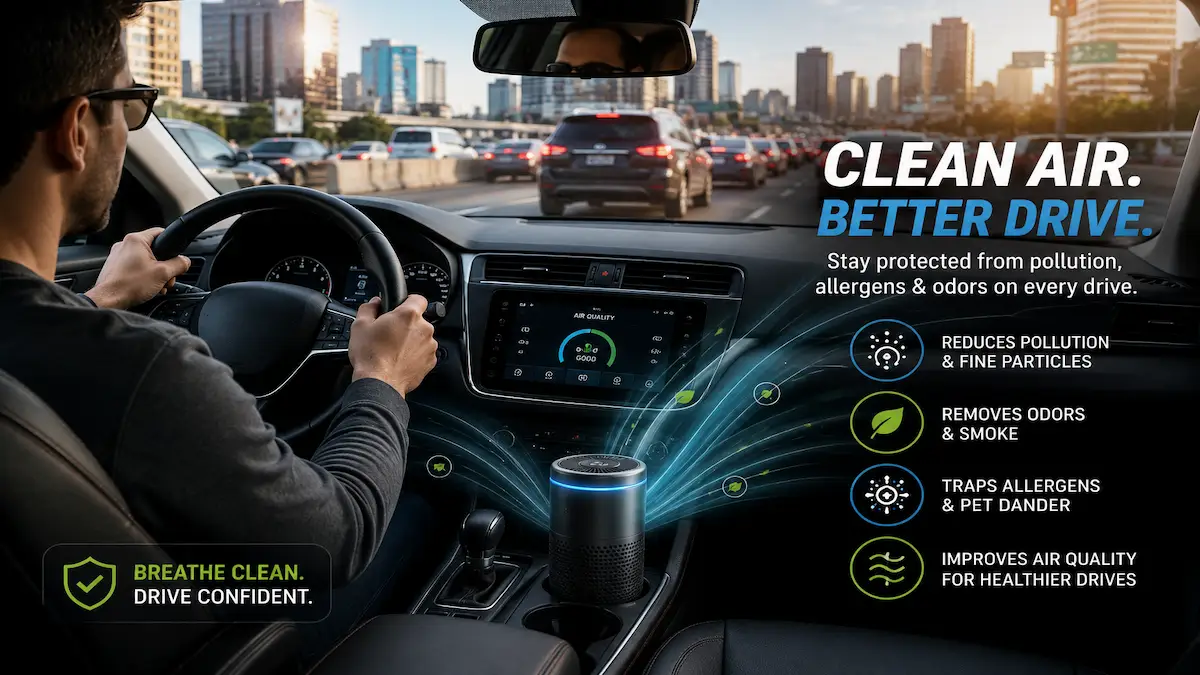
The best car air purifiers improve cabin air quality by removing dust, pollen, smoke particles, pet dander and unpleasant odours using HEPA and activated carbon filtration. While they don’t replace your vehicle’s cabin air filter, they provide continuous air cleaning that can make daily driving more comfortable, especially for allergy sufferers, commuters and families.
If you spend hours driving every week, cabin air quality matters more than most people realize. I’ve seen plenty of vehicle interiors that looked clean but had terrible air circulation filled with dust, smoke residue, pet hair, and even mold buildup hidden behind cabin filters.
The truth is simple: your vehicle’s factory cabin filter can only do so much. That’s where the best car air purifiers make a noticeable difference. A good purifier can help reduce allergies, eliminate lingering odors, and make daily commuting far more comfortable especially if you drive in traffic-heavy cities or carry pets regularly.
Table of Contents
Why Car Air Quality Matters
Most drivers spend plenty of time keeping the exterior of their vehicle clean, servicing the engine and replacing worn tyres. Yet very few stop to think about the quality of the air they breathe every time they get behind the wheel.
Whether you’re commuting to work, taking children to school or spending hours driving for work, the air inside your vehicle can quickly become contaminated with dust, pollen, road pollution, smoke residue, pet hair and unpleasant odours.
Because modern vehicles are designed with tightly sealed cabins for better fuel efficiency and climate control, many of these pollutants remain trapped inside rather than circulating out naturally.
Over the years, I’ve inspected vehicles that appeared spotless on the surface but had surprisingly poor cabin air quality. In many cases, owners complained about headaches, stale smells or constant sneezing during their daily commute, assuming the air conditioning system was faulty.
More often than not, the real problem was a combination of an overdue cabin air filter and contaminated air continuously circulating throughout the cabin.
A quality car air purifier won’t solve every air quality issue on its own, but when used alongside a properly maintained cabin filter, it can make a noticeable difference. It continuously removes fine airborne particles while helping reduce odours that ordinary cleaning simply can’t eliminate.
If you frequently drive through busy city traffic, live in areas affected by bushfire smoke, transport pets or suffer from seasonal allergies, investing in one of the best car air purifiers can significantly improve everyday driving comfort.
To help you make an informed decision, this guide compares some of the highest-rated models currently available. Each recommendation has been evaluated using manufacturer specifications, independent research, verified owner feedback and practical considerations such as filtration efficiency, noise levels, ease of installation, maintenance costs and overall value for money.
Why Is the Air Inside Your Car Often More Polluted
Many people assume that once the doors are closed, they’re protected from outside pollution. Unfortunately, that’s only partly true.
Every time you open a door or window, airborne contaminants enter the cabin. Dust from roads, pollen from surrounding vegetation, vehicle exhaust, industrial emissions and microscopic particles from brake and tyre wear all find their way inside. Once trapped, these particles continue circulating through the ventilation system.
Road congestion makes the problem even worse. Sitting in slow-moving traffic behind diesel vehicles or buses exposes your cabin to higher concentrations of fine particulate matter. Even with the windows closed, some pollutants still enter through the vehicle’s ventilation system.
Another common source of poor cabin air is moisture. Water entering through wet shoes, umbrellas or minor leaks can create the ideal environment for mould and mildew. Over time, this often leads to the familiar musty smell many drivers notice whenever they switch on the air conditioning.
I’ve also seen vehicles where owners repeatedly used air fresheners to hide unpleasant smells instead of addressing the underlying cause. While fragrances temporarily mask odours, they do nothing to remove airborne contaminants that continue circulating throughout the cabin.
For families travelling with children, pet owners and anyone with asthma or allergies, cleaner cabin air isn’t simply about comfort. Reducing exposure to airborne particles may help minimise irritation during long journeys and create a more pleasant driving environment.
This is where a dedicated car air purifier adds genuine value. Unlike the factory cabin filter, which only filters air entering through the HVAC system, an air purifier continuously circulates and cleans the cabin air while you drive.
Many premium models combine True HEPA filtration with activated carbon filters, allowing them to capture microscopic particles while also reducing smoke, food smells and other persistent odours.
Independent research from organisations such as the United States Environmental Protection Agency (EPA) has shown that indoor air can sometimes contain higher concentrations of pollutants than outdoor air, making regular filtration an important consideration even inside vehicles.
When combined with routine cabin filter replacement and occasional interior deep cleaning, a good air purifier helps create a noticeably fresher environment that many drivers appreciate after only a few days of use.
Car Air Purifier Benefits
A quality car air purifier does far more than make your cabin smell pleasant. The right model continuously removes airborne contaminants that build up while driving, creating a cleaner and more comfortable environment every time you get behind the wheel. While results vary depending on the purifier and your driving conditions, the following benefits are the ones drivers notice most.
Helps Remove Smoke and Unpleasant Odours
Persistent odours are one of the biggest reasons people buy a car air purifier. Cigarette smoke, takeaway food, damp carpets, gym bags and pet smells can linger inside upholstery and ventilation ducts long after the source has been removed.
Models equipped with activated carbon filters are particularly effective because they absorb odour-causing gases rather than simply masking them with fragrance. This makes a noticeable difference in vehicles that are used daily or regularly transport pets and passengers.
During routine inspections, I’ve come across vehicles where owners had tried multiple air fresheners without success. Once the cabin filter was replaced and a quality air purifier was added, the interior gradually became much fresher over the following weeks. Although deep cleaning is still important, continuous filtration helps prevent those stubborn smells from returning as quickly.
Reduces Allergens for More Comfortable Driving
If you regularly experience sneezing, itchy eyes or a blocked nose while driving, airborne allergens inside the cabin may be contributing to the problem.
True HEPA filters are designed to capture extremely small particles, including:
- Pollen
- Dust
- Pet dander
- Mould spores
- Fine airborne particles
This is especially helpful during spring when pollen levels are high or for drivers who frequently travel on dusty roads. Many allergy sufferers report feeling more comfortable during longer journeys once cleaner air is continuously circulating through the cabin.
Improves Everyday Driving Comfort
Clean air is something most people don’t appreciate until they experience the difference themselves.
After spending hours in traffic, cabins can often feel warm, stale and heavy, particularly with the windows closed. By constantly filtering airborne particles and reducing lingering odours, a good purifier helps maintain a fresher atmosphere throughout the journey.
One rideshare driver I spoke with installed a compact purifier after spending ten to twelve hours a day driving in congested urban areas. While he wasn’t expecting dramatic changes, he mentioned that the cabin felt noticeably fresher by the end of each shift, and passengers frequently commented on how clean the vehicle smelled.
Although everyone’s experience will differ, cleaner cabin air can make daily commuting feel less tiring, particularly for people who spend long periods behind the wheel.
Helps Protect Passengers
Families with young children, older passengers or anyone with respiratory sensitivities often place greater importance on cabin air quality.
Children are generally more sensitive to airborne pollutants than adults, while older passengers may also benefit from cleaner air during longer journeys. Although a car air purifier is not a medical device, reducing airborne dust, smoke particles and allergens can help create a more pleasant travelling environment for everyone inside the vehicle.
Supports Your Vehicle’s Existing Cabin Filter
Many drivers assume replacing the cabin air filter is all that’s needed to improve interior air quality. While replacing it at the recommended interval is essential, the factory filter only cleans air entering through the vehicle’s heating and air-conditioning system.
A dedicated air purifier works alongside that filter by continuously circulating and cleaning the air already inside the cabin. Together, they provide far better filtration than either system can achieve on its own.
For the best results, always replace your cabin air filter according to the manufacturer’s service schedule and keep your vehicle’s interior clean. Even the best car air purifiers perform more effectively when they’re not competing with excessive dust, pet hair or accumulated dirt.
Best Car Air Purifiers
1. Best Car Air Purifier Overall: Philips GoPure GP5611

Among the models currently available, the Philips GoPure GP5611 stands out as the best overall choice for most drivers because it delivers an excellent balance of filtration performance, quiet operation and everyday practicality.
Rather than focusing on flashy features, Philips has designed this purifier to tackle the problems that matter most. Its multi-stage filtration system combines True HEPA technology with an activated carbon filter to capture fine airborne particles while reducing smoke, traffic pollution and unpleasant odours that commonly build up inside vehicle cabins.
One of its biggest strengths is its compact design. It fits comfortably inside most vehicles without taking up valuable cabin space, making it suitable for everything from small hatchbacks to larger SUVs. Installation is straightforward using either a USB or 12-volt power connection, allowing most drivers to have it running within minutes.
Noise is another area where the GP5611 performs particularly well. Some budget air purifiers become distracting during motorway driving because their fans constantly run at higher speeds. Philips has done a good job keeping operating noise low, allowing the purifier to work quietly in the background without becoming irritating during long journeys.
Another advantage is its consistent performance in day-to-day driving. Whether you’re commuting through busy city traffic, transporting pets or regularly dealing with seasonal pollen, the purifier continuously filters the cabin air without requiring constant adjustments. It simply gets on with the job while you focus on driving.
Why I Recommend It
- True HEPA and activated carbon filtration
- Quiet operation suitable for daily commuting
- Compact design that fits most vehicles
- Simple USB or 12V installation
- Excellent balance between performance and price
- Suitable for allergy sufferers, commuters and rideshare drivers
For most drivers looking to improve cabin air quality without spending premium money, the Philips GoPure GP5611 remains one of the safest and most well-rounded choices available. (https://www.philips.com)
2. Best Premium Car Air Purifier: IQAir Atem Car
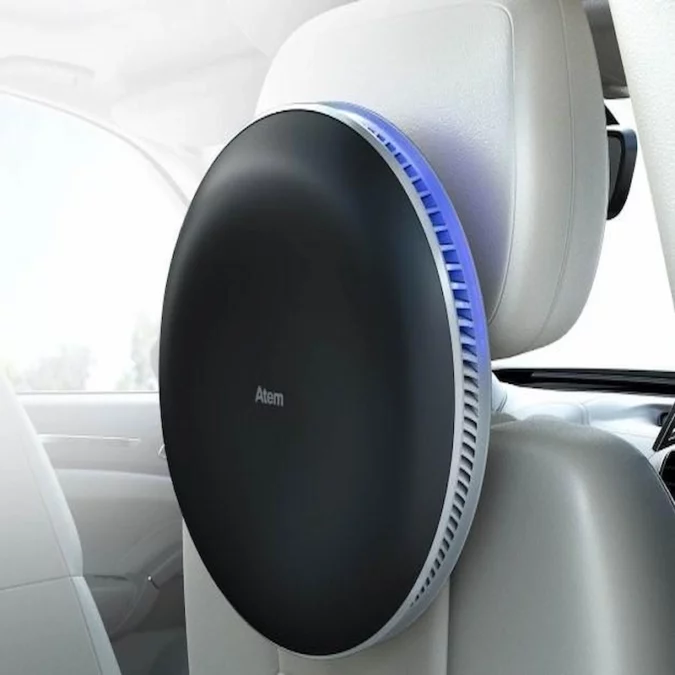
If maximum filtration performance is your priority, the IQAir Atem Car is one of the most capable car air purifiers you can buy. Although it’s considerably more expensive than most competitors, it delivers outstanding air-cleaning performance that’s difficult to match, particularly for drivers who regularly encounter smoke, heavy traffic or poor air quality.
Unlike many compact purifiers that rely on basic HEPA filters, the Atem Car uses HyperHEPA® filtration, which is designed to capture ultrafine airborne particles that many standard filters struggle to remove.
This makes it especially suitable for urban commuters, allergy sufferers and anyone living in areas affected by seasonal bushfire smoke or industrial pollution.
One aspect that immediately stands out is the purifier’s airflow. Many small car purifiers quietly circulate air but take a long time to make a noticeable difference. The IQAir Atem Car moves a much larger volume of air while maintaining excellent filtration efficiency, allowing the cabin to feel fresher much sooner.
During periods of heavy smoke, I had the opportunity to compare a premium-grade purifier with several lower-priced alternatives in similar driving conditions. The higher-end unit noticeably reduced the smoky smell within a relatively short time, while cheaper models took much longer to improve the cabin environment.
Experiences will naturally vary depending on vehicle size and pollution levels, but the difference in filtration performance was clear.
Build quality is another area where IQAir justifies its premium price. The purifier feels exceptionally well made, with durable materials and secure mounting that remain stable even on rough roads. Rather than sitting loosely in a cup holder, it attaches neatly to the vehicle’s headrest, allowing cleaner air to circulate more effectively throughout the cabin.
Technology enthusiasts will also appreciate the companion smartphone app. It allows users to adjust fan speeds, monitor filter status and control operating modes remotely.
Unlike some connected gadgets that add unnecessary complexity, these features are genuinely useful because they let you optimise filtration based on changing driving conditions. (https://www.iqair.com)
What I Like
- Industry-leading HyperHEPA® filtration
- Excellent performance against smoke and fine airborne particles
- Powerful airflow for faster air cleaning
- Premium construction and secure installation
- Convenient smartphone app control
Things to Consider
- Significantly more expensive than most competitors
- Larger than compact cup-holder models
- Replacement filters cost more over time
Who Should Buy It?
The IQAir Atem Car is an excellent investment for drivers who:
- Spend long hours driving in congested cities
- Regularly experience bushfire smoke or heavy pollution
- Have severe allergies or respiratory sensitivities
- Want the highest level of cabin air filtration available
- Don’t mind paying more for premium performance
For the average commuter, the Philips GoPure GP5611 offers better overall value. However, if cleaner air is your highest priority and your budget allows, the IQAir Atem Car is one of the strongest performers currently available.
3. Best Budget Car Air Purifier: Pure Enrichment PureZone™ Mini
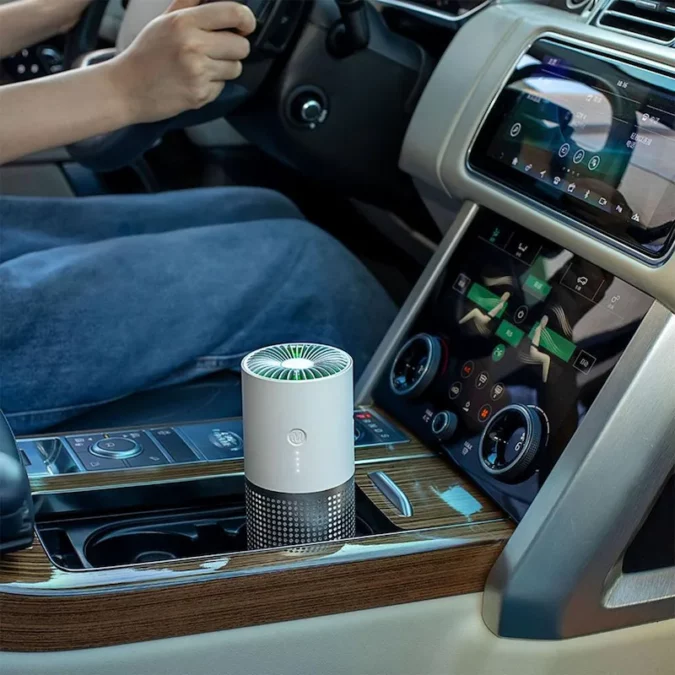
Not everyone needs a premium air purifier costing several hundred dollars. If you’re looking for an affordable way to improve cabin air quality, the Pure Enrichment PureZone™ Mini proves that you don’t have to spend a fortune to notice a difference.
Designed as a compact and portable purifier, the PureZone Mini is small enough to move easily between your car, office or home. Its rechargeable battery eliminates the need for permanent wiring, making it particularly convenient for drivers who use more than one vehicle.
While it doesn’t match the filtration capacity of premium models, it performs surprisingly well considering its size and price. For smaller cabins, daily commuting and light odour control, it offers excellent value. (https://pureenrichment.com)
One colleague started using this purifier after adopting two dogs that regularly travelled in his hatchback. Despite frequent vacuuming, wet fur and pet odours tended to linger after rainy days. After replacing the cabin air filter and using the PureZone Mini consistently for about a week, the cabin smelled noticeably fresher, especially during longer journeys.
Like any budget purifier, it’s important to keep expectations realistic. It isn’t designed to tackle severe smoke pollution or rapidly clean the air inside larger SUVs. However, for everyday driving, it provides a worthwhile improvement over relying solely on the factory cabin filter.
Why It’s a Great Budget Choice
- Affordable purchase price
- Lightweight and portable
- Rechargeable battery operation
- Easy to move between vehicles
- Suitable for smaller cabins and everyday commuting
Best For
- Budget-conscious drivers
- Small cars and hatchbacks
- Pet owners
- Students and first-time buyers
- Drivers wanting a portable purifier for multiple locations
Although premium models deliver stronger filtration, the PureZone Mini remains one of the best entry-level options for drivers looking to improve cabin air quality without making a significant investment.
4. Best Car Air Purifier for Odour Removal: Sharp Plasmacluster IG-GC2
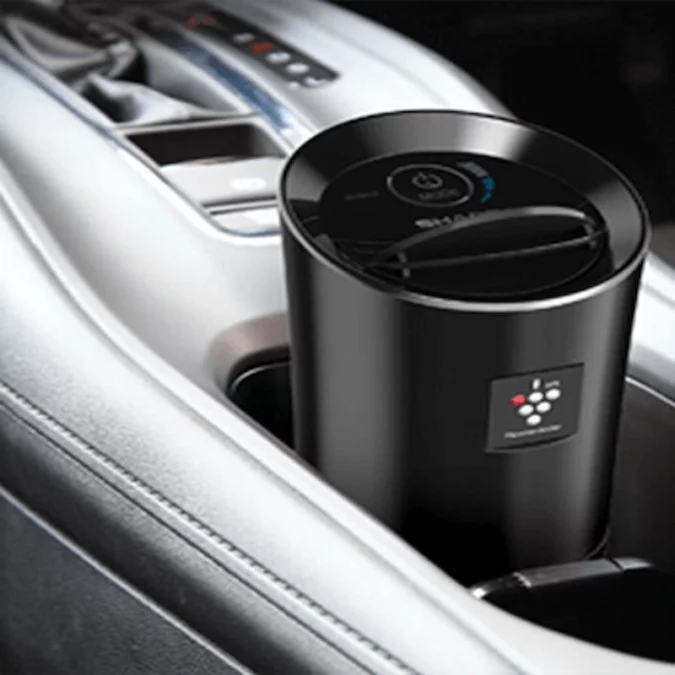
If unpleasant smells are your biggest concern, the Sharp Plasmacluster IG-GC2 deserves a closer look. Rather than focusing solely on trapping airborne particles, this model is designed to help neutralise odours before they have a chance to build up inside the cabin.
Anyone who regularly eats in their car, transports pets or carries sports equipment knows how quickly lingering smells can become part of the driving experience. Air fresheners may temporarily cover them up, but they rarely deal with the source of the problem.
The Sharp Plasmacluster takes a different approach by combining air purification with ion technology that helps reduce odours while improving overall cabin freshness. (https://global.sharp)
One feature that makes this purifier particularly practical is its compact cup-holder design. Unlike larger units that require brackets or headrest mounting, the IG-GC2 simply slots into a standard cup holder, making installation quick and unobtrusive. It also blends well with most vehicle interiors without taking up valuable storage space.
Noise levels are another strong point. Even on higher fan settings, the purifier remains relatively quiet, making it suitable for long motorway journeys where constant fan noise can quickly become distracting.
During routine servicing, I’ve noticed that vehicles used for food deliveries or frequent family trips often develop lingering interior smells even after a thorough clean. While no air purifier can replace proper upholstery cleaning, models like the Sharp help maintain a fresher cabin between deep cleans by continuously treating the circulating air.
Why Drivers Like It
- Effective at reducing lingering odours
- Compact cup-holder design
- Quiet operation during everyday driving
- Easy installation with minimal setup
- Suitable for daily commuting and family vehicles
Best For
- Drivers who regularly eat in their vehicle
- Families transporting children
- Pet owners
- Gym-goers and outdoor enthusiasts
- Anyone wanting a fresher-smelling cabin
If odour control is more important to you than advanced smart features, the Sharp Plasmacluster IG-GC2 is one of the strongest options currently available.
5. Best Smart Car Air Purifier: Xiaomi Smart Car Air Purifier

For drivers who enjoy connected technology, the Xiaomi Smart Car Air Purifier combines effective air filtration with features that make monitoring cabin air quality much easier.
Unlike conventional purifiers that quietly run in the background, Xiaomi’s model provides real-time air quality monitoring, allowing you to see exactly how the air inside your vehicle changes throughout your journey.
This can be surprisingly informative when driving through busy city centres, tunnels or industrial areas where pollution levels often rise without being immediately noticeable.
The companion smartphone app adds another level of convenience. Drivers can monitor filter condition, adjust fan speed and review air quality information directly from their phone. Rather than relying on guesswork, you can tailor the purifier’s performance to match changing road conditions. (https://www.mi.com)
Normally, I’m cautious about recommending products simply because they include smartphone connectivity. Many connected accessories add features that drivers rarely use after the first few weeks.
In this case, however, the live air quality display serves a practical purpose by showing when the purifier is working hardest and when filter maintenance may be required.
Filtration performance is also respectable. The purifier combines a high-efficiency particulate filter with activated carbon to help remove dust, smoke particles, pollen and common odours.
While it doesn’t quite reach the medical-grade filtration offered by premium units like the IQAir Atem Car, it provides more than enough performance for most everyday driving situations.
Its modern appearance also complements newer vehicles, particularly those already equipped with digital dashboards and connected technology.
Its modern appearance also complements newer vehicles, particularly those already equipped with digital dashboards and connected technology.
Why It’s Worth Considering
- Real-time air quality monitoring
- Smartphone app integration
- Modern, attractive design
- Effective HEPA and activated carbon filtration
- Automatic fan adjustment based on pollution levels
Best For
- Technology enthusiasts
- Daily urban commuters
- Owners of connected or smart vehicles
- Drivers who enjoy monitoring vehicle data
- Anyone wanting greater control over cabin air quality
The Xiaomi Smart Car Air Purifier is ideal for drivers who appreciate technology that delivers genuine everyday benefits rather than simply adding unnecessary gadgets.
How to Choose the Best Car Air Purifiers
Not every car air purifier performs the same, and the most expensive option isn’t automatically the best choice for every driver. The right model depends on your vehicle, driving habits and the air quality issues you’re trying to solve.
Understanding a few key features before buying will help you avoid wasting money on a purifier that doesn’t meet your needs.
Choosing the best car air purifier isn’t simply about buying the model with the highest price tag or the most features. The right choice depends on your driving environment, the size of your vehicle and the type of air quality problems you want to solve.
Understanding a few key features before you buy will help you invest in a purifier that continues performing well long after the initial excitement wears off.
Prioritise True HEPA Filtration
If your main goal is cleaner, healthier air, True HEPA filtration should be at the top of your checklist.
A genuine HEPA filter captures extremely small airborne particles that commonly circulate inside vehicle cabins, including:
- Dust
- Pollen
- Pet dander
- Smoke particles
- Mould spores
- Fine road pollution
This is particularly valuable for drivers with allergies, asthma or anyone who regularly travels through areas with heavy traffic. In my experience, vehicles fitted with quality HEPA-based purifiers generally show a much greater improvement in overall cabin freshness than those relying solely on ionisers or fragrance-based systems.
Some manufacturers advertise “HEPA-like” or “HEPA-style” filters, but these don’t always meet the same filtration standards. Whenever possible, choose a purifier that clearly states it uses True HEPA filtration.
Don’t Overlook Activated Carbon Filters
While HEPA filters remove airborne particles, they aren’t designed to eliminate smells. That’s where activated carbon becomes important.
Activated carbon absorbs many of the gases responsible for unpleasant cabin odours, including:
- Cigarette smoke
- Food smells
- Pet odours
- Fuel vapours
- Volatile Organic Compounds (VOCs)
If your vehicle regularly carries pets, sports equipment or takeaway meals, a purifier combining HEPA and activated carbon filtration will usually provide much better long-term results than a HEPA-only model.
Drivers often assume persistent smells are caused by dirty upholstery alone. In reality, airborne odour molecules continue circulating through the cabin, which is why continuous carbon filtration makes such a noticeable difference over time.
Choose the Right Size for Your Vehicle
One mistake many buyers make is assuming every purifier works equally well in every vehicle. The reality is that cabin size has a significant impact on performance.
A compact purifier that works brilliantly in a small hatchback may struggle to circulate enough air inside a seven-seat SUV or large ute. Conversely, buying an oversized purifier for a compact city car may simply waste money without delivering meaningful extra benefits.
Before purchasing, check the manufacturer’s recommended coverage area and match it to your vehicle’s interior volume.
As a general guide:
- Small portable units are ideal for hatchbacks and compact sedans.
- Mid-sized purifiers suit most family cars and crossovers.
- Larger, high-capacity models perform better in SUVs, people movers and commercial vehicles.
Pay Attention to Noise Levels
Air purifiers are designed to run while you’re driving, so excessive fan noise quickly becomes annoying.
I’ve tested accessories that worked reasonably well but produced a constant humming sound that became distracting after an hour on the motorway. Drivers covering long distances every day tend to notice this more than occasional weekend users.
Manufacturers often publish operating noise levels in decibels (dB). Lower figures generally indicate quieter operation.
Many premium models also include automatic fan control, increasing airflow only when pollution levels rise before returning to a quieter setting once the air has been cleaned.
Consider Filter Replacement Costs
The purchase price is only part of the total ownership cost.
Every air purifier eventually needs replacement filters, and prices vary considerably between brands.
Some budget models appear inexpensive initially but require costly replacement cartridges every few months. Over several years, those ongoing expenses can exceed the original purchase price.
Before buying, check:
- How often filters need replacing
- The cost of replacement filters
- Whether replacements are readily available
- How easy the filters are to install
A purifier with affordable, widely available filters often provides better long-term value than a cheaper model with expensive consumables.
Installation Should Be Simple
Most modern car air purifiers are designed for quick installation, but some are noticeably more convenient than others.
Common mounting options include:
- Cup holder placement
- Headrest mounting
- Dashboard mounting
- Centre console positioning
Power is typically supplied through a USB connection or a 12-volt accessory socket.
Unless you specifically want a permanent installation, choosing a purifier that’s easy to move between vehicles gives you much greater flexibility.
Smart Features Are Helpful But Not Essential
Many newer air purifiers now include Wi-Fi or Bluetooth connectivity, smartphone apps and real-time air quality displays.
These features can certainly be useful, particularly if you drive through areas where pollution levels change throughout the day. Seeing real-time air quality readings can also help you understand when your purifier is working hardest. That said, smart technology shouldn’t be the deciding factor.
I’d always recommend prioritising filtration performance, reliability and ease of maintenance over extra digital features. A purifier that quietly delivers consistently clean air is far more valuable than one packed with technology but average filtration.
Match the Purifier to Your Driving Habits
The best car air purifier is the one that suits how you actually use your vehicle. If your daily commute involves heavy traffic, prioritise strong particle filtration. If pets regularly travel with you, focus on activated carbon filters that help reduce lingering odours.
Families with young children may benefit from quieter models that operate continuously without becoming distracting, while rideshare drivers often gain the most from purifiers designed for long daily operating hours.
Thinking about your typical driving routine before buying makes it much easier to choose a purifier that delivers lasting value rather than becoming another unused accessory.
Signs Your Car Needs an Air Purifier
Not every vehicle needs a dedicated air purifier, but there are certain warning signs that suggest your cabin air quality isn’t as clean as it should be. If you’ve noticed persistent odours, allergy symptoms or stale air despite keeping your car clean, adding a purifier could make a noticeable difference.
Although replacing the cabin air filter is always the first step, some air quality issues continue even after routine maintenance. That’s when a dedicated air purifier becomes a worthwhile upgrade.
Unpleasant Odours Keep Coming Back
One of the clearest signs is a smell that refuses to disappear. You might vacuum the carpets, wipe down the dashboard and even use air fresheners, only for the odour to return within a few days. This often happens because airborne odour molecules continue circulating through the cabin and ventilation system.
Common causes include:
- Cigarette smoke
- Food spills
- Pet odours
- Damp carpets
- Gym bags
- Moisture trapped inside the ventilation system
An activated carbon filter won’t replace proper interior cleaning, but it helps remove many of the gases responsible for these lingering smells instead of simply covering them up.
Allergy Symptoms Become Worse While Driving
Do you start sneezing shortly after switching on the air conditioning? Do your eyes become itchy or your nose blocked during longer journeys? These symptoms can indicate that allergens are circulating inside your vehicle.
Pollen, dust, mould spores and pet dander easily enter the cabin whenever doors or windows are opened. Once inside, they can remain suspended in the air, especially if the cabin filter is nearing the end of its service life.
A purifier fitted with a True HEPA filter continuously removes many of these airborne particles, helping create a cleaner environment for allergy sufferers.
Of course, if symptoms persist, it’s also worth inspecting the cabin air filter and evaporator for mould or excessive dirt, as these can contribute to poor air quality.
You Spend Hours Driving in Heavy Traffic
Drivers who commute through busy cities face constant exposure to vehicle emissions. Even with the windows closed, fine particles from diesel exhaust, brake dust and tyre wear can enter the cabin through the ventilation system.
Spending an hour or more each day in stop-start traffic means you’re repeatedly exposed to these pollutants. Over time, many drivers notice the cabin feeling stuffy or stale, particularly during peak-hour congestion.
A dedicated car air purifier continuously filters these airborne particles, helping maintain cleaner air throughout the journey.
This is one reason rideshare drivers, delivery drivers and frequent commuters often notice greater benefits than people who only use their vehicle occasionally.
You Frequently Travel With Pets
Pets are wonderful travelling companions, but they also introduce hair, dander and odours into the cabin.
Even after vacuuming, tiny particles often remain embedded in seats, carpets and upholstery. As passengers move around the cabin, these particles become airborne again.
If your dog joins you on regular road trips or your cat frequently travels in a carrier, an air purifier with HEPA and activated carbon filtration can help reduce both allergens and lingering pet smells between deep cleans.
Your Vehicle Feels Stale Even After Cleaning
Sometimes a vehicle looks spotless but still doesn’t feel fresh. This usually happens because cleaning removes dirt from visible surfaces while airborne contaminants continue circulating through the cabin.
I’ve inspected several vehicles where owners had professionally detailed the interior yet still complained that something “didn’t feel right.” After replacing an overdue cabin filter and adding an air purifier, the cabin atmosphere became noticeably cleaner within a relatively short period.
While every situation is different, this combination often provides much better results than relying on interior cleaning alone.
You Notice a Musty Smell From the Air Conditioning
A damp or musty smell when the air conditioning starts is another common warning sign.
Although the purifier won’t fix the underlying cause, it can help improve overall cabin air quality once the issue has been addressed.
Common causes include:
- A dirty cabin air filter
- Moisture trapped around the evaporator
- Mould or mildew inside the HVAC system
- Blocked air-conditioning drain tubes
If these problems are ignored, unpleasant odours usually return regardless of how many air fresheners are used.
It’s always worth having the ventilation system inspected before assuming an air purifier alone will solve the problem.
You Live in an Area With High Pollution or Bushfire Smoke
Drivers living near busy roads, industrial areas or regions affected by seasonal bushfires often experience poorer cabin air quality than those in rural locations.
During periods of elevated smoke or pollution, keeping windows closed only provides limited protection. Fine airborne particles can still enter through the ventilation system.
Premium air purifiers with high-efficiency filtration are particularly valuable under these conditions because they continuously remove microscopic particles while you’re driving.
One misconception I regularly come across is that buying a car air purifier automatically fixes every air quality problem.
In reality, the best results usually come from combining several simple maintenance steps:
- Replace the cabin air filter on schedule.
- Keep carpets and upholstery clean.
- Remove moisture before mould develops.
- Service the air-conditioning system when needed.
- Use a quality air purifier for continuous filtration.
Working together, these steps create a noticeably fresher, healthier cabin than any single solution can achieve on its own.
Cabin Filters vs Car Air Purifiers
One of the most common questions drivers ask is whether buying a car air purifier makes the factory cabin air filter unnecessary. The short answer is no.
Although both improve the air inside your vehicle, they perform different jobs. Rather than replacing one another, they work together to create a cleaner and healthier cabin.
Understanding how each system works will help you decide whether investing in an air purifier is worthwhile.
What Does a Cabin Air Filter Do?
Every modern vehicle is fitted with a cabin air filter as part of the heating and air-conditioning (HVAC) system.
Its primary job is to filter outside air before it enters the passenger compartment through the ventilation system.
A quality cabin filter helps trap contaminants such as:
- Dust
- Pollen
- Leaves and debris
- Road dirt
- Insects
- Some larger airborne particles
This protects both the occupants and the HVAC system by preventing dirt from building up inside the ventilation components.
However, the cabin filter only works on incoming air. Once air is already inside the vehicle, the filter doesn’t continuously clean it as it circulates around the cabin.
What Does a Car Air Purifier Do?
A car air purifier performs a different role.
Instead of filtering only the air entering through the ventilation system, it continuously circulates and cleans the air already inside the cabin.
Most quality units use a combination of:
- True HEPA filtration
- Activated carbon filtration
- Multi-stage particle filters
Together, these filters help remove:
- Fine dust
- Smoke particles
- Pet dander
- Airborne allergens
- Food odours
- VOCs (Volatile Organic Compounds)
Because the purifier operates continuously while you drive, it keeps reducing airborne contaminants rather than relying solely on fresh air entering through the HVAC system.
| Feature | Cabin Air Filter | Car Air Purifier |
|---|---|---|
| Installed by manufacturer | Yes | No |
| Filters incoming ventilation air | Yes | No |
| Continuously cleans cabin air | No | Yes |
| Removes lingering odours | Limited | Yes |
| Helps reduce smoke particles | Limited | Yes |
| Uses activated carbon (on many models) | Sometimes | Often |
| Easy to upgrade | Limited | Yes |
Many drivers assume replacing the cabin filter solves every air quality problem.
While replacing a dirty filter is one of the best maintenance tasks you can perform, it doesn’t remove contaminants already trapped inside the cabin.
For example, if someone regularly smokes inside the vehicle, transports pets or often drives through polluted traffic, microscopic particles and odours continue circulating long after the ventilation system has filtered incoming air.
Adding a dedicated purifier provides continuous filtration that complements the work already being done by the factory filter.
From what I’ve seen over the years, the biggest improvements usually come when drivers combine three simple habits:
- Replace the cabin air filter at the recommended service interval.
- Keep the vehicle interior clean and dry.
- Use a quality air purifier for continuous filtration.
Together, these steps noticeably improve cabin freshness and reduce airborne contaminants far more effectively than relying on any single solution.
When a Cabin Filter Alone Is Enough
Not every driver needs a dedicated air purifier.
If you:
- Replace your cabin filter regularly
- Drive mainly in rural or low-pollution areas
- Rarely carry pets
- Don’t suffer from allergies
- Keep your interior clean
then the factory filtration system may already provide satisfactory air quality.
For occasional drivers with relatively clean cabins, buying an air purifier may offer only a modest improvement.
If you’re also looking to improve your vehicle’s security, our guide to the Best Car Anti-Theft Devices on Pickyaura can help you choose effective ways to protect your car from theft.
Common Mistakes Buyers Make
Buying the best car air purifier is relatively straightforward once you know what to look for, but many drivers still end up disappointed because they focus on the wrong features or expect unrealistic results.
Avoiding a few common mistakes will help you choose a purifier that delivers better performance and long-term value.
Buying the Cheapest Model Available
It’s tempting to save money, especially when many car air purifiers look almost identical online. However, lower-priced models often achieve their affordable price by using basic filters that struggle to remove fine airborne particles.
Some inexpensive purifiers rely only on ionisers or small foam filters, which may reduce certain odours but don’t provide the same level of filtration as a True HEPA system. If cleaner air is your main goal, spending a little more on a reputable model is usually worthwhile.
A quality purifier should be viewed as a long-term investment rather than just another car accessory. Better filtration, quieter operation and improved durability often justify the slightly higher upfront cost.
Ignoring Filter Replacement Costs
Many buyers compare only the purchase price and overlook one of the biggest long-term expenses; replacement filters.
Every purifier requires periodic maintenance, and replacement filter prices vary considerably between manufacturers. A budget model with expensive filters may actually cost more to own over several years than a premium unit with longer-lasting cartridges.
Before buying, check:
- Ease of changing the filters
- Recommended replacement intervals
- Filter availability
- Replacement costs
Choosing a purifier with reasonably priced, widely available filters will save money throughout its lifespan.
Expecting Instant Results
Another common misconception is that a car air purifier will completely transform the cabin within a few minutes.
Although some premium models noticeably improve air quality quite quickly, most purifiers work gradually by continuously filtering the air while you drive.
If your vehicle has years of built-up smoke residue, mould, pet hair or embedded odours, don’t expect any purifier to solve everything overnight.
In these cases, a thorough interior detail, replacing the cabin air filter and cleaning the air-conditioning system should be completed before expecting the purifier to deliver its best performance. Think of it as maintaining clean air rather than performing a one-time deep clean.
Forgetting About Vehicle Size
A purifier that’s perfect for a compact hatchback may not provide enough airflow for a large SUV or people mover.
Many buyers overlook the manufacturer’s recommended coverage area and choose a model based solely on price or appearance. As a result, the purifier struggles to circulate enough air throughout the cabin, reducing its overall effectiveness.
Always select a purifier designed for the size of your vehicle to ensure it can clean the air efficiently.
Choosing Smart Features Over Filtration Performance
Modern air purifiers often include smartphone apps, touch controls, air quality displays and automatic operating modes. While these features are convenient, they shouldn’t take priority over filtration quality.
A purifier with True HEPA and activated carbon filters will usually provide far greater everyday benefits than a feature-packed model with average filtration. Smart technology is useful, but clean air should always remain the main priority.
Neglecting Basic Vehicle Maintenance
Even the best car air purifier cannot compensate for poor maintenance. I’ve inspected vehicles where owners expected a new purifier to eliminate unpleasant smells, only to discover that the cabin air filter hadn’t been replaced for several years or the evaporator was contaminated with mould.
For the best results:
- Replace the cabin air filter according to the manufacturer’s schedule.
- Keep carpets and upholstery clean.
- Remove moisture before mould develops.
- Service the air-conditioning system if unpleasant smells appear.
- Replace purifier filters when recommended.
Combining these simple maintenance tasks with a quality air purifier delivers much better results than relying on any single solution.
Final Thoughts
Clean cabin air isn’t something most drivers think about until they experience ongoing allergies, unpleasant smells or the effects of spending hours in traffic. Once those problems become noticeable, improving the air inside your vehicle can make every journey more enjoyable.
The best car air purifiers aren’t just luxury accessories anymore. They’re practical upgrades for commuters, families, rideshare drivers, pet owners and anyone who wants a cleaner, healthier cabin.
When paired with regular cabin filter replacement and routine vehicle maintenance, they provide continuous protection against dust, pollen, smoke and everyday odours.
For most drivers, the Philips GoPure GP5611 offers the best combination of performance, quiet operation and value. If you frequently drive through heavy pollution or bushfire smoke and want premium filtration, the IQAir Atem Car is a worthwhile investment despite its higher price.
Whichever model you choose, remember that no purifier replaces proper vehicle maintenance. Keep your cabin clean, replace filters on schedule and deal with moisture or ventilation issues promptly.
Taking these simple steps will help you enjoy cleaner air and a more comfortable driving experience every time you get behind the wheel.
Frequently Asked Questions
Do car air purifiers really work?
Yes. High-quality car air purifiers fitted with True HEPA and activated carbon filters can significantly reduce airborne dust, pollen, smoke particles, pet dander and unpleasant odours. While they won’t replace regular vehicle maintenance, they continuously improve cabin air quality when used alongside a clean cabin air filter.
Which is the best car air purifier for smoke?
The IQAir Atem Car is one of the strongest performers for smoke removal thanks to its advanced HyperHEPA® filtration, which captures extremely fine airborne particles. For most drivers seeking a balance of price and performance, the Philips GoPure GP5611 also provides excellent smoke and odour reduction.
Are car air purifiers safe to use?
Yes. Reputable air purifiers designed specifically for vehicles are safe for everyday use. Models using HEPA and activated carbon filtration simply remove airborne contaminants without releasing harmful substances into the cabin.
How often should I replace the filter?
Most manufacturers recommend replacing filters every 6 to 12 months, depending on driving conditions, pollution levels and usage. If you regularly drive in heavy traffic, transport pets or travel through dusty areas, more frequent replacement may be necessary.
Can a car air purifier remove pet odours?
Yes. Models fitted with activated carbon filters are particularly effective at reducing pet-related smells. They also help capture pet dander, making the cabin more comfortable for allergy sufferers.
Is a HEPA filter necessary?
If your goal is to reduce dust, pollen, smoke or allergens, True HEPA filtration is strongly recommended. Basic filters may remove larger particles, but they cannot match the efficiency of a genuine HEPA system for improving overall cabin air quality.
Will a car air purifier remove mould?
A car air purifier can capture airborne mould spores, but it cannot eliminate mould growing inside your vehicle. If mould is present in the carpets, upholstery or air-conditioning system, the source must be professionally cleaned or repaired before an air purifier can be fully effective.