
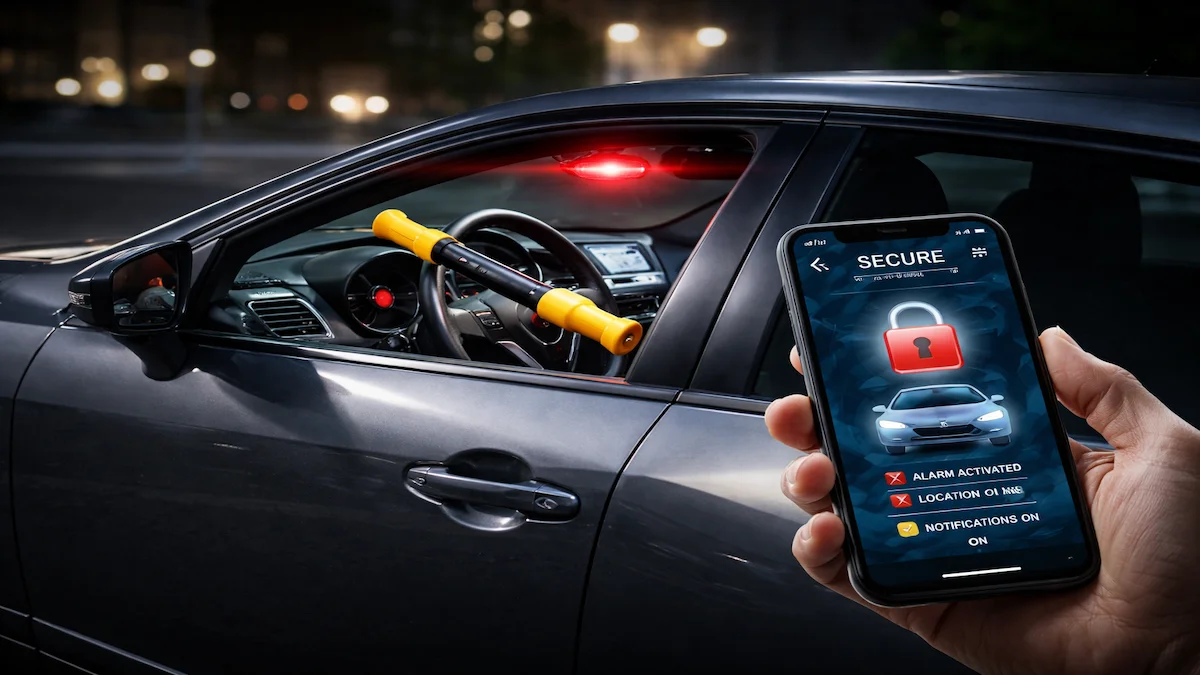

TL;DR: What are Anti-Theft Devices
The best car anti-theft devices are the ones that make your vehicle harder to steal in real-world conditions, not just better on a product page. For most drivers, the smartest setup is a visible deterrent like a steering wheel lock, backed up by a hidden layer such as a GPS tracker, kill switch, or upgraded alarm. If your car has keyless entry, a Faraday pouch or disabling passive entry should also be part of the plan.
If you want the short version, the most effective car anti-theft devices usually fall into three categories: visible deterrents, immobilising protection, and recovery tools. Steering wheel locks and wheel clamps make a car look like too much effort. Kill switches and immobilisers stop the vehicle from being driven even if thieves get inside. GPS trackers improve the chances of recovering the car if the worst happens. For newer keyless vehicles, protection against relay theft matters as much as physical security.
The mistake many people make is assuming one gadget solves everything. It usually doesn’t. In real life, car theft prevention works best when you build layers that suit your car, where you park it, and how much theft risk you’re actually dealing with.
What’s Inside (Quick Glance)
How Cars Are Actually Stolen Today
Before choosing any car anti-theft device, it helps to understand what you’re trying to defend against. There isn’t just one type of theft anymore, and different devices protect against different methods.
With older vehicles, thieves were more likely to target weak door locks, older ignitions, or simply tow the car away. With newer vehicles, the bigger risk is often electronic theft (National Insurance Crime Bureau (NICB)).
A keyless car parked in a driveway can sometimes be targeted using a relay attack, where thieves capture and extend the signal from your key fob to unlock and start the vehicle. In other cases, thieves break into the car, access the diagnostic port, and program a new key.
Then there are opportunistic thieves. These are the ones a lot of drivers underestimate. They’re not necessarily sophisticated organised criminals. They’re looking for the easiest target in a car park, outside an apartment block, or on a dark residential street. If they see one car with no visible protection and another with a steering lock, flashing LED alarm, or wheel clamp, they often move on to the easier option.
That’s why the best anti-theft strategy isn’t always the most expensive one. It’s the one that makes your car slower, louder, harder, or riskier to steal than the one parked next to it.
From what I’ve seen around workshop conversations and owner complaints over the years, the biggest issue is that many drivers are either relying on factory security alone or buying random gadgets without understanding what threat they’re actually trying to stop. That’s where people waste money.
For a broader vehicle safety setup, you can also read our guide to essential car safety gadgets and our breakdown of car emergency kit essentials if you want to improve overall protection rather than theft prevention alone.
What Actually Makes a Car Harder to Steal?
The simplest way to think about car anti-theft devices is this: they either deter, delay, disable, or help recover the vehicle.
A steering wheel lock deters and delays. A kill switch disables. A GPS tracker helps recover. A Faraday pouch protects against a very specific type of electronic theft. A proper anti-theft setup often combines more than one of those jobs.
That’s also why some products look impressive but don’t really change the outcome. If a device is awkward to use and ends up sitting under the seat after a week, it’s not protecting anything.
If a cheap lock looks secure but can be cut or bent quickly, it’s more decoration than defence. The real test is whether you’ll actually use it consistently and whether it meaningfully changes the thief’s job.
The Best Car Anti-Theft Devices and What They’re Good At
1) Steering Wheel Locks: Still One of the Best Everyday Deterrents
If someone asked me for the single most practical starting point for car security, a decent steering wheel lock would still be near the top of the list.
That might sound old-school, but that’s partly why they work. A steering wheel lock is obvious from outside the vehicle. It tells a thief immediately that stealing this car is going to take longer, make more noise, or involve extra tools.
That visual deterrent matters far more than some drivers realise. Most thieves do not want a long, awkward job in a public place.
A good steering wheel lock is especially useful for people who park on the street, leave their car in station car parks, or own a vehicle that’s commonly targeted. It doesn’t stop every theft method, but it adds friction to the process, and friction is exactly what you want.
That said, not all steering locks are equal. Cheap units with weak locking barrels or flimsy metal arms can be defeated much more easily than heavier, better-built models. If you go this route, buy for strength rather than just price. You want solid construction, a decent lock cylinder, and a design that doesn’t feel like it belongs on a child’s bike.
For many owners, this is the best “first layer” anti-theft device because it’s visible, simple, and doesn’t rely on apps, batteries, or subscription fees.
2) Wheel Clamps: Excellent for High-Risk Parking and Long-Term Storage
Wheel clamps are less convenient than steering locks, but in the right situation they can be extremely effective. If your car, caravan, trailer, or project vehicle spends long periods parked in one place, a wheel clamp adds a serious physical barrier. It’s not something most thieves can casually ignore.
They’re particularly useful if you store a vehicle outdoors for weeks at a time, keep a second car at a holiday property, or own something valuable that isn’t driven daily. A wheel clamp is also worth considering if you’ve already had a theft attempt or live in an area where repeat targeting is common.
The downside is convenience. Most people won’t want to fit and remove a wheel clamp every day before work. That’s why I see them as a specialised tool rather than an all-round solution. For a daily commuter car, a steering lock usually makes more sense. For a vehicle that sits parked for long stretches, a wheel clamp can be a very smart extra layer.
3) GPS Trackers: Not Theft Prevention, But Very Useful for Recovery
A GPS tracker won’t stop someone breaking in or driving away. What it can do is dramatically improve your chances of finding the vehicle again, especially in the first few hours after theft.
That matters because some cars aren’t stolen for joyriding anymore. They’re moved quickly, hidden, stripped, or transported. If you can see the vehicle’s location in real time, share that information with police, and act fast, a tracker can be the difference between recovery and a total loss.
For people with newer SUVs, utes, enthusiast cars, or work vehicles carrying expensive tools, I think GPS tracking makes a lot of sense as a backup layer. It’s particularly valuable if the car is high-value, commonly stolen, or parked away from home often.
The key is not to treat a GPS tracker as your main anti-theft device. It’s not. It’s your recovery plan if the first layers fail. If you’re going to use one, look for reliable app support, geofencing alerts, battery backup, and decent subscription transparency so you know exactly what ongoing costs you’re taking on.
4) Kill Switches: One of the Strongest Hidden Defences
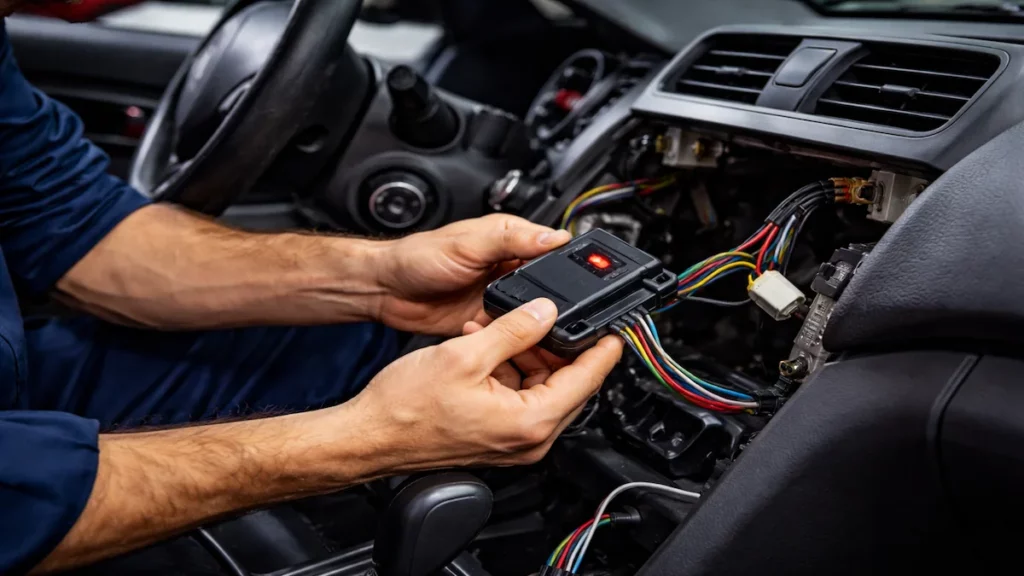
Kill switches don’t get as much mainstream attention as steering locks or trackers, but they can be one of the most effective anti-theft tools when installed properly.
A kill switch works by interrupting something the car needs to start or run, such as the ignition or fuel system. To anyone who doesn’t know it’s there, the car simply won’t start normally. That can be incredibly effective against thieves who’ve managed to get into the vehicle but expect to drive away quickly.
The reason I like kill switches as part of a layered setup is that they’re hidden. A steering lock is visible, which is good for deterrence. A kill switch is invisible, which is good for stopping the theft attempt from progressing if the thief gets past the first barrier.
The catch is installation. This is not the sort of thing I’d recommend doing badly just to save money. A poorly installed switch can create reliability problems, electrical headaches, or obvious wiring that defeats the whole point.
If you’re adding a kill switch, it’s worth having it done properly so it’s discreet, reliable, and doesn’t create a future fault-finding nightmare.
5) Upgraded Car Alarms: Helpful, But Not a Complete Solution
Aftermarket alarms can still be useful, especially if they add features your factory system doesn’t have, such as tilt sensors, shock sensors, smartphone alerts, glass-break detection, or better siren behaviour.
The problem is that a lot of drivers expect an alarm to do more than it really can. An alarm is mainly there to draw attention and create pressure. That’s useful if someone is trying to smash a window, jack the car up, or tamper with it in a public place. It’s less useful if the vehicle is being quietly stolen using an electronic method and nobody is around to respond.
So I wouldn’t dismiss alarms, but I also wouldn’t build your whole security plan around one. Think of an upgraded alarm as part of the warning layer rather than the complete defence. It’s much stronger when combined with a physical deterrent and, ideally, a hidden immobilising layer.
6) Faraday Pouches: Worth It for Keyless Cars, Useless for the Wrong Car
If your car uses passive keyless entry, a Faraday pouch can be one of the cheapest worthwhile anti-theft purchases you make. If your car doesn’t use passive keyless entry, it may do absolutely nothing useful.
That distinction matters because Faraday pouches are designed to block the signal from a key fob so thieves can’t relay it from inside your house to the car outside. If your vehicle is vulnerable to relay theft, a good pouch can close off that attack route very cheaply. If your car only unlocks when you physically press the fob button, relay theft usually isn’t the same risk.
The other thing to understand is that Faraday pouches are not a magic shield for all forms of theft. They won’t stop someone smashing a window. They won’t stop OBD key programming if a thief gets inside the vehicle. They won’t help if the pouch is poor quality or worn out and no longer blocks the signal properly.
Used correctly, though, they’re a sensible part of a keyless vehicle’s security setup. If you rely on one, test it every so often. Put the key inside the pouch, walk up to the car, and confirm it won’t unlock or start.
7) OBD Port Locks and Immobiliser Protection: Smart for Some Modern Vehicles
For some newer vehicles, especially those known to be targeted through diagnostic-port attacks, OBD port protection is worth considering. The basic idea is simple: if a thief breaks into the car and tries to plug a programmer into the OBD port to add a new key, an OBD lock or related security measure makes that much harder.
This isn’t a universal must-buy for every driver, but if your vehicle model has a known history of theft through key programming or CAN bus attacks, it’s a much more relevant conversation than buying random generic gadgets.
Some owners of newer SUVs and popular fleet vehicles are much better off spending money here than on novelty security stickers or bargain-bin alarms.
8) VIN Etching and Identification Marking: Not Exciting, But Sometimes Worthwhile
VIN etching and identification marking don’t stop a thief physically taking the car, so they’re often overlooked. What they can do is make resale, dismantling, or parting out less attractive by increasing traceability. That’s why some insurers and police-backed schemes still recommend them.
I wouldn’t treat VIN etching as a primary anti-theft device, but as a supplementary layer it can make sense, particularly for high-risk areas or vehicles that spend a lot of time parked in unsecured locations. Think of it as making the stolen vehicle less convenient to profit from rather than harder to physically access.
The Best Anti-Theft Setup Depends on Your Car and Parking Situation
If You Park on the Street Every Night
If your car lives on the street, visibility matters. You want thieves to spot protection before they even touch the vehicle. In that case, I’d lean heavily toward a strong steering wheel lock as the first layer, with either a tracker or hidden immobilising device behind it. If the car has keyless entry, add a Faraday pouch or disable passive entry if the manufacturer allows it.
Street-parked vehicles are often chosen based on convenience. Anything that makes your car look slower or riskier to steal helps.
If You Own a Newer Keyless SUV or Family Car
For a keyless SUV parked on a driveway, I’d worry less about flashy alarms and more about relay theft protection plus a visible lock. A Faraday pouch is cheap insurance if the car is vulnerable to keyless theft. Pair it with a steering lock and you’ve already removed two of the easiest attack routes.
If it’s a higher-value vehicle or one that’s frequently targeted, I’d strongly consider a tracker as well.
If You Store a Vehicle Long-Term
For a car, caravan, or trailer that sits parked for long periods, a wheel clamp becomes far more appealing. Convenience matters less because you’re not removing it every morning. In that situation, combining a clamp with a battery-backed tracker or immobiliser can be a very solid setup.
If You Drive an Older Car
Older cars aren’t immune from theft at all. In fact, common older vehicles can be attractive because parts are in demand and security is often weaker. For many older cars, a steering lock plus sensible parking habits can still be one of the best-value security upgrades. If the vehicle has real sentimental or financial value, adding a tracker or hidden switch is worth thinking about.
Buying Guide: How to Choose Car Anti-Theft Devices
The first thing I’d look at is not the device itself but the car and the risk profile around it. Is the vehicle commonly stolen? Does it have passive keyless entry? Is it parked in a driveway, on the street, in an apartment complex, or in a secure garage? Is it a daily commuter, a work ute carrying tools, or something that sits for weeks at a time?
Once you know the actual risk, choosing the device gets much easier.
The second thing I’d look at is whether you’ll genuinely use it. This is one of the most overlooked parts of anti-theft buying. A brilliant security device that annoys you every single day usually turns into an expensive object in the boot. If you know you won’t fit a complicated clamp every morning, don’t pretend you will. Buy the best device you’ll use consistently, then add another layer later if needed.
The third thing is quality. With anti-theft gear, cheap often becomes expensive later. A bargain lock that can be bent, cut, or jammed quickly is false economy. You don’t have to buy the most expensive option on the shelf, but you do need something that feels like it was designed to resist actual abuse rather than just look tough in photos.
And finally, think in layers rather than silver bullets. A visible deterrent plus a hidden backup is usually a better investment than spending the same money on one fancy product that only covers one angle.
Check the product reviews on car anti-theft devices here
Common Mistakes People Make With Car Anti-Theft Devices
Relying on Factory Security Alone
Factory immobilisers and alarms are useful, but many thieves already know what they’re dealing with. Assuming the car is secure because it’s modern is one of the easiest ways to become complacent.
Buying the Cheapest Lock Available
There’s a big difference between “good value” and “cheap enough to fail when someone leans on it with the right tool”. Anti-theft devices need to be judged by construction quality and resistance, not just by star ratings and sale prices.
Using a Faraday Pouch Without Confirming You Actually Need One
Faraday pouches are useful for keyless-entry theft risk. They’re not a universal answer for every vehicle. If your car isn’t vulnerable to relay theft, your money may be better spent elsewhere.
Choosing a Device That’s Too Annoying to Use
This is probably the most common real-world problem. If fitting the device becomes a daily hassle, plenty of owners simply stop using it. The best anti-theft product is the one that becomes part of your routine rather than a constant inconvenience.
Treating a GPS Tracker as a Theft-Proof Solution
Trackers are great recovery tools, but they don’t stop the initial theft. They work best when paired with deterrents or immobilising devices.
Ignoring Where the Car Is Parked
Theft risk is heavily shaped by routine and environment. A car parked on a quiet driveway with the keys hanging near the front door has different vulnerabilities from one kept in a locked garage. Security choices should reflect that.
Car Theft Prevention Strategies
Practical Car Theft Prevention Tips That Cost Little or Nothing. Anti-theft devices matter, but so do the habits around them. In many cases, the cheapest improvements come from removing easy opportunities.
If your car has keyless entry, don’t leave the keys right by the front door. If the manufacturer allows it, consider disabling passive keyless entry when you don’t need it. Park in well-lit, visible areas whenever possible. Don’t leave registration papers, spare keys, or obvious valuables in the cabin. If you own a garage, use it for the car rather than as a storage unit if theft risk is a concern.
It’s also worth checking whether your insurer offers any discount or policy preference for specific anti-theft devices. It won’t always be a big saving, but if you’re fitting security anyway, it’s worth asking.
My Honest Recommendation: What I’d Buy for Different Budgets
If you’re on a tight budget and just want a solid first step, I’d start with a proper steering wheel lock from a reputable brand. It’s still one of the best value anti-theft upgrades because it’s visible, quick to use, and immediately makes the car less attractive.
If you’ve got a newer keyless car, I’d add a Faraday pouch straight away if the vehicle is vulnerable to relay theft. It’s inexpensive and addresses a very specific modern weakness.
If you want a stronger all-round setup without going overboard, the sweet spot for many drivers is a steering wheel lock plus a GPS tracker, with a Faraday pouch added if relevant. That gives you deterrence, recovery support, and better coverage against keyless theft.
If your vehicle is especially valuable, regularly parked in higher-risk areas, or already been targeted once, I’d seriously consider adding a hidden kill switch or other immobilising protection on top of the visible devices.
The best setup is rarely the most glamorous one. It’s the one that fits your routine and gets used every day.
Final Thought
If you strip away the marketing, the best car anti-theft devices are the ones that do one of three things well: make the car look difficult to steal, stop it being driven away, or help you recover it fast if it’s taken.
For most drivers, the smartest move is not buying one expensive gadget and hoping for the best. It’s building a simple layered setup that fits the car and the way you actually use it. A steering wheel lock remains one of the best-value deterrents. A GPS tracker is a strong backup if recovery matters. A kill switch is excellent hidden protection when installed properly. And if your car uses passive keyless entry, relay-theft protection deserves real attention.
If I were advising someone who just wanted the most sensible starting point, I’d say this: buy a good steering wheel lock, protect a keyless car against relay theft if relevant, and add a tracker or hidden immobilising layer if the vehicle is valuable or parked in a higher-risk area. That approach is practical, realistic, and far more useful than chasing gimmicks.
The goal isn’t to make your car impossible to steal. The goal is to make it enough of a hassle that thieves decide it isn’t worth the trouble.
Frequently Asked Questions
What is the most effective car anti-theft device?
There isn’t one single device that’s best for every car, but a layered setup is usually the most effective. For many drivers, a steering wheel lock combined with either a GPS tracker, kill switch, or upgraded immobiliser offers much better protection than relying on one device alone.
Do steering wheel locks really work?
Yes, especially as a visible deterrent. They don’t make a car impossible to steal, but they increase the time, effort, and risk involved. That alone is often enough to push opportunistic thieves toward an easier target.
Are GPS trackers worth it for theft protection?
They’re worth it as a recovery tool, not as a standalone theft-prevention device. A tracker won’t stop the theft from happening, but it can significantly improve the odds of locating the vehicle quickly after it’s taken.
Do I need a Faraday pouch for my car keys?
Only if your car is vulnerable to keyless relay theft. If your vehicle uses passive keyless entry and start, a Faraday pouch can be a cheap and useful safeguard. If your car doesn’t rely on that kind of keyless system, it may not offer much real benefit.
Is a car alarm enough to stop theft?
Usually no. An alarm can help by drawing attention and adding pressure, but it’s rarely enough on its own. It’s best used as one part of a wider anti-theft setup rather than the entire plan.
Can modern cars still be stolen even with immobilisers?
Yes. Immobilisers are useful, but modern theft methods include relay attacks, OBD key programming, and other forms of electronic theft. That’s why extra layers like steering locks, tracker systems, Faraday pouches, or kill switches can still be worthwhile.
Are wheel clamps practical for daily use?
For most daily commuters, not really. They’re better suited to vehicles that stay parked for long periods, such as caravans, trailers, or second cars. For everyday convenience, a steering lock is usually easier to live with.
This is a highly practical and experience-driven overview that clearly highlights the importance of layered vehicle security rather than relying on a single solution. I appreciate how you’ve combined real-world insights with actionable recommendations, especially the balance between visible deterrents and hidden protection. Your emphasis on usability and quality over price is particularly valuable for everyday drivers making informed decisions. Overall, this provides a credible and well-rounded perspective on reducing theft risk effectively.
Hi Kavitha,
I am glad that you find it helpful. Thank you very much for your valuable comment.
Thank you.