
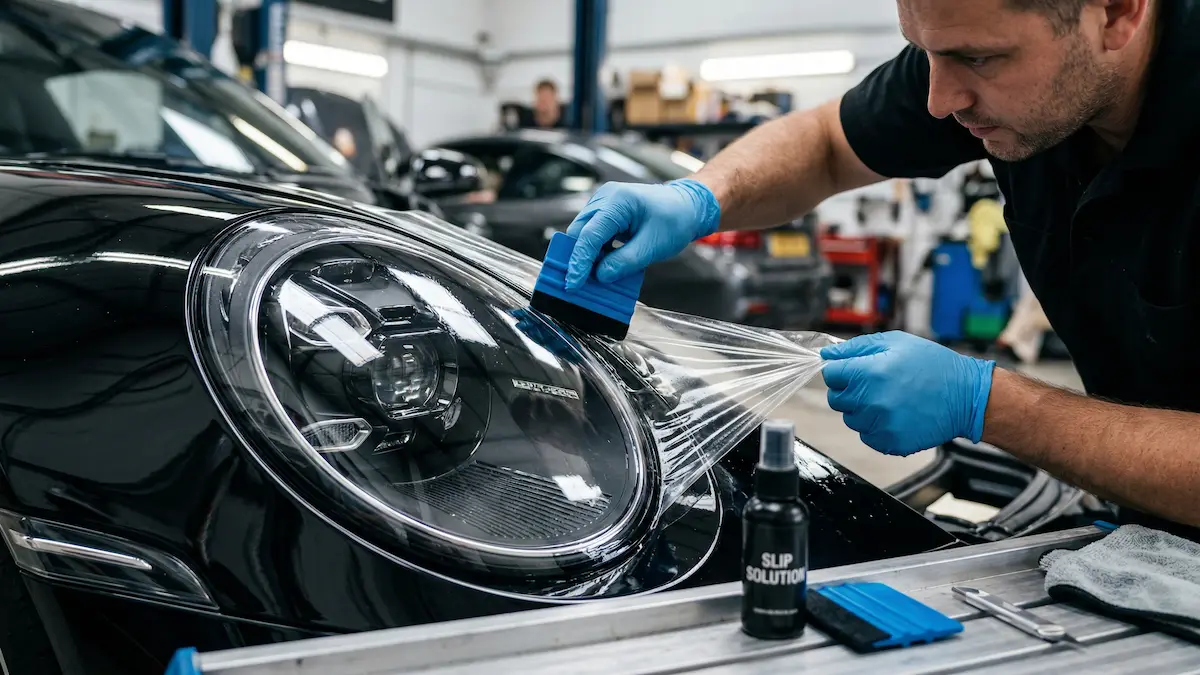

TL;DR: What Are the Best Car Headlight Protectors?
The best car headlight protectors are high-quality polyurethane protection films that shield the headlight lens from UV rays, stone chips, scratches and oxidation without reducing light output. For most drivers, premium paint protection films provide the best balance of durability, clarity and long-term value, while ceramic coatings and rigid covers suit specific driving conditions.
Headlights do far more than help you see the road after dark. They make your vehicle visible to others, improve driving confidence in poor weather, and play a major role in overall road safety.
Unfortunately, modern headlights are also one of the most vulnerable parts of a vehicle. Everyday exposure to sunlight, road debris, insects, chemicals and harsh weather slowly damages the clear plastic lens until it becomes cloudy, scratched or yellow.
I’ve seen countless owners surprised when they discover that replacing a damaged LED or HID headlight assembly can cost hundreds or even thousands of pounds depending on the vehicle.
Most never realised that this expensive repair could often have been avoided with a relatively inexpensive protective film or cover fitted when the headlights were still new.
What is Inside? (Quick Glance)
Why Modern Car Headlights Become Yellow So Quickly
Many drivers remember older cars with glass headlights that seemed to last forever. Modern vehicles are different.
Almost every manufacturer now uses lightweight polycarbonate plastic because it is stronger, lighter and less likely to shatter during an impact. The downside is that plastic naturally degrades when it is constantly exposed to ultraviolet light.
Manufacturers apply a factory UV coating to slow this process, but that protective layer gradually wears away. Once it begins breaking down, sunlight starts attacking the plastic itself. The surface becomes dull, develops tiny cracks and eventually turns cloudy or yellow.
Road conditions make the problem even worse. Every motorway journey throws fine grit, dust and tiny stones at the headlight lens. Even if the damage isn’t immediately visible, thousands of small impacts slowly roughen the surface.
Once the plastic loses its smooth finish, dirt sticks more easily and UV damage accelerates.
Chemical exposure is another factor many people overlook. Strong detergents, automatic car washes, bug removers and road salt all contribute to wearing away the original protective coating. Vehicles parked outdoors every day usually deteriorate much faster than those kept under cover.
One pattern I’ve noticed in the workshop is that cars driven long distances on motorways often show heavy pitting on the headlights even when the rest of the paintwork still looks excellent. The driver rarely notices the gradual damage until night-time visibility begins to suffer.

Why Headlight Protection Is Worth Considering
Many people think headlight protectors are simply cosmetic accessories. In reality, they are preventative maintenance that helps avoid much larger repair costs later.
A quality protector acts as a sacrificial barrier. Instead of road debris striking the plastic lens directly, the protector absorbs most of the impact. If the film becomes scratched after several years, replacing it is far cheaper than replacing the entire headlight assembly.
The benefits go well beyond appearance. Clear headlights produce a cleaner beam pattern that helps illuminate the road more effectively. Even slight clouding scatters light, reducing visibility and increasing glare for approaching drivers.
Maintaining clear headlights can also improve resale value. Buyers often judge how well a vehicle has been maintained by looking at items such as headlights, paintwork and interior condition.
Crystal-clear headlights immediately create a better impression than heavily faded or yellowed lenses.
Another advantage is reducing future maintenance. Rather than repeatedly polishing oxidised headlights every year or two, many owners simply replace the protective film once it reaches the end of its service life.
Signs Your Headlights Need Protection Now
Many drivers wait until yellowing becomes obvious before taking action. Unfortunately, by then the factory protective coating has often already failed.
If your headlights still look perfectly clear, now is actually the best time to install protection. Preventing damage is considerably easier than reversing it.
Even if the lenses appear clean, look closely under direct sunlight. Fine scratches, tiny stone chips or a slightly hazy appearance usually indicate that surface wear has already started.
You should also consider fitting protection if you regularly:
- Drive long motorway distances.
- Travel on gravel or country roads.
- Park outside throughout the day.
- Live in areas with intense sunlight.
- Frequently wash the vehicle using automatic car washes.
- Own a vehicle with expensive LED or adaptive headlights.
These driving conditions expose the lenses to much higher levels of UV radiation and impact damage than occasional urban driving.
Types of Car Headlight Protectors
Not every product offers the same level of protection. Understanding how each type works makes choosing the right option much easier.
Polyurethane Protection Film (Best Overall)
For most vehicles, paint protection film remains the benchmark. This transparent polyurethane layer is applied directly over the headlight lens and provides excellent defence against UV exposure, scratches and small stone impacts.
Premium films also include self-healing technology. Minor swirl marks and light scratches disappear when exposed to warmth from sunlight or warm water, helping maintain a clear finish for years.
Professional-grade films typically last between five and ten years depending on driving conditions and maintenance.
In vehicles I’ve worked on, professionally installed polyurethane film consistently provides the best balance between protection, clarity and longevity. Many owners forget it’s even there until it’s eventually replaced years later.
Ceramic Headlight Coatings
Ceramic coatings create a thin protective layer that bonds to the surface of the plastic. Their primary purpose is reducing UV damage, improving water repellency and making the headlights easier to clean.
While ceramic coatings improve protection compared with bare plastic, they cannot absorb impacts like polyurethane film. A stone travelling at motorway speed will easily damage the lens despite the coating.
For drivers mainly concerned about UV exposure rather than physical impacts, ceramic coatings can still be a worthwhile option.
Hard Plastic Headlight Covers
Rigid headlight covers were more common on older four-wheel drives and touring vehicles, but they still have a place today.
These covers provide strong protection against larger stones and branches, making them useful for vehicles regularly driven on unsealed roads or through remote areas.
However, cheaper covers sometimes reduce optical clarity or slightly alter the headlight beam pattern. Choosing high-quality, vehicle-specific covers helps minimise these issues.
Vinyl Tint Films
Tinted films are often marketed as protective products, but many are primarily designed for styling rather than protection.
Although they may provide some UV resistance, darker films can reduce headlight output and may not comply with local road regulations. Unless you’re certain they are road legal, clear protective films remain the safer choice for everyday driving.
Which Type Is Best for Different Drivers
The best choice depends largely on how and where you drive.
Daily commuters generally benefit most from polyurethane protection film because it offers long-lasting defence against everyday wear without affecting appearance.
Drivers covering thousands of motorway miles each year usually appreciate the additional stone-chip resistance that premium films provide.
Off-road enthusiasts may prefer thicker protection films or rigid covers capable of absorbing repeated impacts from gravel, mud and branches.
Owners of prestige vehicles often choose professionally installed paint protection film because replacing advanced LED matrix or laser headlights can be extremely expensive compared with installing preventative protection.
For older vehicles with minor oxidation already beginning to appear, restoring the headlights first before applying a quality protective film usually produces the best long-term result.
Best Car Headlight Protectors Worth Considering
Choosing the right headlight protector is less about buying the most expensive product and more about matching it to your driving habits. Some products focus on long-term UV protection, while others are designed to withstand constant stone impacts. Below are some of the most reliable options available today.
1. 3M Clear Paint Protection Film
For most drivers, 3M Clear Paint Protection Film remains one of the best all-round solutions. It combines excellent optical clarity with strong resistance to scratches, road debris and UV damage. Because it is virtually invisible once installed, it protects your headlights without changing the appearance of the vehicle.
Its self-healing surface is one of its biggest advantages. Minor swirl marks gradually disappear when exposed to sunlight or warm temperatures, helping the film maintain a clean appearance for years.
Best for: Daily drivers, motorway commuters and long-term ownership.
2. XPEL Headlight Protection Film
XPEL has built an excellent reputation among professional installers for producing premium paint protection films. It offers exceptional impact resistance and is particularly suitable for modern vehicles equipped with costly LED, Matrix LED or laser headlights.
Many kits are pre-cut for specific vehicle models, making installation easier and ensuring a factory-quality finish.
Best for: Premium vehicles and owners wanting maximum long-term protection.
3. Lamin-x Headlight Film
Lamin-x combines protection with customisation. Alongside its clear protective films, it also offers lightly tinted versions for drivers wanting a more personalised appearance while still protecting the headlight surface.
The company produces model-specific kits for many popular vehicles, reducing trimming during installation.
Best for: Drivers wanting both protection and subtle styling options.
4. WeatherTech LampGard
WeatherTech’s LampGard uses a thicker protective material than standard films, making it well suited to vehicles regularly exposed to gravel roads and loose stones.
Its custom-fit design provides reliable impact protection without requiring permanent modifications to the vehicle.
Best for: Rural driving, touring vehicles and frequent gravel road use.
5. SYLVANIA Headlight Restoration Kit with UV Protection
This product is slightly different because it combines restoration with protection. If your headlights have already started fading, restoring them before applying UV protection can significantly improve clarity.
While it doesn’t provide the same impact resistance as polyurethane film, it offers good value for owners trying to extend the life of ageing headlights.
Best for: Older vehicles showing early signs of oxidation.
How to Choose Headlight Protection
Buying the right product becomes much easier once you understand what separates a quality protector from a poor one. A cheap protector that peels after six months usually ends up costing more than investing in a premium product from the beginning.
Choose the Right Material
Material quality has the biggest influence on durability.
Polyurethane films remain the preferred choice because they are flexible, highly transparent and resistant to everyday impacts. They also cope better with temperature changes than cheaper vinyl products.
Inferior films often become brittle over time, especially on vehicles that spend long hours parked in direct sunlight.
Prioritise UV Protection
The biggest enemy of modern headlights isn’t always stone damage. Ultraviolet radiation slowly destroys the protective coating applied by the manufacturer.
A good headlight protector should block harmful UV rays before they reach the plastic lens. Without this protection, even vehicles driven carefully can develop yellowing after several years.
Select the Correct Fit
Headlight protectors are generally available in two formats.
Pre-cut kits are designed for specific makes and models, making installation much simpler while reducing the chance of trimming errors.
Universal sheets provide greater flexibility but require careful measuring and cutting before installation.
Unless you’re experienced with paint protection film, vehicle-specific kits are usually the safer choice.
Consider Film Thickness
Thickness affects both protection and installation difficulty.
Thicker films generally absorb stone impacts more effectively, making them suitable for vehicles regularly driven on rough roads.
Thinner films are easier to apply around curved headlight shapes but may provide slightly less protection against larger impacts.
Check Optical Clarity
The purpose of protecting headlights is to preserve visibility, not reduce it. Premium products maintain excellent transparency and do not noticeably affect beam performance.
Poor-quality films or covers may introduce distortion or reduce brightness, particularly after prolonged UV exposure.
Look at Warranty Support
Reputable manufacturers usually back their products with multi-year warranties covering yellowing, cracking and peeling.
While a warranty doesn’t guarantee perfect performance, it often reflects confidence in the quality of the material.
Maintaining Headlight Protectors
Even the best protection film requires occasional care to maximise its lifespan. Regular washing prevents abrasive dirt from building up on the surface. Gentle automotive shampoos are usually sufficient without the need for aggressive cleaners.
Avoid scrubbing the film with stiff brushes or abrasive pads. Although premium films are durable, repeated scratching gradually dulls the surface.
If tree sap, bird droppings or insects remain on the film for extended periods, remove them promptly before they stain the surface.
Applying a quality paint protection film sealant or ceramic topper, where recommended by the manufacturer, can also help maintain water repellency and simplify future cleaning.
With sensible maintenance, premium polyurethane films commonly remain clear for many years before requiring replacement.
Common Mistakes That Shorten Headlight Protector Life
Most premature failures are caused by installation errors rather than product defects. One of the biggest mistakes is applying film over dirty or oxidised headlights. Any contamination trapped underneath will remain visible and may prevent proper adhesion.
Another common problem is attempting installation outdoors on windy days. Dust, pollen and fine debris can quickly contaminate the adhesive before the film is positioned.
I’ve also seen people stretch the film excessively to force it around sharp curves. Although it may initially look fine, overstretched film often shrinks back over time, causing lifted edges.
Using harsh household chemicals is another mistake. Strong solvents can damage both the protective layer and the adhesive, reducing the film’s lifespan.
Finally, many buyers focus solely on price. Extremely cheap products often lack proper UV stabilisers, meaning they yellow, crack or peel much sooner than premium alternatives.
Common Car Headlight Protector Buying Mistakes to Avoid
Buying the first headlight protector you find online often leads to disappointment. Spending a little more time researching can prevent poor performance and unnecessary replacement costs.
One of the biggest mistakes is choosing the cheapest product available. Low-cost films often use inferior adhesives and weaker UV inhibitors, causing them to peel, crack or yellow far sooner than premium alternatives.
Another mistake is buying based solely on thickness. While thicker films generally provide better impact protection, they can be harder to install on complex headlight shapes. Material quality is usually more important than thickness alone.
Some buyers also overlook compatibility. Universal sheets may appear cheaper but require accurate trimming, whereas pre-cut kits usually produce a neater and more reliable installation.
Finally, many people wait until the headlights are badly faded before considering protection. At that stage, restoration becomes an additional expense that could have been avoided.
Check my article on on car bonnet protectors here
Final Thoughts
Modern headlights are one of the most expensive exterior components to replace, yet they’re constantly exposed to sunlight, stone chips, road debris and harsh weather. Once the factory UV coating begins to deteriorate, yellowing and surface damage usually accelerate.
Installing a quality headlight protector while the lenses are still clear is one of the simplest ways to preserve visibility, improve the vehicle’s appearance and avoid unnecessary repair costs.
For most drivers, a premium polyurethane protection film offers the best combination of clarity, durability and long-term value. Drivers who regularly travel on gravel roads or off-road may benefit from thicker protective solutions, while ceramic coatings remain a good option for improving UV resistance and ease of cleaning.
Choosing the right product, installing it correctly and carrying out basic maintenance will help your headlights remain clear for years to come. A relatively small investment today can prevent a far more expensive repair in the future.
Frequently Asked Questions
Do headlight protectors really prevent yellowing?
Yes, high-quality headlight protectors significantly slow down yellowing by blocking ultraviolet rays before they reach the polycarbonate lens. They also reduce surface wear from road debris, helping the factory coating last much longer.
Are headlight protection films better than ceramic coatings?
For most drivers, yes. Polyurethane protection films offer both UV protection and impact resistance, making them the better long-term solution. Ceramic coatings mainly protect against UV exposure, water spots and light contamination but cannot absorb stone impacts.
How long do headlight protection films last?
The lifespan depends on product quality, driving conditions and maintenance. Premium polyurethane films typically last between five and ten years, while budget films may only remain effective for two or three years before showing signs of peeling or discolouration.
Vehicles regularly driven on gravel roads or parked outdoors year-round may require earlier replacement.
Can I install headlight protectors myself?
Yes. Many vehicle-specific kits are designed for DIY installation.
However, achieving a bubble-free finish requires careful cleaning, patience and the right application technique. If you’re protecting expensive LED or Matrix headlights, professional installation is often worth considering.
Will a headlight protector reduce brightness?
A quality clear protection film should have no noticeable effect on light output or beam pattern. Problems usually occur with poor-quality products or heavily tinted films, which may reduce visibility and could fail to meet local road regulations.
Can you apply protection to older headlights?
Absolutely, but restoration should come first. If the lenses are already oxidised or cloudy, restore them using a quality headlight restoration kit before applying a protective film. Installing film over damaged plastic simply seals the defects underneath.
Are headlight protectors suitable for LED and HID headlights?
Yes. In fact, they are especially beneficial for vehicles fitted with LED, HID or laser headlights because these assemblies are significantly more expensive to replace than conventional halogen units. Protecting them from the beginning can save substantial repair costs later.
How should I clean protected headlights?
Wash them using a pH-neutral car shampoo and a soft microfibre wash mitt. Avoid abrasive compounds, aggressive solvents and stiff brushes, as these can damage the protective layer over time.
This was a really helpful and well-structured guide, especially the way you explained the differences between materials and why optical clarity matters so much for safety. I didn’t realize that some low-quality covers could actually reduce visibility or even affect beam patterns, which is a big deal for night driving. The section about UV damage and how quickly headlights can degrade without protection was also eye-opening. Based on your recommendations, would you say that paint protection film is the best long-term option for most drivers, or are there specific situations where rigid covers or coatings might still be the better choice?
Hi Hanna,
Thanks so much for your kind feedback!
For most drivers, paint protection film (PPF) is the best long-term choice since it offers great clarity, UV protection, and doesn’t affect beam performance. That said, rigid covers are better for off-road or heavy debris conditions, while coatings can be a good budget-friendly option but may need reapplication. It really depends on your driving conditions, but PPF is usually the best all-around solution!