
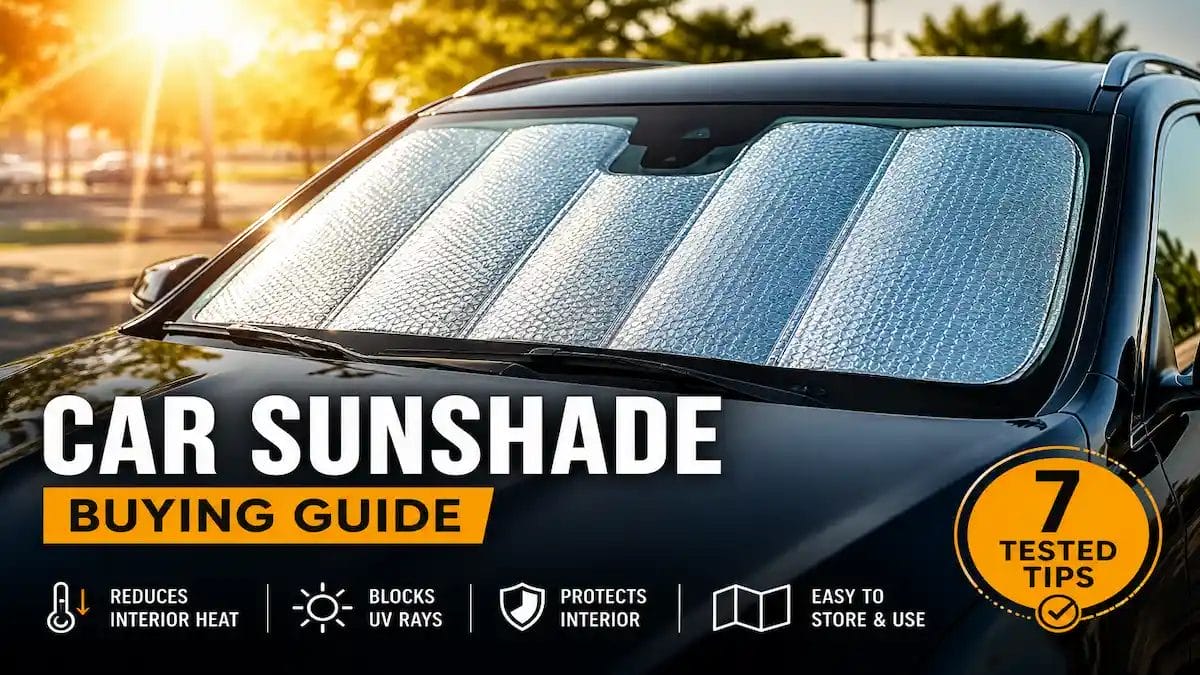
TL;DR: Benefits of Innovative Car Sunshades
A car sunshade reduces cabin temperatures, protects dashboards and seats from UV damage, and improves driving comfort in hot weather. The best car sunshade should match your windscreen size, use reflective multi-layer materials, fold easily for storage, and provide full windshield coverage without gaps for maximum heat protection and interior preservation.
A properly fitted car sunshade can reduce dashboard temperatures, minimise UV fading, and make your vehicle far more comfortable during summer parking. In this car sunshade buying guide, you’ll learn how to choose the correct size, material, folding style, and UV protection level based on real-world driving conditions and long-term vehicle care. As an automotive diagnostic technician, I’ve seen cracked dashboards, damaged infotainment screens, and faded trims caused simply by prolonged sun exposure.
If you’ve ever opened your car door after it sat in direct sunlight for hours, you already know how brutal cabin heat can get. Steering wheels become untouchable, seat belts burn your skin, and electronics suffer quietly in the background. A quality sunshade won’t solve everything, but honestly, it makes a massive difference.
For readers looking to improve overall cabin protection, you can also read our related guide on car interior protection at Pickyaura and explore practical upgrades that help extend your vehicle’s lifespan.
Table of Contents
How Effective are Car Sunshades
Many drivers think sunshades are just comfort accessories. From what I’ve seen in workshops over the years, they’re more of a preventative maintenance tool. UV radiation and prolonged heat exposure slowly damage:
- Dashboard plastics
- Leather seats
- Steering wheels
- Touchscreens
- Rubber seals
- Interior adhesives
I remember diagnosing a touchscreen failure in a midsize SUV that constantly sat in open sunlight at a train station car park. The owner thought the infotainment unit had an electrical fault. In reality, repeated heat exposure had damaged the display adhesive and internal circuitry over time. A proper reflective sunshade could’ve significantly slowed that wear down.
That’s the sort of real-world issue people rarely think about until repair bills show up.
How Car Sunshades Work
A car sunshade reflects and blocks solar radiation before it enters the cabin through the windscreen. Windscreens act almost like magnifying glass panels under intense sunlight, trapping heat inside the vehicle. High-quality sunshades usually combine:
- Reflective aluminium surfaces
- Insulating foam layers
- UV-resistant backing materials
The better the material and coverage, the lower the cabin temperature becomes. Some premium options can reduce dashboard surface temperatures dramatically during extended parking sessions. That’s especially important for vehicles with leather interiors or large digital displays.
Types of Car Sunshades

Accordion Fold Sunshades
These are the traditional folding shades most people recognise. They’re affordable, lightweight, and easy to find. However, some cheaper models lose shape over time and stop fitting tightly against the windscreen. They’re still a solid option if you want something simple and inexpensive.
Umbrella-Style Sunshades
These have become extremely popular recently. They open like an umbrella and usually store compactly. Honestly, I was sceptical at first, but after testing several in customer vehicles, they’re surprisingly practical for daily commuting.
One customer I worked with drove rideshare full-time and constantly parked outdoors between airport runs. He switched from a flimsy folding shade to an umbrella-style model and immediately noticed cooler cabin temperatures during midday pickups. That convenience factor matters more than people realise.
Custom-Fit Sunshades
Custom-fit models are designed specifically for your vehicle’s windscreen dimensions. These usually offer:
- Better heat blocking
- Fewer light gaps
- Improved durability
- Cleaner appearance
They cost more, but if you own a newer vehicle or regularly park outside, they’re often worth the investment.
Retractable Sunshades
Retractable shades install permanently and slide open when needed. They’re convenient but sometimes less reflective than removable designs. Some also develop mechanism issues over time if exposed to constant heat.
Personally, I’d still lean towards removable reflective shades for maximum thermal performance.
How to Choose the Right Car Sunshade
Measure Your Windscreen Properly
This is where many people get it wrong. A sunshade that’s too small leaves heat gaps around the edges. Too large, and it bends awkwardly or won’t sit flush. Measure:
- Windscreen width
- Windscreen height
- Rear-view mirror clearance
Universal fit models can work, but exact sizing delivers better results.
Choose Reflective Multi-Layer Materials
Thin polyester shades usually look decent online but struggle in extreme heat. Look for:
- Reflective aluminium coating
- Multi-layer insulation
- UV-resistant surfaces
- Reinforced stitching
I’ve tested bargain shades that literally warped after one summer. Spending slightly more upfront often saves replacing them every year.
Prioritise Ease of Use
A sunshade only works if you actually use it consistently. That sounds obvious, but drivers stop using awkward products quickly.
If installation takes too long or folding becomes annoying, the shade ends up sitting in the boot permanently. That’s why umbrella-style designs have exploded in popularity recently; they’re quick and honestly, after long workdays, convenience matters.
Check Storage Size
Some large SUV sunshades become frustratingly bulky. Compact folding designs work better for:
- Daily commuting
- Smaller cabins
- Shared vehicles
- Rideshare drivers
Always consider where the shade will live when not in use.
Look for UV Protection Ratings
Not all reflective shades block UV equally. Quality products typically advertise:
- UV resistance
- Heat reflection percentage
- Multi-layer construction
Cheap models often focus purely on appearance.

Common Mistakes Buyers Make
Buying Based Only on Price
I get it; everyone wants value but ultra-cheap sunshades often:
- Collapse easily
- Fade quickly
- Tear at folding points
- Provide poor heat reflection
One customer used a discount-store shade that deteriorated so badly it left metallic fragments across the dashboard vents. Not exactly ideal.
Ignoring Side Window Protection
Front windscreen coverage helps, but side windows also contribute major cabin heat. If you park outdoors regularly, consider adding side window shades too. This becomes even more important for families with children or pets travelling frequently.
Forgetting Climate Conditions
Drivers in hotter regions need stronger thermal performance. If your vehicle spends hours under direct sun daily, invest in thicker reflective materials rather than basic foam shades.
Best Features to Look For
Reinforced Edges
These improve durability and help maintain shape over time.
Double-Sided Reflective Layers
Better heat rejection usually means better overall cabin cooling.
Lightweight Construction
Heavy shades become annoying quickly.
Quick-Fold Design
You’ll use it more often if setup takes seconds instead of minutes.
Is a More Expensive Sunshade Worth It?
In many cases, yes. Premium sunshades generally last longer and perform better under repeated heat exposure.
As a technician, I’d rather spend slightly more on prevention than see owners paying for cracked trim pieces, damaged screens, or prematurely faded interiors later.
That said, you don’t necessarily need the most expensive option on the market. The sweet spot is usually a well-reviewed mid-range reflective model with proper fitment.
After years around vehicles exposed to extreme temperatures, I’ve noticed certain cars age much faster internally than others. Usually, the difference comes down to:
- Parking conditions
- UV exposure
- Interior care habits
- Preventative accessories like sunshades
One older sedan I inspected recently still had remarkably clean interior plastics after nearly a decade outdoors. The owner used a reflective windshield shade daily without fail. Meanwhile, another similar vehicle from the same year had severe dashboard cracking and faded door trims. Tiny habits add up over time.
Car Sunshade Buying Guide for Different Drivers
Daily Commuters
Prioritise quick setup and compact storage. Umbrella-style shades work brilliantly here.
Families
Choose wider coverage and durable materials. Rear passenger protection matters too.
Outdoor Workers
Go for heavy-duty reflective insulation with maximum UV blocking. You’ll notice the difference immediately after long parking periods.
Luxury Vehicle Owners
Custom-fit shades provide better aesthetics and interior protection for premium cabins.
For additional information about UV exposure and vehicle heat risks, the experts at Cancer Council Australia provide useful guidance on UV protection and heat exposure awareness.
Final Thoughts
This car sunshade buying guide ultimately comes down to one thing: protecting your vehicle before heat damage becomes expensive.
After more than a decade working around vehicles every day, I’ve seen how quickly interiors deteriorate under constant sunlight. A properly fitted reflective sunshade is one of the simplest and most affordable ways to reduce cabin temperatures, improve comfort, and preserve your car’s interior condition long term.
Don’t overthink it; choose a quality reflective design, make sure it fits properly, and use it consistently. Your dashboard, steering wheel, and future repair bills will thank you for it.
Frequently Asked Questions
What is the best type of car sunshade?
Umbrella-style and custom-fit reflective sunshades currently offer the best balance of convenience, heat reduction, and durability for most drivers.
Do car sunshades really reduce heat?
Yes. Quality reflective sunshades significantly reduce dashboard and cabin temperatures by blocking solar radiation entering through the windscreen.
Are custom-fit sunshades worth it?
If you park outdoors regularly, custom-fit shades usually provide better coverage, fewer heat gaps, and longer-lasting performance.
Can sunshades protect car interiors?
Absolutely. They help reduce UV damage, fading, cracking, and heat stress affecting dashboards, seats, electronics, and trim materials.
How long do car sunshades last?
A good-quality sunshade can last several years with proper storage and regular use. Cheap models often deteriorate within one or two summers.