
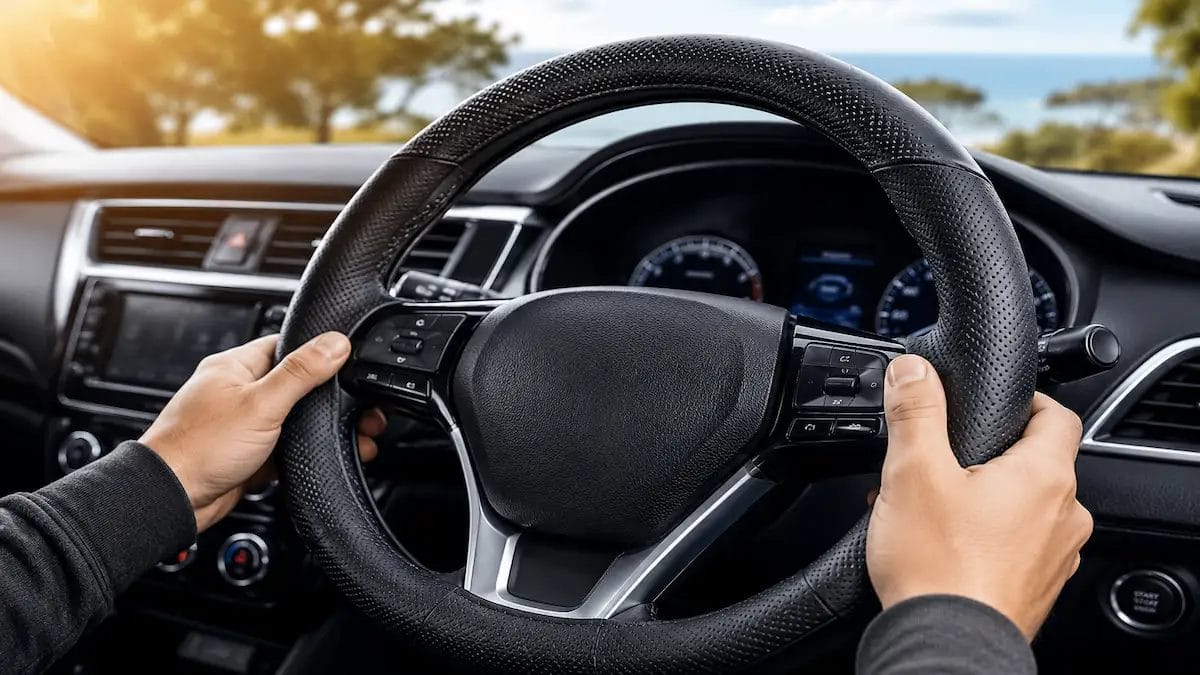
TL;DR: How to Choose a Steering Wheel Cover
Choosing the right steering wheel cover depends on your wheel size, grip preference, material durability, climate and driving comfort. A properly fitted steering wheel cover improves control, protects the wheel from UV damage and reduces hand fatigue. Australian drivers should prioritise heat-resistant materials, non-slip grip and accurate sizing for safer everyday driving.
If you’re wondering how to choose a steering wheel cover, the biggest mistake I see in the workshop is drivers buying one purely because it “looks good”. As an automotive diagnostic technician, I can tell you the wrong cover can actually make steering feel slippery, bulky or uncomfortable; especially during long Queensland summer drives.
A good steering wheel cover should improve grip, reduce heat build-up and protect the original steering wheel from wear. It also needs to fit properly. Too loose, and it’ll move while cornering. Too tight, and you’ll struggle fitting it on without damaging the material.
In this guide, I’ll walk you through exactly how to choose a steering wheel cover for Australian conditions, what materials work best, common buying mistakes and which features actually matter in real-world driving.
If you’re also upgrading overall cabin comfort, you might want to read our car floor mat buying guide here
Table of Contents
Why Steering Wheel Covers Matter More Than Most Drivers Think
A steering wheel cover isn’t just a cosmetic accessory anymore. Modern covers improve:
- Steering grip
- Driving comfort
- UV protection
- Sweat resistance
- Steering wheel longevity
- Cabin appearance
In Australia, steering wheels cop a brutal amount of sun exposure. I’ve seen factory leather wheels crack badly after only a few years because the vehicle spent most days parked outside.
One customer brought in a late-model SUV with a steering wheel so heat-damaged it felt like brittle plastic. Instead of replacing the entire wheel assembly, we fitted a high-quality UV-resistant leather cover. Six months later, the owner said it completely changed driving comfort during summer.
That’s the sort of practical difference the right cover can make.
How to Choose a Steering Wheel Cover Properly
1. Measure Your Steering Wheel First
This is the step most people skip. To understand how to choose a steering wheel cover, you need accurate wheel measurements first. Measure:
- Diameter of the steering wheel
- Grip thickness
Most passenger vehicles in Australia use steering wheels between 14.5 and 15.5 inches. If the cover is too large:
- It may slip while driving
- Steering feedback feels vague
If it’s too small:
- Installation becomes painful
- Material stretches unevenly
- Seams can split over time
You’d be surprised how many cheap universal covers end up loose after a few months.
2. Choose the Right Material for Weather
Material matters more than branding. Here’s what works best in real-world driving conditions.
Leather Steering Wheel Covers
Leather looks premium and feels great during cooler weather. Genuine leather also lasts longer if maintained properly. However, during Brisbane summers, black leather covers can become extremely hot. Best for:
- Premium interiors
- Highway driving
- Drivers wanting a factory-style feel
Downside:
- Can get slippery with sweaty hands
- Needs occasional conditioning
Microfibre Steering Wheel Covers
Honestly, microfibre is underrated. It offers:
- Better breathability
- Excellent grip
- Reduced sweat build-up
- Comfortable feel in hot weather
A rideshare driver I worked with swapped from leather to microfibre because his hands constantly slipped during long shifts. He reckoned the difference was “night and day”. For daily commuting, microfibre is often the smarter option.
Rubber or Silicone Covers
Rubber-based covers provide the strongest grip. These are ideal for:
- Work vehicles
- 4WDs
- Tradies
- Wet-weather driving
The downside is they can feel bulky and less premium. Still, if practicality matters most, they’re hard to beat.

Best Steering Wheel Cover Types for Different Drivers
For Daily Commuters
Choose:
- Breathable microfibre
- Medium thickness
- Sweat-resistant finish
Comfort matters during stop-start traffic.
For Long-Distance Drivers
Look for:
- Padded grip zones
- Ergonomic shaping
- Reduced vibration design
One thing I’ve noticed after years in workshops; drivers doing long country trips often underestimate steering wheel fatigue. After several hours behind the wheel, even small comfort improvements make a noticeable difference.
For Performance Enthusiasts
Avoid overly thick covers. You want:
- Maximum steering feedback
- High grip
- Thin profile
A bulky cover can ruin steering feel completely.
For 4WD and Off-Road Drivers
Go with:
- Heavy-duty stitching
- Non-slip rubber texture
- Waterproof materials
Dust, sweat and mud destroy cheap covers fast.
Common Mistakes People Make When Buying Steering Wheel Covers
Buying Purely for Looks
This happens all the time. Chrome accents and flashy designs might look nice online, but many become slippery or uncomfortable in daily use. Function first. Appearance second.
Ignoring Thickness
A thick steering wheel cover isn’t always better. Some cheap padded covers make steering feel disconnected and awkward, especially in smaller cars.
I fitted one for a customer years ago who returned a week later saying the car suddenly felt “hard to control”. The extra thickness reduced steering sensitivity more than expected. We swapped it for a thinner textured cover and the problem disappeared instantly.
Choosing Cheap Stitching
Poor stitching usually fails first. Watch for:
- Uneven seams
- Loose thread
- Thin inner lining
Once stitching starts separating, the cover quickly becomes unsafe.
Should You Buy a Universal or Custom Steering Wheel Cover?
Universal Covers
Pros:
- Cheap
- Easy to find
- Quick installation
Cons:
- Fit varies massively
- May loosen over time
Custom-Fit Covers
Pros:
- Better grip
- Cleaner appearance
- Improved durability
Cons:
- More expensive
- Longer installation time
If you genuinely care about comfort and longevity, custom-fit is worth it.
Features That Actually Matter
When learning how to choose a steering wheel cover, these are the features I’d prioritise.
Non-Slip Texture
Essential during:
- Wet weather
- Long drives
- Summer heat
UV Resistance
Sun destroys cheap materials quickly. Look for:
- UV-resistant leather
- Fade-resistant stitching
- Heat-resistant inner lining
Breathability
Breathable materials reduce:
- Sweaty palms
- Odours
- Sticky feeling during summer
Easy Cleaning
A steering wheel gets filthy faster than most drivers realise. Especially rideshare vehicles. Choose covers that wipe clean easily.
If someone asks me today how to choose a steering wheel cover, my recommendation is simple: For most drivers:
- Choose breathable microfibre
- Avoid ultra-cheap universal covers
- Prioritise grip over appearance
- Stick with medium thickness
- Buy UV-resistant materials
That combination works best in real-world conditions. Not the fanciest answer, but it’s the one that actually holds up over time.

Steering Wheel Cover Buyer’s Guide
| Feature | Best Choice |
|---|---|
| Hot climates | Microfibre |
| Premium feel | Genuine leather |
| Wet weather grip | Rubber/silicone |
| Long-distance driving | Ergonomic padded |
| Budget option | Universal microfibre |
| Best durability | Custom-fit leather |
| Best all-rounder | Breathable textured microfibre |
Real-World Signs You Need a Better Steering Wheel Cover
You probably need a replacement if:
- Your hands slip while steering
- The wheel feels too hot in summer
- Material is cracking or peeling
- The cover rotates slightly during turns
- You notice hand fatigue on long drives
Don’t ignore those signs. A steering wheel is one of the main control points of your vehicle.
Installation Tips Most Guides Forget
Here’s a little workshop trick. Before fitting a steering wheel cover: Leave it in the sun for 10 minutes
Sounds simple, but it softens the material and makes installation much easier. I’ve done this hundreds of times and it saves heaps of frustration. Also:
- Start fitting from the top section
- Pull evenly downward
- Avoid forcing one side excessively
For steering wheel safety and vehicle ergonomics, you can also check:
Final Thoughts
Knowing how to choose a steering wheel cover properly can genuinely improve comfort, control and long-term steering wheel protection.
After spending more than a decade diagnosing and repairing vehicles, I’d honestly say the best steering wheel covers are the ones you barely notice while driving. They simply feel natural, secure and comfortable every single day.
For Australian drivers, breathable materials, accurate fitment and UV resistance matter far more than flashy designs or gimmicks.
Spend a little extra on quality and you’ll notice the difference every time you drive. If you’re upgrading your vehicle interior further, you may also like our automotive accessory guides at Pickyaura Automotive Guides.
Frequently Asked Questions
What is the best material for a steering wheel cover in Australia?
Microfibre is usually the best all-round option for Australian weather because it stays cooler, offers strong grip and handles sweat better than leather.
Are steering wheel covers safe?
Yes, provided they fit correctly and do not slip during steering. Loose covers can become dangerous because they reduce steering control.
How do I know my steering wheel cover size?
Measure the steering wheel diameter from edge to edge through the centre. Most Australian passenger cars use 14.5 to 15.5-inch covers.
Do steering wheel covers damage steering wheels?
No. In fact, quality covers protect the original wheel from UV damage, sweat and wear.
Is leather or microfibre better for steering wheel covers?
Leather feels more premium, while microfibre usually performs better in hot Australian conditions due to improved breathability and grip.
How long does a steering wheel cover last?
A quality steering wheel cover can last between 3 to 7 years depending on material quality, sun exposure and driving conditions.