
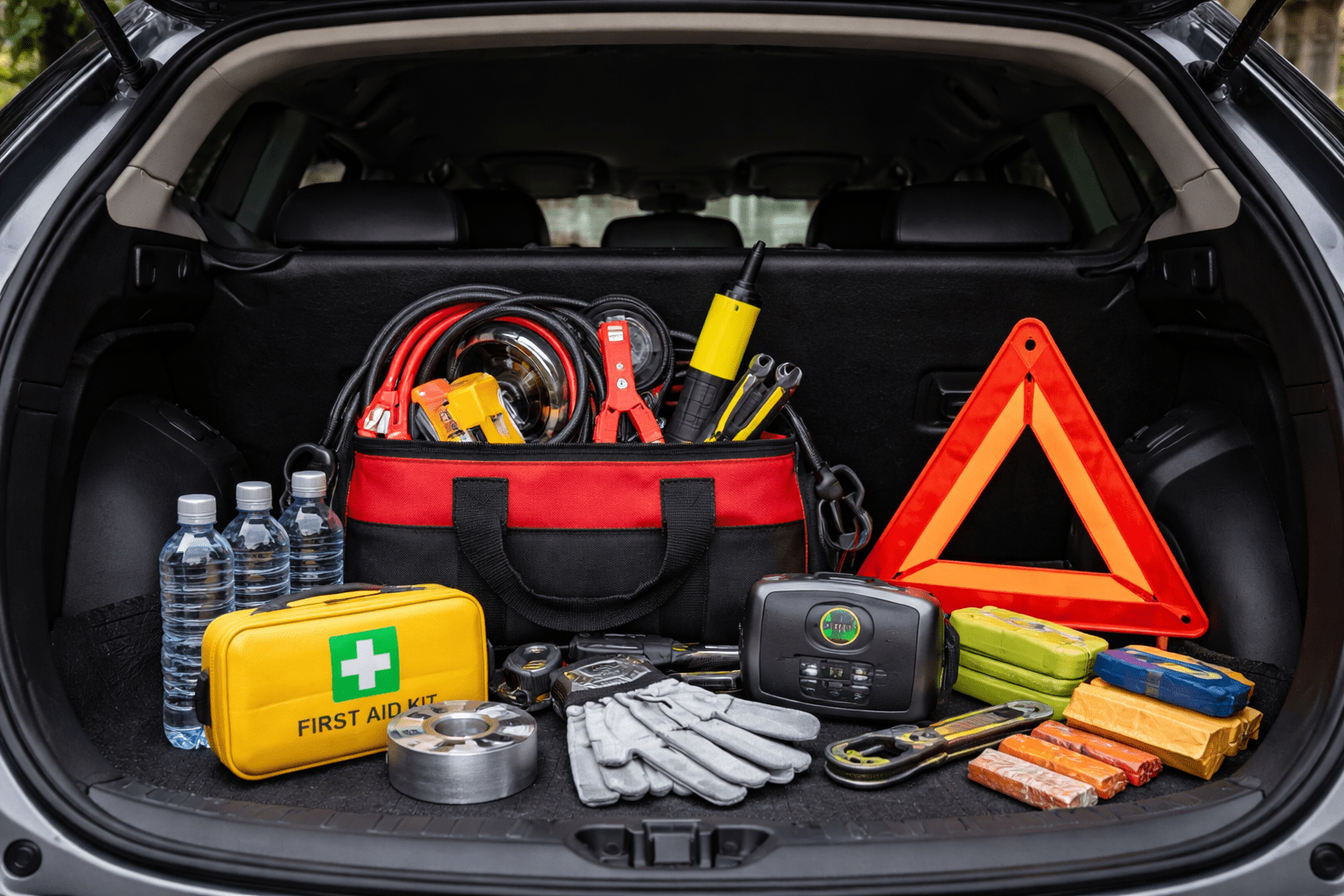
A car emergency kit is a compact collection of essential tools and safety supplies designed to handle common roadside issues like flat tires, dead batteries, or unexpected weather. A well-prepared kit improves safety, reduces downtime, and ensures you can manage emergencies without relying entirely on roadside assistance.
A car emergency kit is a practical collection of tools and safety essentials designed to handle common roadside problems like flat tires, dead batteries, and unexpected weather conditions. Choosing the right kit ensures you can respond quickly, stay safe, and avoid being stranded during everyday drives or long trips.
From my experience, I can tell you this straight; most breakdowns aren’t dramatic engine failures. They’re small things that turn into big problems because drivers aren’t prepared.
A customer once came into the workshop after being stranded for 3 hours; all because of a dead battery. The kicker? He had jumper cables sitting in his garage at home. If those cables were in his trunk, he would’ve been back on the road in 5 minutes.
That’s the difference a car emergency kit makes.
Key Benefits:
- ✔ Handles small problems before they escalate
- ✔ Keeps you safe during roadside stops
- ✔ Helps others in emergencies (which happens more than you’d think)
- ✔ Gives you confidence on long drives
👉 If you’re already working on basic maintenance, check this guide:
https://pickyaura.com/diy/10-essential-car-maintenance-tools-every-beginner-must-have-save-money-fast/
Essential Items Every Car Emergency Kit Must Have
Let’s keep it real, you don’t need a truckload of gear. You need the right gear.
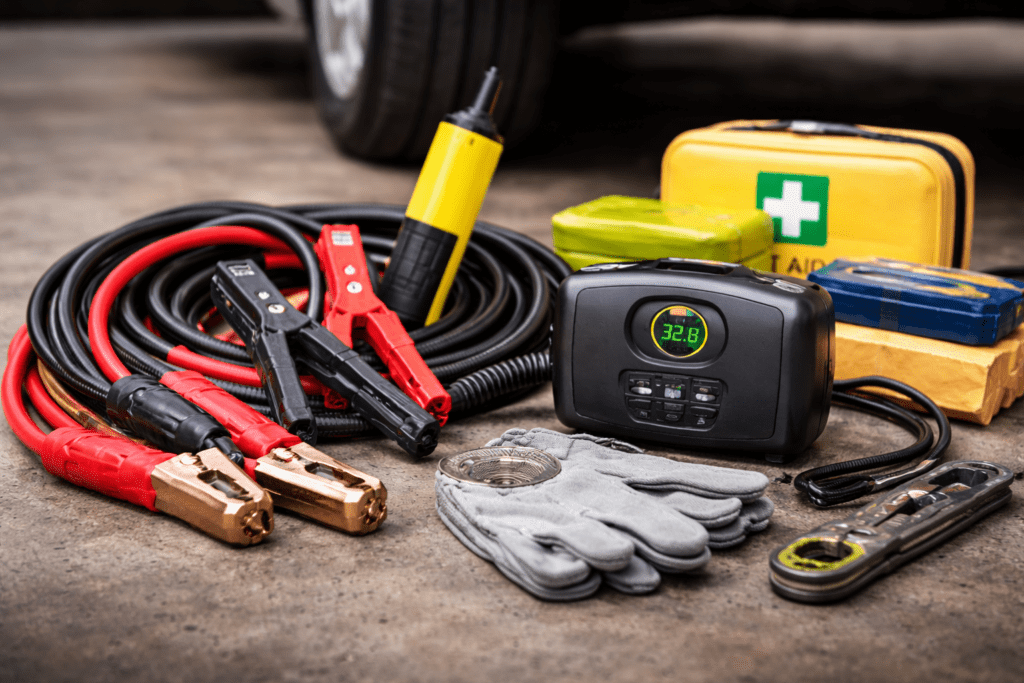
🔧 Core Essentials:
- Jumper cables (8–12 ft, heavy-duty)
- Flashlight (preferably rechargeable)
- First aid kit
- Basic toolkit (pliers, screwdrivers, wrench)
- Tire inflator or sealant
- Reflective warning triangles
- Emergency blanket
- Water & non-perishable snacks
- Phone charger / power bank
👉 Want to avoid bad tool purchases?
https://pickyaura.com/automotive-tools/7-red-flags-to-avoid-when-buying-an-automotive-tool-kit-a-mechanics-insider-guide/
Step-by-Step: How to Build the Best Car Emergency Kit
1. Start With the Basics
Don’t overcomplicate it.
You’ll be surprised — 80% of roadside issues can be handled with:
- Jumper cables
- Tire inflator
- Basic tools
Honestly, I’ve seen people carry fancy kits but forget the basics. Don’t do that. Start simple, then build up.
2. Customize for Your Environment
Here in Australia, heat is a serious factor. I once had a driver come in dehydrated after being stuck roadside for 2 hours. No water in the car. That’s not a mechanical failure, that’s a preparation failure.
Adjust Based On:
- Hot climates → extra water, sun protection
- Cold climates → blankets, gloves
- Rural driving → offline maps, extra supplies
3. Consider Your Vehicle Type
- SUVs/trucks → heavier-duty cables & tow straps
- Small cars → compact kits to save space
You don’t need to go overboard, but don’t cheap out either, especially on cables.
4. Maintain Your Kit (Most People Forget This)
A guy once tried using jumper cables that were completely corroded. Didn’t work. Ended up needing a tow anyway.
Lesson?
👉 Check your kit every 6 months.
Smart Tips Most Guides Don’t Tell You
- Keep your kit accessible (not buried under junk)
- Practice using tools BEFORE you need them
- Label everything clearly
- Add vehicle-specific tools
Should You Buy or Build a Car Emergency Kit?
Option 1: Pre-Made Kits
- ✔ Convenient
- ❌ Often missing quality tools
Option 2: DIY Kit (Recommended)
🔧 Mechanic Opinion:
I always build my own. Why? Because I know what actually fails on the road — and most pre-made kits don’t cover that properly.
👉Learn more about roadside safety from NRMA:
https://www.mynrma.com.au/cars-and-driving/driver-training-and-licences/resources/car-emergency-kit
Final Thoughts
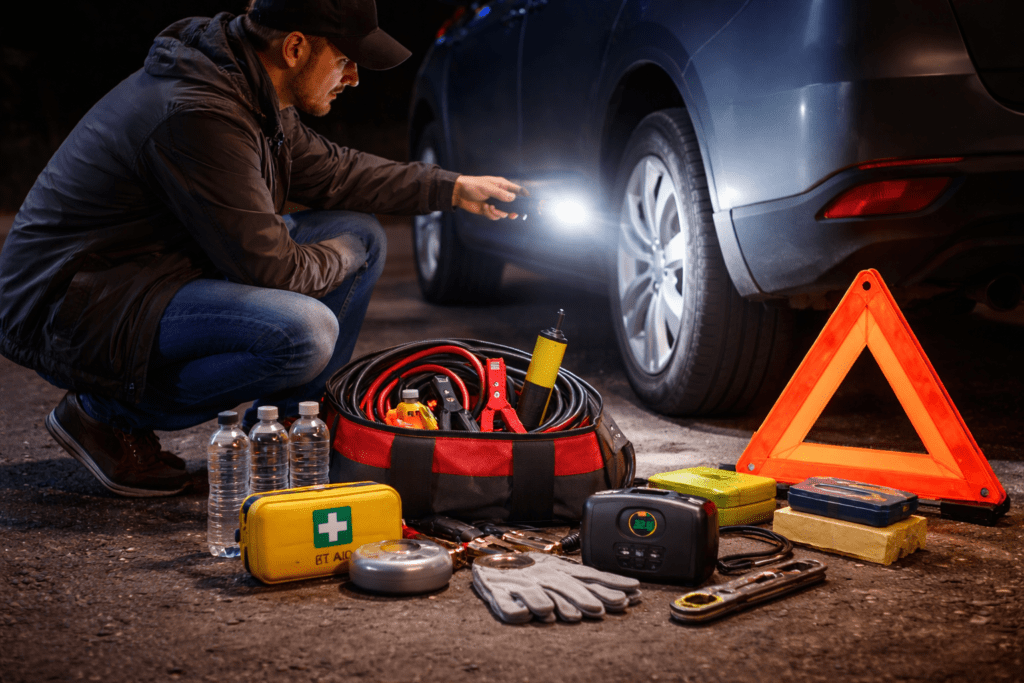
A car emergency kit isn’t just another thing to throw in your trunk but it’s your backup plan when things go wrong. From my experience as an automotive technician, the drivers who stay prepared are the ones who avoid stress, save money, and stay safe. Build your kit smart, maintain it regularly, and you’ll never regret being ready.
FAQ
Q1: What is the most important item in a car emergency kit?
Jumper cables and a tire inflator are the most critical tools, as they solve the most common roadside issues quickly.
Q2: How often should I check my car emergency kit?
Every 6 months. Replace expired items like batteries, food, and medical supplies.
Q3: Is a car emergency kit really necessary?
Yes. Even a basic car emergency kit can prevent long delays, improve safety, and help you handle unexpected situations independently.