
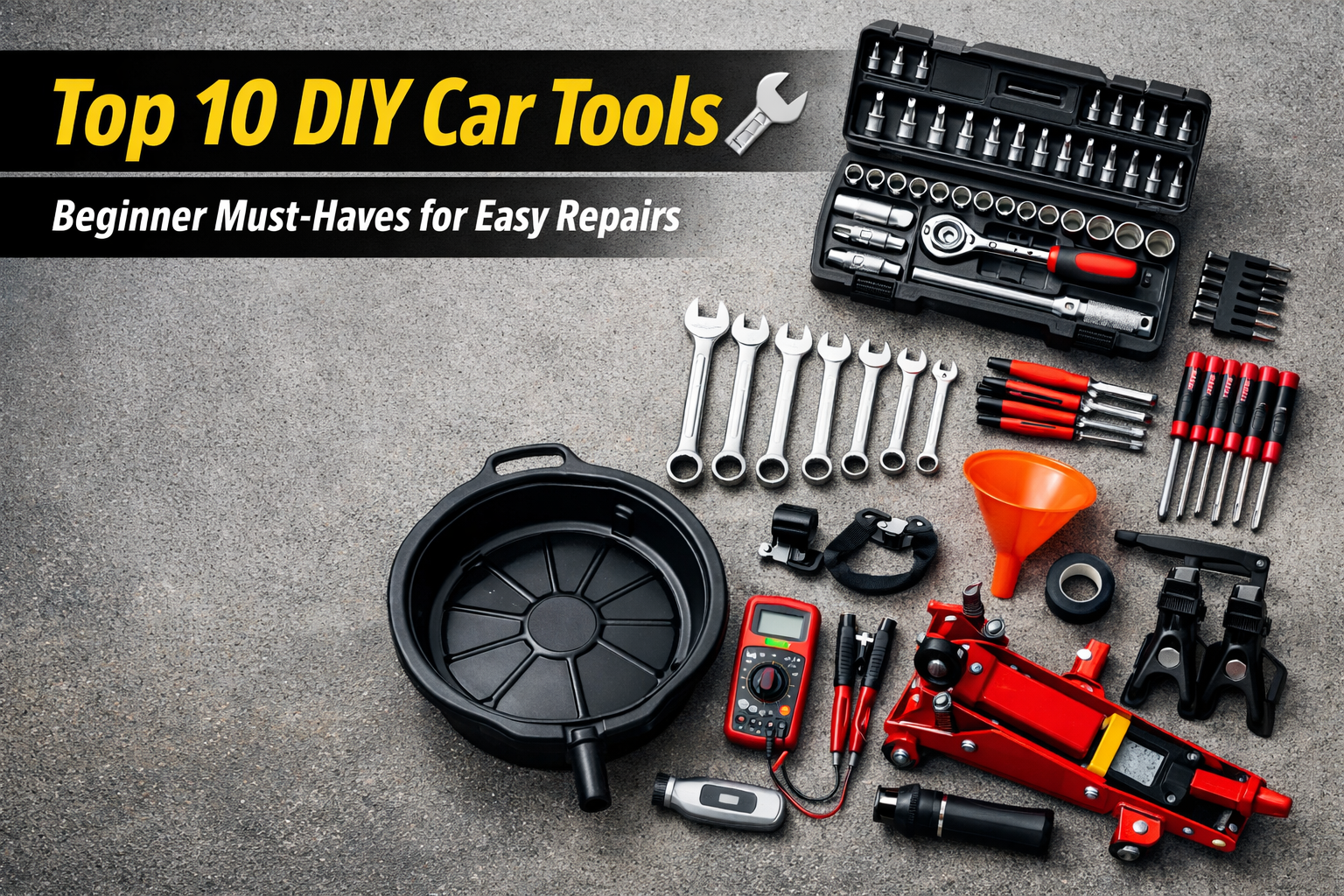
Car maintenance tools like a socket set, jack, torque wrench, and OBD2 scanner allow beginners to handle basic repairs, reduce mechanic costs, and maintain vehicle safety. Starting with essential, reliable tools ensures efficient DIY maintenance while preventing common mistakes that lead to costly damage.
If you’re just getting started with DIY car maintenance, you don’t need a full professional garage to begin. I’ve been working as an auto mechanic for over 10 years, and honestly, most basic repairs come down to having the right tools—not expensive ones.
I’ve seen people spend hundreds on simple fixes that could’ve been done at home in under an hour. So in this guide, I’ll walk you through the 10 essential car maintenance tools every beginner should have to save money and avoid common mistakes. Keeping your car in top shape doesn’t have to cost a fortune. With the right tools, even a beginner can handle basic maintenance and save hundreds of dollars on repairs.
🧰 Why You Need Basic Car Maintenance Tools
Let’s be honest, starting DIY car maintenance without proper tools is a disaster waiting to happen.
I remember a customer who tried to change brake pads using cheap spanners. He stripped a caliper bolt and ended up paying triple the repair cost. That’s exactly why choosing the essential car maintenance tools for beginners matters.
Here’s what the right tools do:
- Help you build real confidence
- Before jumping into the list, here’s why investing in tools is worth it:
- Prevent damage to components
- Save time and frustration
- Improve safety
🔝 Top 10 Essential DIY Car Maintenance Tools
1. 🔩 Socket Wrench Set (Your #1 Must-Have Tool)

If there’s one tool I’d tell every beginner to buy first, it’s a socket wrench set—you’ll end up using it on almost every job.
Why it matters:
- Handles most car bolts and nuts
- Speeds up repairs
- Prevents damage to parts
Tip: Always get both metric and standard sizes.
2. Screwdriver Set
You’d be surprised how often you’ll need a simple screwdriver. From interior panels to battery covers, it’s used everywhere.
What to look for:
- Flathead and Phillips heads
- Magnetic tips (trust me, they help a lot)
3. Tire Pressure Gauge
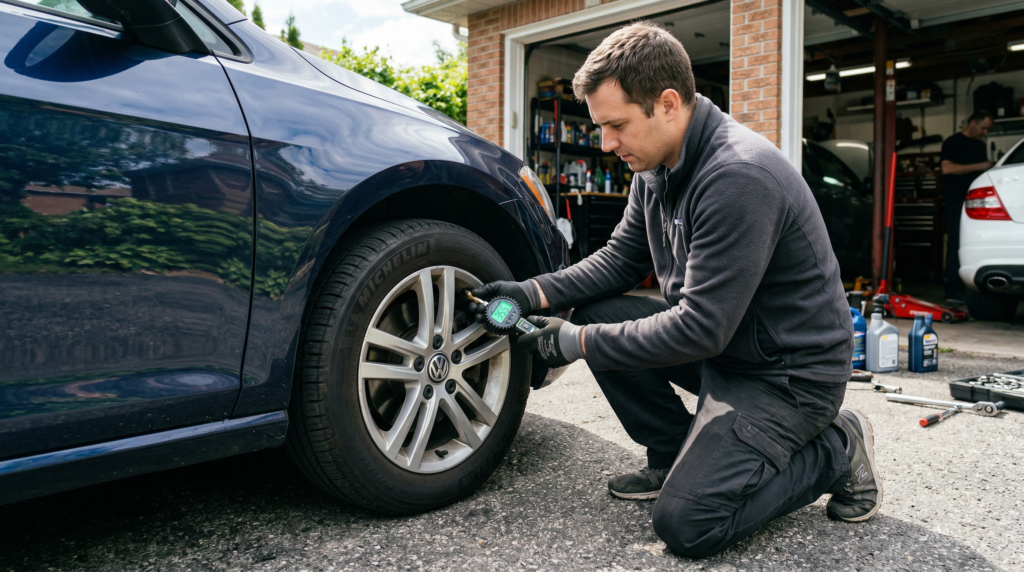
It might look like a simple tool, but I’ve seen this small device prevent some really expensive problems.
I’ve seen underinflated tires cause uneven wear, poor fuel economy, and even dangerous blowouts. One quick check can save you from a serious problem.
Why you need it:
- Improves safety
- Increases fuel efficiency
- Extends tire life
Tip: Go for a digital gauge—it’s quicker and easier to read.
4. Car Jack and Jack Stands
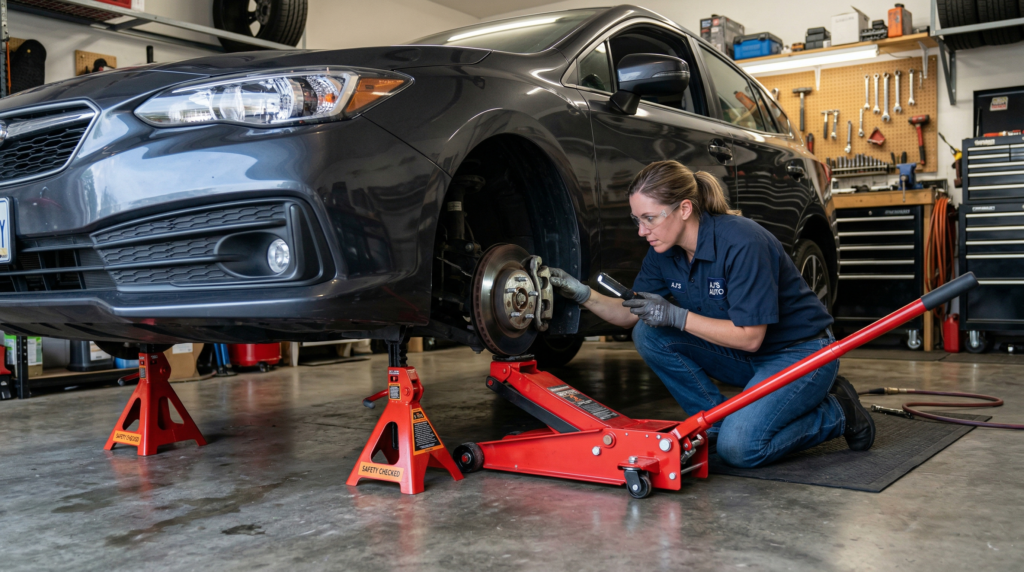
If you’re working under your car, safety comes first. A car jack lifts the vehicle, but jack stands keep it secure.
I’ve seen beginners rely only on a jack—that’s risky. Don’t cut corners here.
Safety tips:
- Always use jack stands
- Work on a flat surface
- Double-check stability before going under
5. Oil Filter Wrench
Changing your engine oil is one of the easiest DIY tasks—but a stuck oil filter can turn it into a nightmare.
I once spent nearly an hour trying to remove a tight filter before grabbing the right tool. After that, it came off in seconds.
Why it helps:
- Removes tight filters easily
- Saves time and frustration
6. Pliers Set
A good set of pliers is something you’ll reach for constantly. Whether it’s gripping, cutting, or pulling parts, it’s incredibly versatile.
Common uses:
- Removing clips and wires
- Holding small parts
- Cutting cables
Tip: Needle-nose pliers are especially useful in tight spaces.
7. Funnel and Fluid Containers
Pouring oil or coolant without a funnel? That’s a mess waiting to happen.
I always keep a funnel in my kit—it keeps things clean and avoids wasting fluids.
Why it matters:
- Prevents spills
- Keeps engine bay clean
- Makes fluid changes easier
8. Flashlight or Work Light
Working on a car without proper lighting is frustrating—and sometimes dangerous.
I’ve done repairs at night where a good LED work light made all the difference. You’ll spot issues faster and work more accurately.
Tip: Choose a rechargeable LED light for convenience.
9. Torque Wrench
This is where many beginners make mistakes. Tightening bolts too much can damage threads, while loose bolts can be dangerous.
I’ve seen both happen—and neither ends well.
Why it’s essential:
- Ensures correct tightening
- Prevents damage
- Improves safety
Rule: Don’t guess torque—always use the tool.
10. Multimeter
If you want to diagnose electrical problems, a multimeter is a must-have.
Just recently, I used one to track down a faulty fuse in minutes. Without it, that job would’ve taken much longer.
What it does:
- Checks battery voltage
- Detects wiring issues
- Helps diagnose electrical faults
🧠 Buyer’s Guide: Choosing the Right Tools
When buying essential car maintenance tools for beginners, keep this in mind:
✅ Quality Over Price
Cheap tools fail when you need them most.
✅ Brand Reputation
Stick to trusted brands with warranties.
✅ Compatibility
Ensure tools match your vehicle type.
✅ Storage
A toolbox keeps everything organized.
🛒 Bonus: Build a Beginner DIY Tool Kit
If you’re just starting, aim for:
- A complete starter kit
- Durable, long-lasting tools
- Trusted brands
👉 This saves money compared to buying tools individually.
❌ Common Mistakes Beginners Make
- Buying cheap, low-quality tools
- Skipping safety gear
- Not using the right tool for the job
- Ignoring basic maintenance
🚀 Final Thoughts
Starting your DIY car maintenance journey doesn’t have to be complicated. With these 10 essential tools, you can handle most basic repairs confidently and save a lot of money in the long run.
From my 10+ years of experience, I can tell you this, having the right tools isn’t just about convenience… it’s what makes the difference between a quick fix and a frustrating day.
Start small, build your toolkit, and you’ll be surprised how much you can do on your own.
FAQs
Q1: What tools do I need for basic car maintenance?
You need a socket wrench set, screwdrivers, tire pressure gauge, jack and stands, and a few basic tools like pliers and a funnel.
Q2: Can beginners really do car maintenance at home?
Yes, beginners can handle basic tasks like oil changes, tire checks, and battery maintenance with the right tools.
Q3: How much money can DIY car maintenance save?
You can easily save hundreds of dollars per year by handling simple repairs yourself.