
TL;DR: How to Choose Car Speakers
Choosing car speakers involves matching speaker type (coaxial or component), size, power handling (RMS), and sensitivity to your vehicle and stereo system. Prioritize compatibility, sound quality, and installation needs. High-sensitivity speakers suit factory stereos, while component systems offer better clarity for upgraded setups and premium listening experiences.
Upgrading your car audio isn’t just about louder music, it’s about clarity, balance, and actually enjoying what you’re listening to. From my experience as an automotive diagnostic technician, I’ve seen how even a simple speaker swap can completely transform a driving experience. And honestly? Most factory speakers just don’t cut it.
If you’re wondering how to choose car speakers, I’ll walk you through it the same way I do for customers in the workshop—no fluff, just real-world advice that works.
What’s Inside? (Quick Glance)
Why Upgrade Your Car Speakers?
Let me tell you something I see all the time. A customer walks in complaining about “bad audio,” but the issue isn’t the head unit it’s the cheap factory speakers. A few months back, a guy came in with a 2015 sedan. Stock speakers, muddy sound, no bass. We swapped in mid-range aftermarket speakers nothing crazy and the difference was night and day. He literally said, “I feel like I bought a new car.”
What improves when you upgrade:
- Clearer vocals and instruments
- Tighter, cleaner bass
- Less distortion at high volume
- Longer lifespan
If you want to go deeper into audio upgrades, check this internal guide:
https://pickyaura.com/car-electronics-and-gadgets/car-audio-accessories/
Car Speaker Types (What Actually Matters)
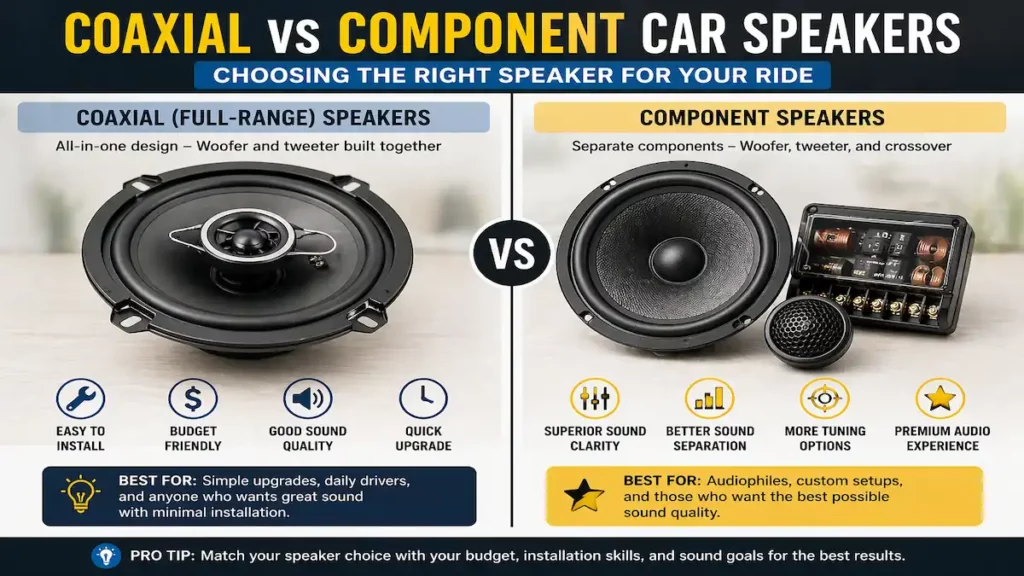
1. Coaxial Speakers (Best for Most People)
If you’re not planning a full audio build, this is your safest bet. I’ve installed hundreds of these, and honestly, they’re hard to mess up. These are your all-in-one speakers, woofer + tweeter combined.
- Easy install
- Budget-friendly
- Solid upgrade over stock
2. Component Speakers (Best Sound Quality)
I once installed component speakers in a customer’s SUV who loved acoustic music. After tuning the tweeters properly, he said he could hear details he’d never noticed before. That’s the difference. Separate tweeters, woofers, and crossovers:
- Better sound staging
- Cleaner highs and mids
- More tuning control
Checking Compatibility (Don’t Skip This)
This is where most people go wrong.
1. Speaker Size
Common sizes:
- 6.5-inch
- 6×9-inch
- 5.25-inch
Always check your car manual or use a fit guide like:
https://www.crutchfield.com/
2. Mounting Depth
Here’s a mistake I’ve seen too often. Someone buys premium speakers then realizes they don’t fit behind the door panel. Trust me, you don’t want to pull everything apart twice.
3. Wiring Compatibility
Some cars need adapters. It’s a small detail but it saves a lot of headaches.
Car Speaker Features to Consider (This Is Where Quality Shows)
1. Power Handling (RMS vs Peak)
- RMS = real usable power
- Peak = marketing number
Match RMS with your stereo or amp. I’ve seen speakers blown in weeks because people ignored RMS ratings. Don’t be that guy.
2. Sensitivity
- Higher sensitivity = louder sound with less power. 90dB+ = great for factory stereos
3. Materials Matter
- Polypropylene woofers = durable
- Silk tweeters = smooth sound
- Metal tweeters = brighter, sharper
4. Frequency Range
Don’t chase numbers blindly. A customer once chose speakers purely for “wide frequency range” but they sounded worse than a balanced set with lower specs. Specs matter but tuning matters more.
Choosing Speakers for Car Audio System
1. Set Your Budget
Let’s be real, you don’t need to spend a fortune. Even mid-range speakers can outperform factory ones easily.
2. Check Fitment First
This avoids returns and wasted money. Use tools like:
- Manufacturer guides
- Local installers
3. Listen Before You Buy (If Possible)
I always recommend this. If it doesn’t sound good in-store, it won’t magically sound better in your car. What I do:
- Play familiar songs
- Test low + high volume
- Listen for distortion
4. Decide: DIY or Pro Install
DIY: Saves money and Great for coaxial installs
Professional: Cleaner install and Better tuning
If you’re unsure, go pro it’s worth it.
Car Speaker Buying Guide
| Goal | Best Option |
|---|---|
| Budget upgrade | Coaxial speakers |
| Premium sound | Component speakers |
| Loud system | Add amplifier |
| Deep bass | Add subwoofer |
| Daily driver | High-sensitivity speakers |
How to Upgrade Car Speakers: Extra Tips
1. Add a Subwoofer
Door speakers alone won’t give deep bass.
Check this article for must have car tech gadgets:
https://pickyaura.com/car-electronics-and-gadgets/car-tech-gadgets/
2. Use Sound Deadening
I added sound deadening to a customer’s doors once same speakers, same setup but the clarity improved massively. Less vibration = better sound.
3. Avoid Mixing Brands
Different tuning = uneven sound. Stick with one brand if possible.
4. Consider a Small Amplifier
Even a compact amp: Improves clarity and Reduces distortion If you’re serious about upgrading your sound, don’t just guess, choose smart.
Explore more expert-tested guides here: https://pickyaura.com/ or drop your setup in the comments I’d love to see what you’re running.
Final Thoughts
When it comes to how to choose car speakers, it’s not about chasing the most expensive option it’s about finding what fits your car, your music taste, and your setup. After working on cars for over a decade, I can tell you this: the right speakers can completely change how you feel behind the wheel. Take your time, choose wisely and enjoy every drive a whole lot more.
Frequently Asked Questions
How do I know what size car speakers I need?
Check your car manual or use online fit guides like Crutchfield. Measuring your existing speakers is also a reliable method.
Are expensive car speakers worth it?
Yes, but only if your system supports them. Without proper power or installation, you won’t notice the full benefit.
Can I install car speakers myself?
Yes—especially coaxial speakers. Basic tools and patience are enough for most vehicles.
Do I need an amplifier for better sound?
Not always, but it significantly improves clarity and volume without distortion.
What’s better: coaxial or component speakers?
Coaxial for simplicity, component for sound quality.
This was a very practical and easy-to-follow guide. I liked how you explained the difference between coaxial and component speakers without making it too technical. The reminder to check speaker size, mounting depth, wiring, RMS power, and sensitivity before buying is especially helpful because those small details can save a lot of frustration. I also appreciated the real-world examples from your workshop experience. For someone using a factory stereo, would you usually recommend starting with high-sensitivity coaxial speakers first?
Hi Hanna! Thanks for the great question. You’re exactly right for a factory stereo setup, high-sensitivity coaxial speakers are absolutely the most reliable starting point. They are designed to deliver a professional sound finish without needing an external amplifier, making them the most practical and budget-friendly upgrade. By focusing on sensitivity first, you ensure you get that “new car” clarity immediately.