
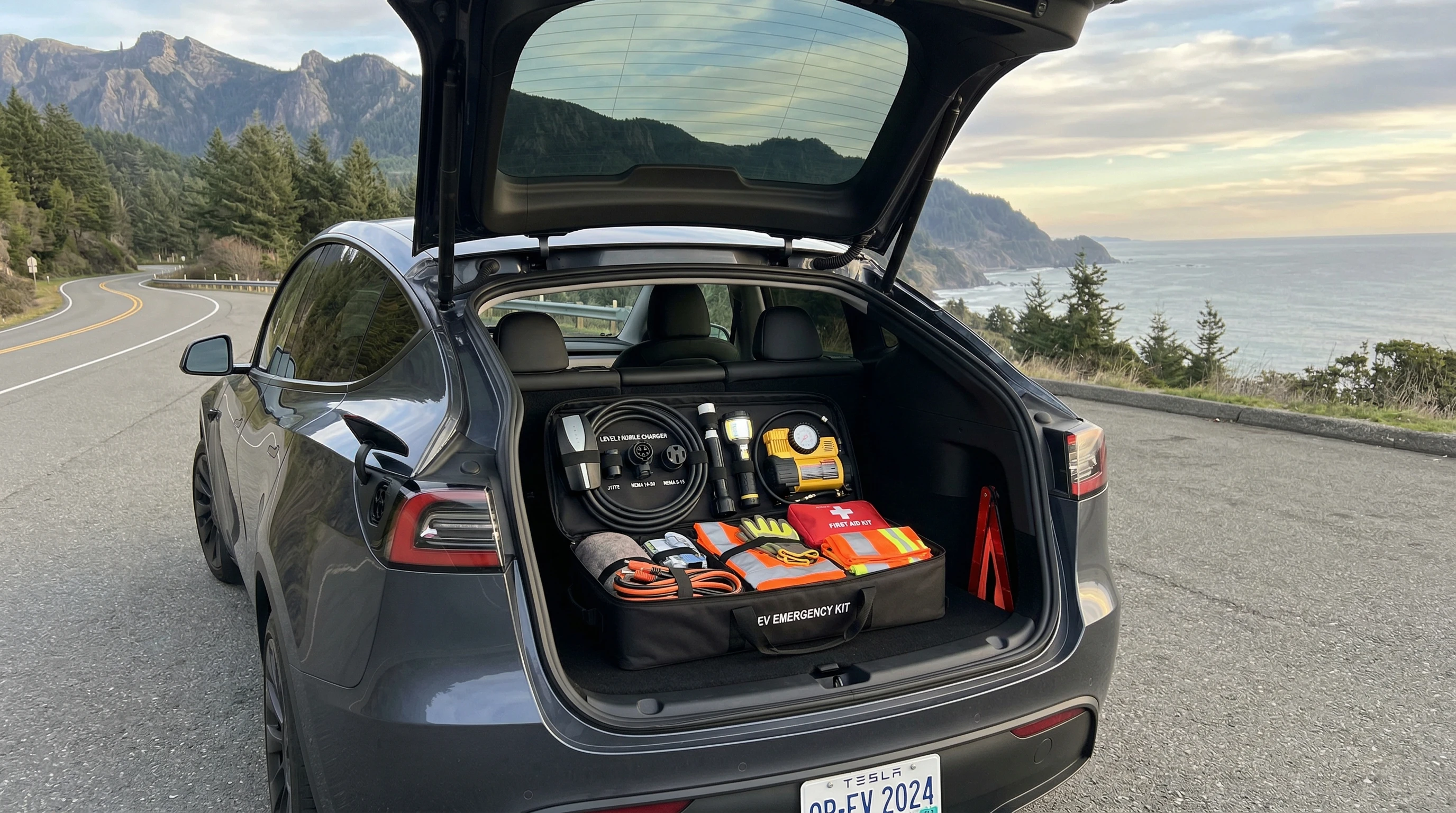
Preparing an EV emergency kit ensures drivers are equipped to handle battery limitations, charging challenges, and roadside emergencies. Unlike traditional vehicles, EVs require charging flexibility, backup power, and safety gear. A well-prepared kit improves reliability, safety, and peace of mind during both daily commutes and long-distance travel.
After working as an automotive technician for over 10 years, I can tell you one thing straight EVs don’t usually leave you stranded because they “break down”… they leave you stranded because you weren’t prepared.
And honestly, that’s avoidable.
I’ve seen drivers panic over something as simple as a missing charging adapter or a flat tire with no inflator. The good news? A properly built EV emergency kit solves most of these problems before they even become stressful.
🧰 Why You’ll Appreciate an EV Emergency Kit
Let’s be real—EV ownership is great, but it comes with a different mindset.
✔ Real-World Insight
A customer once came into my workshop after running out of battery just 5 km from a charging station. The issue wasn’t range—it was that he didn’t carry a portable charger or extension cable. We could’ve solved that on the spot if he had the basics.
That’s when it really hit me—small preparation saves big headaches.
Key Benefits:
- Less stress when battery runs low
- Prepared for weather changes
- Quick fixes without waiting for roadside assistance
- Confidence on long trips
⚡ EV Emergency Kit Essentials
Here’s what I personally recommend based on real workshop experience:
🔌 Charging & Power
- Portable EV charger (Level 1 or 2)
- Charging adapters (Type 2, CCS, etc.)
- Heavy-duty extension cord
🚨 Safety Gear
- Reflective vest
- Warning triangle
- Flashlight (rechargeable)
🔧 Repair & Survival Tools
- Tire repair kit / inflator
- First aid kit
- Thermal blanket
- Gloves + rain poncho
🔋 Backup & Convenience
- Power bank
- Water & snacks
🛠 Step-by-Step: Build Your EV Kit
1. Gather Essentials
Start with the core items listed above.
2. Pack for Your Climate
- Winter → blankets, hand warmers
- Summer → water, sunscreen
3. Use a Proper Storage Box
Keep everything organized in a waterproof container.
4. Maintain Your Kit
Check every 2–3 months:
- Recharge devices
- Replace expired items
- Update seasonal gear
🔧 Technician Insight
Most drivers assume roadside assistance will save them—but here’s the truth:
In remote areas, even in Australia, I’ve seen delays of 2–3 hours minimum.
If you’ve got:
- A thermal blanket
- Backup power
- Basic tools
You’re not stuck you’re just waiting comfortably.
- EV charging networks:
➡️ https://www.plugshare.com
➡️ https://abetterrouteplanner.com
These apps help you locate real-time charging stations.
🛒 EV Emergency Kit Buyer’s Guide
If you’re buying instead of building:
Look for:
- Durable storage case
- EV-compatible charging accessories
- Multi-use tools
- Compact design
Avoid:
- Cheap inflators (they fail when needed most)
- Low-capacity power banks
- Poor-quality cables
➡️ Car Safety Accessories You Must Have
🧾 Final Thoughts
Here’s the truth EVs are reliable, but prepared drivers are even more reliable.
After a decade in the workshop, I’ve learned that most roadside issues aren’t mechanical failures they’re lack-of-preparation failures.
Take an hour, build your kit properly, and you’ll avoid 90% of common EV problems.
Trust me… it’s worth it.
❓ FAQ
Q1: What makes an EV emergency kit different?
EV kits focus on charging tools, adapters, and power management instead of fuel-related items.
Q2: How often should I check my kit?
Every 2–3 months or before long trips.
Q3: Can I rely only on public charging stations?
No. Always carry a backup charging solution.
Q4: Is a portable EV charger necessary?
Yes, it’s one of the most important tools in your kit.
Q5: What’s the biggest mistake EV drivers make?
Not carrying adapters or underestimating battery range.