
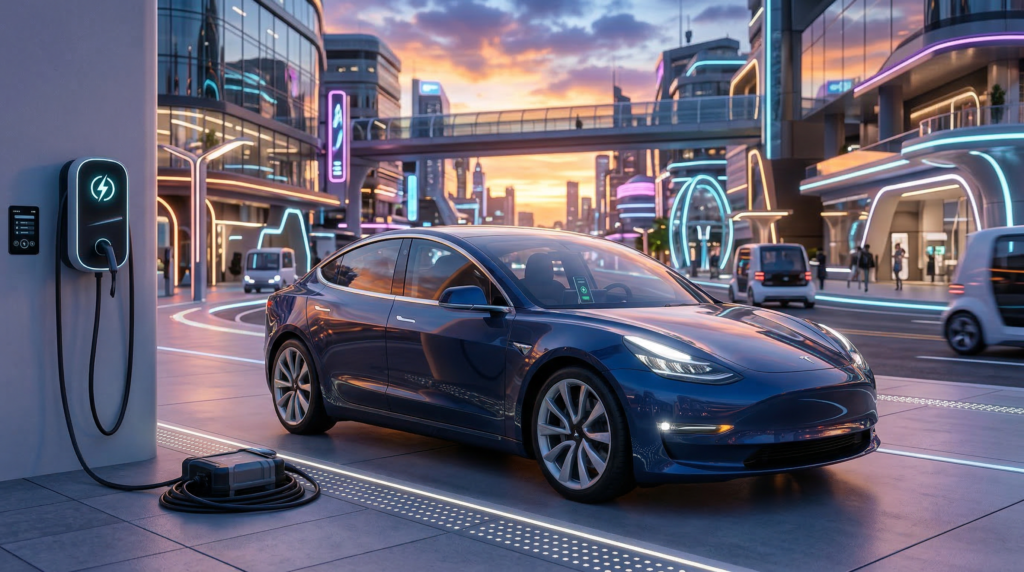
Electric cars already offer drivers cleaner transportation and big savings, but the right accessories can make EV ownership even better. Innovative add-ons have become the “unsung heroes” of the EV world, optimizing convenience, comfort, safety, and efficiency. For example, EV forums and blogs often list items like home chargers, portable cables, adapters, and charging apps as “must-haves” for EV drivers. By contrast to gas cars, EV owners can bring chargers on road trips, block out solar heat, and even harness their battery for power when camping. In this guide, we help EV owners (and buyers) cut through the clutter. We explain which EV accessories are truly essential, why, and how much they cost, backed by industry insights and expert tips.
Essential Charging Accessories
Electric vehicles need power – and these accessories make charging simpler and faster.
Level 2 Home Charger
A Level 2 (240V) home charger is often cited as a foundational EV accessory. Installing a dedicated home charging station lets you recharge much faster than a standard outlet (up to ~30–37 miles of range per hour at 40–50A) and save on energy costs. One source notes that “80 to 90 percent” of EV charging is done at home, making a Level 2 charger a must-have for many drivers. These units range in price (typically $350–$1,000+ depending on power and features). Look for models with Wi-Fi/smart controls (for scheduling and efficiency), a high amperage rating for your car, and weatherproof housings if outdoor-mounted. Always have it installed by a qualified electrician. (Examples: JuiceBox Pro, ChargePoint Home Flex, Tesla Wall Connector).
Portable EV Charging Cable
Having a portable charging cable (often called a Mode-3 cable) is crucial when you need to charge on the go. Many public AC charging stations (level 2) do not include a tethered cable, so bringing your own J1772 cable (Type 1 or Type 2 depending on region) prevents you from missing charging opportunities. Portable cables can also plug into a 120V or 240V outlet (dual-voltage cable) for emergency charging. They’re not as fast as a high-power charger, but they rescue range anxiety by letting you “top up” from any household outlet or RV park socket. Expect a heavy-duty 16–40A cable (16–25 feet) to cost on the order of $200–$500. Tips: Choose the correct plug type (NEMA 5-15 for 120V, NEMA 14-50 or 6-50 for 240V) for your travel needs, and buy from reputable EVSE brands.
Charging Adapters & Converters
Charging adapters bridge the gap between different plug standards. A big change in the industry is the adoption of Tesla’s NACS (North American Charging Standard) plug by almost every automaker. During this transition, non-Tesla EVs often need adapters to use Tesla chargers, and vice versa. For example, Tesla provides a J1772-to-NACS adapter (~$59) so its cars can use regular stations, while GM and others are offering NACS-to-CCS/J1772 adapters for non-Tesla EVs (typically ~$100–$200). Tesla’s own NACS info page notes that as automakers switch to NACS by 2025, adapters will eventually be phased out – but until then, owning the right adapter is key to accessing more chargers. Buying Tip: Always buy certified adapters from your automaker or trusted third parties (e.g. Lectron) to ensure safety and warranty compliance.
Portable Power Station
For extended trips or emergency backup, some EV owners carry a portable power station (a large battery pack with AC outlets). These units (e.g. EcoFlow Delta Pro, Jackery Explorer) can power laptops, small appliances, or even provide a few kWh back to your EV in a pinch. Think of it like a jerry-rigged gasoline can for an EV. On long road trips or camping, plugging your car into a power station can add some range if chargers are far apart. They can also serve as a home backup: many can integrate with your house panel during an outage. Key stats: high-end models store ~3–5 kWh, support AC and DC outputs, and some can stack or recharge via solar. Downsides: they are bulky (~60–100+ lbs) and expensive (often >$2,000). Still, for frequent travelers or off-grid campers, the peace of mind can be worth the price. (Example: EcoFlow Delta Pro – ~10,000Wh, ~$3,500; Jackery Explorer 1500 – 1,500Wh, ~$1,200.)
Comfort & Convenience Accessories
Beyond charging, several accessories improve daily EV life on the road and at home.
Glass Roof / Windshield Sunshades
Many EVs have large panoramic glass roofs or windshields that heat up the cabin in summer. A custom sunshade (for the windshield, roof, or windows) blocks glare and UV, keeping your EV cooler and protecting the interior. This in turn reduces A/C use and can preserve driving range. For example, Tesla Model Y/Mach-E owners often install retractable or foldable shades since the glass roof has no built-in cover. Sunshade prices vary: simple nylon shades start around $30–$100, while custom-fit insulated panels are $100–$200 (motorized Tesla roof shades run ~$500–$700). Tip: Get one designed for your exact model and try reflective or black-out material to cut heat.
Charging Extension Cable
A common annoyance with home EV charging is reaching the car from the outlet. Extension cables solve this: heavy-duty 20–40ft extensions attach between your charger and the car. For instance, Lectron sells a 20-foot J1772 extension (40A) for ~$300. Tesla owners can use a NACS extension cable too (~20ft, 48A, ~$300). This is handy if you need to park slightly differently in the garage or share a long driveway. Buying Tip: Only use UL-listed EV extension cables designed for high current – do not use a standard extension cord. Also, minimize connectors for safety (one extension is fine, but avoid daisy-chaining).
Cable and Port Protectors
Protecting your charging cables and ports can save money over time. Two simple gadgets are:
- Garage Door Cable Protector: This rubber seal fits under your garage door and snugs around the cable, preventing critters from entering and reducing wear. For ~$20–$65 you can seal the gap (e.g. Spigen DuraPro, UNDOR Pro).
- Waterproof Port Cover: Cold or wet climates can ice over a charging port. Magnetic charging port covers cap the vehicle’s inlet when idle. These range ~$10–$30 and keep snow/ice out.
Installing these prevents damage to expensive charging cords and your EV’s connector. (Also consider cable holsters or hooks to hang your charger when not in use.)
Mobile Work/Desk Tray
Until charging is as quick as gasoline fueling, many drivers use the charging downtime productively. A steering-wheel desk tray provides a stable surface in your parked EV for a laptop or meal. These attach to the steering wheel or rest on the console, then fold flat when not in use. Priced around $30–$50, they turn charging pauses into mini office breaks. (Some even have cup holders or phone stands.) This isn’t a necessity for everyone, but tech-savvy owners working remotely may find it one of those “cool” accessories that pays for itself in convenience.
Comparison: 8 Must-Have EV Accessories (with Examples)
| Accessory | Example Products | Key Benefits | Price Range | Buying Tips |
|---|---|---|---|---|
| Level 2 Home Charger | JuiceBox Pro, ChargePoint Home Flex, Tesla Wall Connector | Fast & convenient home charging; uses 240V power (adds ~30–37 mi/hr); saves on fuel. | ~$350–$1,000+ | Ensure proper amperage (40–50A), weather rating, and energy-star efficiency. Install by electrician. |
| EV Charging Adapter | Tesla J1772–NACS adapter ($59), GM CCS–to–NACS adapter ($130) | Access more chargers (Tesla/NACS vs J1772/CCS); future-proofs compatibility. | ~$60–$200 | Buy automaker-certified adapters to avoid warranty issues. Check connector types (NACS, CCS, CHAdeMO). |
| Portable Charging Cable | Lectron Dual-Voltage Cable, RHOMBUS Portable EV Charger | Charge away from home; plugs into 120V/240V outlets (dual-voltage) for “top-up” charging. | ~$200–$500 | Choose cable length (16–25 ft) and plug type (NEMA 5-15, 14-50, etc) suited for travel. Look for IP-rated durable cables. |
| Portable Power Station | EcoFlow Delta Pro, Jackery Explorer | Emergency/road-trip power; can run devices (and even add miles to EV). 3–5 kWh capacity for camping or blackout backup. | ~$1,000–$4,000+ (high-end) | Look for 1000Wh+ capacity, AC outlets, and rolling handles. Consider recharging options (car, solar). |
| Sunshade (Roof/Windows) | Covercraft, Zatscreen for Tesla | Blocks glare/UV, keeps cabin cooler, reduces A/C use and preserves range. | ~$30–$200 (model-specific) | Get custom-fit shades for your model. Reflective or black-out material maximizes heat rejection. |
| Charging Extension Cable | Lectron 20ft/40ft J1772 extension | Extends reach of home charger to accommodate parking; heavy-duty and weatherproof. | ~$300 for 20–40ft | Use only EV-specific extensions (up to 48A). Limit to one extension to minimize connections. |
| Cable/Port Protectors | Spigen DuraPro Door Seal ($20), Undor Pro ($65), Magnetic Port Cover ($10) | Protects charging cable from wear under garage door; shields port from weather. | $10–$65 | Pick the right door-seal size. For port covers, ensure snug magnetic fit on your vehicle’s inlet. |
| Steering Wheel Desk Tray | EV Wrap Steering Wheel Table, Ketomo Tray | Turns charging stops into productive rest breaks; stable surface for laptop/food in parked EV. | ~$30–$50 | Verify size for your wheel/model. Collapsible designs store easily in the glovebox or door. |
FAQs
Q1: What are the most important accessories for new EV owners? A: First, a Level 2 home charger (240V) to speed up daily charging. Also carry a portable charging cable (fits 120V/240V outlets) and any needed adapters (Tesla NACS or CCS) for public chargers. A portable power station and cable protectors are nice-to-haves. See table above for details.
Q2: Do I really need a Level 2 home charger? A: If you drive your EV frequently, yes. A Level 2 home charger greatly cuts charging time (often to overnight) and is more cost-effective than public charging. It’s especially useful if lower electricity rates are available at night. If you drive very little, a standard 120V cable might suffice, but most owners find Level 2 charging a worthwhile convenience.
Q3: What is a portable power station, and should I buy one? A: A portable power station is a large battery pack (with AC outlets) that you can take on trips. It can power small appliances or even charge an EV a bit in emergencies. It’s useful for camping or during power outages but is heavy and costly (~$2,000+). Consider if you often camp or travel in areas with few chargers.
Q4: Are there must-have accessories specifically for Tesla owners? A: Tesla drivers often add the Tesla Wall Connector for home charging, plus adapters for non-Tesla chargers (e.g. NACS-to-J1772 adapter for public Level 2 stations). Many also use the built-in mobile app for charging access. General accessories like sunshades, floor mats, and portable chargers apply to any EV, including Teslas.
Q5: How much do EV accessories cost? Are they worth it? A: Costs vary widely – a basic dual-voltage cable might be a few hundred dollars, while a home charger is several hundred to over $1,000. Luxury items like power stations or motorized shades cost more. Consider the value: accessories like a home charger pay off by saving time and charging costs, and travel gear (cables, adapters) can make road trips less stressful. Budget for the key ones (charger, cables, adapters) first.