
DIY car maintenance empowers you to save on repairs and gain confidence in fixing your vehicle. However, working on a car requires the right tools – standard household tools often aren’t up to the task. For example, a mechanic’s socket set must include both SAE and metric sizes and multiple drive sizes. In this guide we present the essential, diagnostic, and specialty tools that every DIY car owner should consider, including recommended models (2026 updates) and what to look for when buying. We also cover basic usage and safety tips (always use jack stands on solid ground). Whether you’re tightening brake pads or diagnosing a check-engine light, this article will help you choose and use your tools effectively. The comparison table below (and detailed descriptions following) makes it easy to see which tools are worth the investment.
Essential Tools for DIY Mechanics
These everyday hand tools form the backbone of any DIY car toolkit. They handle the bulk of routine maintenance and minor repairs:
- Socket & Ratchet Set – A quality set with SAE and metric sockets, plus ¼″, ⅜″, and ½″ ratchets, is indispensable. Look for a set that includes extensions and deep sockets for hard-to-reach nuts. Pros: Versatile for most nuts/bolts, sturdy build, quick tightening. Cons: Kits can be heavy; cheaper sets may wear out. Typical price: $50–$300 (for 50–200-piece sets). Best for: Removing wheels, engine bolts, etc. Buying tip: Choose a well-reviewed brand (e.g., Dewalt, Craftsman) and ensure ratchets click smoothly.
- Wrench Set (Metric & SAE) – Combination wrenches (open-end plus ratcheting box-end) cover sizes where sockets won’t fit. We recommend a ratcheting wrench set. Pros: Narrow profile fits tight spaces, ratcheting saves time, durable steel. Cons: Can slip on rounded bolts if low quality, must carry many sizes. Price: $30–$150. Best for: Hard-to-reach bolts, suspension work. Tip: Get both metric and SAE and consider flex-head wrenches for extra reach.
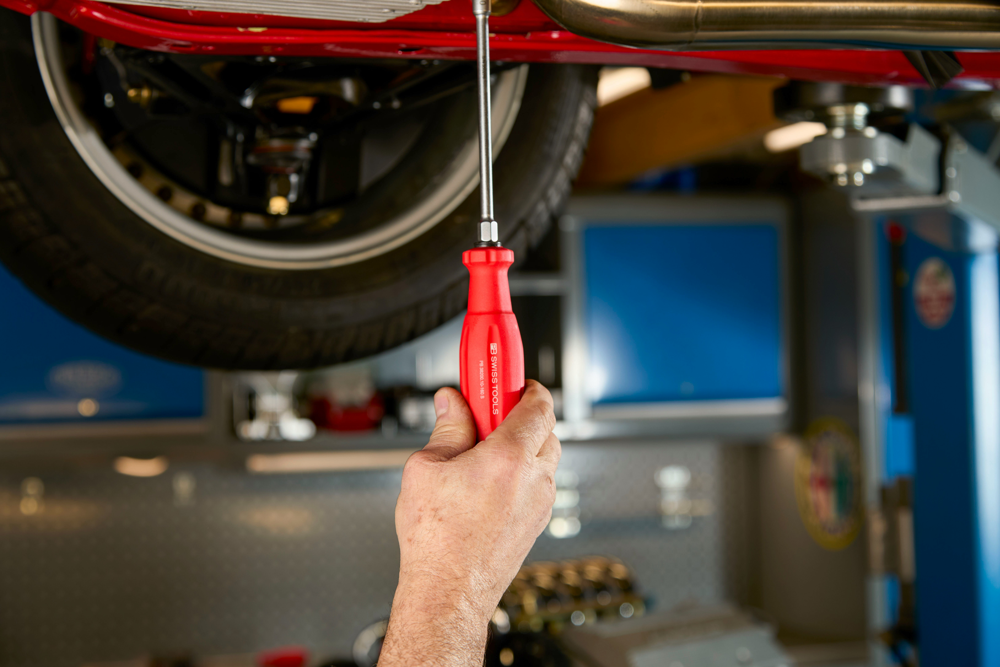
- Screwdriver Set (Phillips & Flathead) – A set (or ratcheting multi-bit set) is crucial for trim panels, clamps, and electronics. Pros: Inexpensive, versatile, often magnetic tips. Cons: Cheap screwdrivers wear quickly; choose good grip handles. Price: $10–$50. Best for: Dash panels, fuse box screws, battery clamps. Tip: Look for sets with insulated or ergonomic handles for comfort.
- Pliers & Wirecutters – Include needle-nose pliers, slip-joint pliers, and side-cutters. These are useful for cables, clips, and wiring. Pros: Gripping/pulling tight clips, cutting wires, long life. Cons: Hard on hands if not ergonomic. Price: $15–$80 (set of 3–5). Best for: Electrical work, clamps, cotter pins. Tip: Brands like Knipex or Channellock are rugged.
- Work Light – A bright LED work light (preferably rechargeable) prevents mistakes in dim garages. Pros: Illuminates engine bays, 360° swivel models cover all angles. Cons: Battery life varies; ensure it charges fully. Price: $20–$100. Best for: Nighttime repairs, trunk/hatch repairs. Tip: Magnetic base or tripod models are handy for hands-free use.
Each of the above tools is considered “essential” because it covers a wide range of tasks. They were mentioned in sources like Popular Mechanics and Cars.com as must-haves for any car toolkit.
Diagnostic Tools
Modern vehicles rely on electronics, so diagnostic tools are also vital:
- OBD-II Scanner (Code Reader) – An OBD-II scanner reads engine & emissions codes. A basic scanner (wired or Bluetooth) can clear codes and check engine lights. Pros: Pinpoints faults, saves on mechanic visits. Cons: Basic models only read generic engine codes. Price: $20–$300 depending on features. Best for: Checking check-engine codes and simple diagnostics. Tip: For advanced troubleshooting, get a unit that reads ABS/SRS or a Bluetooth model that works with smartphone apps.
- Digital Multimeter – Essential for electrical troubleshooting. It measures voltage, current, and resistance on circuits. As Popular Mechanics notes, a multimeter “removes the guessing game” by letting you test wires and sensors. Pros: Tests battery health, alternator output, sensors, etc. Cons: Requires basic electrical knowledge. Price: $20–$100. Best for: Diagnosing dead batteries, fuses, wiring faults. Tip: A rugged model (e.g. Fluke or Klein Tools) can withstand shop use; look for auto-ranging and a clear display.
Specialty Tools
These tools aren’t needed for daily chores but make specific jobs much easier or safer:
- Floor Jack & Jack Stands – A hydraulic floor jack (2–3 ton) plus solid jack stands is crucial for safety. Always use stands after jacking up a car. Pros: Allows safe access underneath, supports weight securely. Cons: Quality varies; cheap jacks can fail. Price: Jack $50–$200, stands $30–$100 (set of 2). Best for: Tire changes, brake service, oil changes. Tip: Choose a jack rated above your vehicle’s weight and always use two stands; never rely on the jack alone.
- Torque Wrench – Ensures bolts are tightened to factory specs. Over-tightening can shear bolts, under-tightening can be unsafe. Pros: Prevents damage, ensures safety (especially for lug nuts and engine parts). Cons: Needs calibration; limited torque range per tool. Price: $40–$200 for 10–150 ft·lb models. Best for: Wheel lug nuts, engine bolts, suspension work. Tip: A click-style torque wrench (e.g. TEKTON or Neiko) is user-friendly. Always reset to lowest setting after use to maintain accuracy.
- Cordless Impact Wrench – Battery-powered 18V/20V impact wrenches speed up jobs like removing lug nuts. Pros: Massive torque (300+ ft·lb), quick disassembly. Cons: High price; heavy. Price: $150–$600. Best for: Wheel removal, suspension disassembly. Tip: A brushless motor model (e.g. Milwaukee M18 Fuel or Bosch) offers durability. Remember to torque lug nuts properly afterward (with a torque wrench).
- Oil Filter Wrench – A tool designed to grip stubborn oil filters. Pros: Prevents filter slipping, enables quicker oil changes. Cons: Many designs exist; one size may not fit all. Price: $10–$30. Best for: Removing and installing oil filters. Tip: Adjustable strap or cap wrenches (e.g. Lisle or OEM-style) are recommended. Select the type that fits your filter (size check).
- Battery Charger/Maintainer – A smart charger keeps your car or tool batteries topped off during long storage. Pros: Extends battery life, prevents being stranded. Cons: Must match battery voltage and chemistry. Price: $50–$150. Best for: Seasonal vehicles, deep-cycle batteries. Tip: Look for smart chargers that switch between charging and float modes to avoid overcharging. Models from NOCO, CTEK, and Battery Tender are highly rated.
Each specialty tool solves a particular problem: torque wrenches prevent broken bolts, impact wrenches save time on lug nuts, etc. While not all are needed for every job, owning the right ones makes tougher tasks manageable.
Buying Tips for Car Tools
When shopping, prioritize quality and versatility. Invest in tools from reputable brands (e.g. DeWalt, Milwaukee, Snap-On/Craftsman) that offer good warranties. Consider your vehicle type: metric vs. SAE sizes and jack capacity should suit your car/truck weight. Read reviews for durability and ease of use. For electronic tools (torque wrenches, multimeters), ensure they meet industry standards (e.g. NIST calibration for torque wrenches). Watch out for counterfeit cheap sets; spending a bit more can mean tools last decades. Finally, bundle deals (e.g. tool kits) can save money, but only if the included tools are ones you will actually use.
Maintenance & Safety Tips
Maintain your tools and workspace to extend tool life and safety:
- Clean & Lubricate: Wipe tools after use. Occasional oil on moving parts (ratchets, hinges) prevents rust.
- Storage: Use a toolbox or pegboard to keep tools organized and off damp floors. Keep high-precision tools (torque wrenches, multimeters) in cases to prevent damage.
- Calibrate Precision Tools: Torque wrenches and multimeters should be calibrated periodically (follow manufacturer’s schedule) to ensure accuracy.
- Safety Gear: Always wear safety glasses and gloves. Support any raised vehicle with quality jack stands on level ground.
- Proper Use: Use each tool for its intended purpose; e.g., don’t use pliers as hammers or use wrenches as levers. Misusing tools can injure you or damage parts.
- Inspect Regularly: Check for cracked handles, frayed cords, or hydraulic leaks. Replace worn tools (like stretching jack stands) immediately.
Frequently Asked Questions (FAQs)
Q1: What are the most essential tools for basic car maintenance?
A: At minimum, have a good socket set, combination wrenches, pliers, screwdrivers, a tire pressure gauge, a car jack and stands, and a basic OBD-II scanner. These cover oil changes, fluid top-ups, filter changes, and light diagnostics.
Q2: Is a torque wrench really necessary?
A: Yes. Critical fasteners (wheel lug nuts, cylinder head bolts, suspension components) require precise torque. Over- or under-tightening can cause part failure. A torque wrench ensures you hit the manufacturer’s specs every time.
Q3: How do I choose the right OBD-II scanner?
A: For most DIYers, a mid-range Bluetooth OBD-II scanner (works with a smartphone app) is best for convenience and detail. Ensure it reads ABS/SRS codes if you plan to troubleshoot brakes or airbag lights. Quality brands include Autel, BlueDriver, or FIXD.
Q4: How should I store and organize my tools?
A: Use a sturdy toolbox or tool chest for hand tools, with foam inserts if possible. Pegboards or wall cabinets help keep frequently used tools visible. Label drawers for socket sizes to save time. Keeping tools clean and dry prevents rust and makes them last longer.
Q5: Can I use an impact wrench to remove lug nuts?
A: Yes, an impact wrench (preferably 1/2″ drive) is ideal for quickly breaking loose and tightening lug nuts. Just be sure to finalize lug nut torque with a torque wrench afterward to the correct spec. Remember, impact wrenches deliver very high torque, so use sparingly on delicate bolts.
Q6: How often should I replace tools?
A: Quality hand tools can last decades. Replace only if damaged (e.g. cracked wrench head or hydraulic fluid leak). Consumables like brake bleeder bottles or disposable shop gloves need regular replenishment. If tool performance declines (e.g. slipping socket), replace or repair it.